

Possibly 1901 - 1926
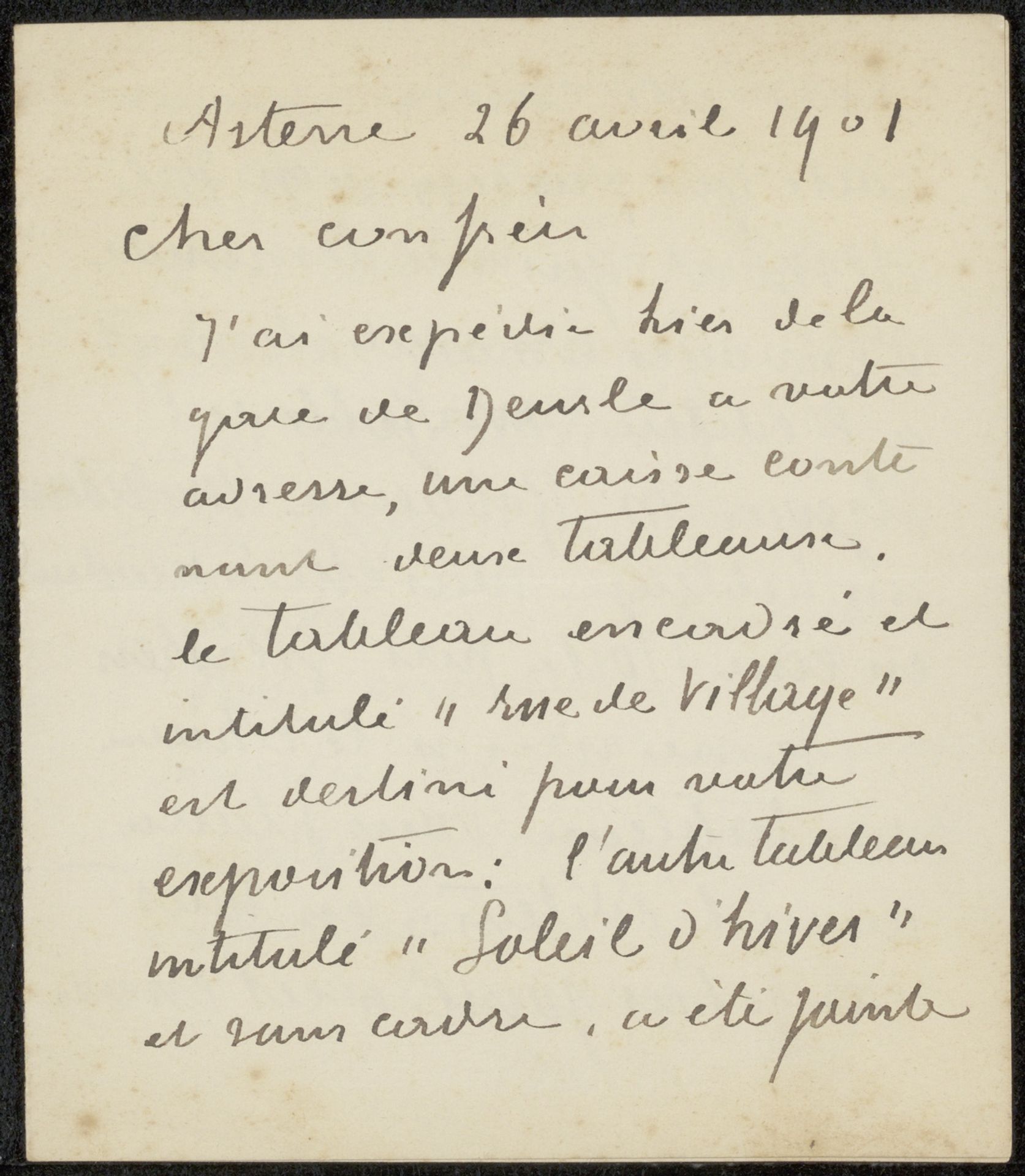
Brief aan Philip Zilcken

Listen to curator's interpretation
Curatorial notes
Curator: We are looking at “Brief aan Philip Zilcken,” a letter by Emile Claus. The date of its creation is estimated to be somewhere between 1901 and 1926. Claus composed it with ink on paper. Editor: There is something both fragile and intimate about looking at someone's handwriting. Even without knowing a word of French, there is a personality present in the cursive that is surprisingly loud. Curator: Precisely! And consider who Claus is writing to. Philip Zilcken was not just an artist, but a critic and promoter of contemporary art. He was a crucial figure in the art world of that period. So, this isn't merely a personal correspondence. It’s a professional one. Editor: That adds a layer, doesn’t it? You read it as part of this negotiation between the artist, the work, and the gatekeepers of the art establishment. What do you suppose they are negotiating? Curator: Claus mentions sending two paintings: "Rue de Village," framed, destined for an exhibition and another “Soleil d'hiver," or winter sun, unframed. It sounds as though he is entrusting Zilcken with the fate of his work, seeking his favor, perhaps, within the established exhibition circuits. Editor: It's interesting he singles out which painting is framed or not. You almost feel a bit of defensiveness regarding the painting without a frame as though it might lack presentation compared to the other. It makes you think about the act of deciding what goes into the frame, the gatekeeping in deciding what gets exhibited and seen, versus the vulnerable, 'unprotected' one. Curator: Frames create hierarchies. Consider also the rise of Intimism at this time. Presenting artwork, via letter, and creating those allusions between vulnerability and public view play a critical part. Even now. Editor: Yes, it’s still a negotiation between intimacy and exposure, public role and private reflection. Curator: Viewing it now provides some unique insights when considering not only art of that era, but even up until current artistic expressions. Editor: Absolutely. The interplay of the social role that dictates acceptance and vulnerability adds greater context and allows you to see the work beyond simply ink on paper.