graphic-art, collage, print, paper
#
graphic-art
#
abstract painting
#
collage
# print
#
constructivism
#
charcoal drawing
#
paper
#
geometric-abstraction
#
abstraction
Copyright: Hans Richter,Fair Use
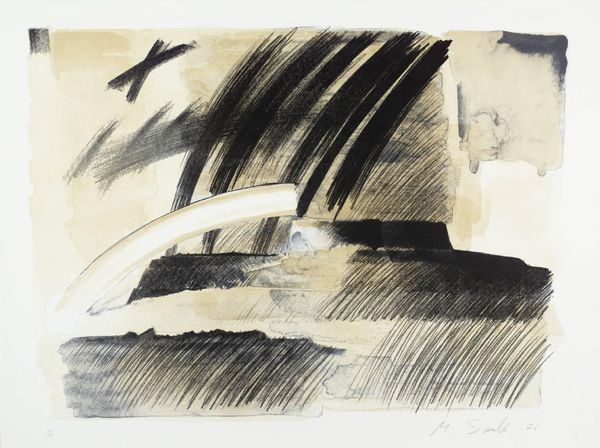
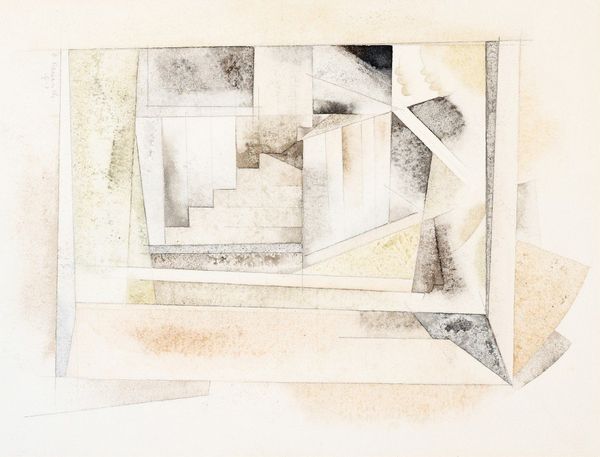
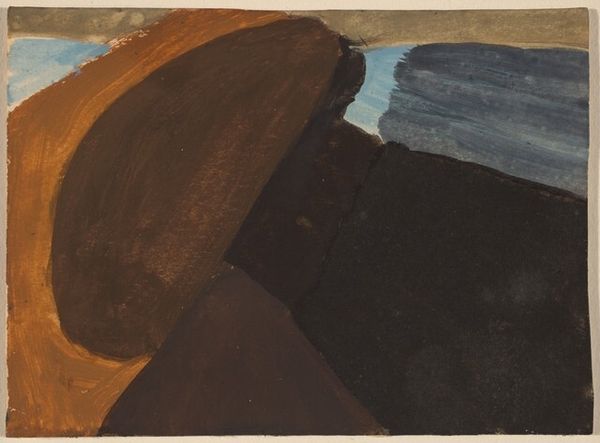
Editor: This is "Sur une jambe," a collage and print on paper by Hans Richter. While the date is unspecified, it evokes a mid-century aesthetic. I find the layered composition quite striking. What do you see in this piece? Curator: I see a powerful engagement with balance and imbalance. Richter’s work here is steeped in the symbolic language of constructivism, a movement born from utopian ideals and a search for order. But “Sur une jambe”—meaning “on one leg”—suggests precarity. How do you read that tension? Editor: That's fascinating. I hadn’t considered the title in relation to the composition. The shapes do seem deliberately off-kilter. Is this precarity a common theme in Richter’s work, perhaps reflecting the instability of the time? Curator: Exactly! Remember Richter's Dada roots. Even when he embraced geometric abstraction, he infused it with a Dada sensibility, a playful subversion. The title implies an active force defying gravity, which also brings to mind individual struggle against oppressive structures, or maybe a society trying to find balance after destruction and upheaval. The layering of visual elements suggests a conscious effort to rebuild, or perhaps reconstruct, but it isn’t perfect and complete; like our memories, fragments persist. Editor: So the shapes themselves are not just abstract forms but also symbols of societal rebuilding. It makes me wonder how the colors contribute, as well. Curator: What do the muted tones suggest to you? Editor: I guess a certain seriousness. Maybe a sense of something incomplete or in progress. Curator: Precisely. They temper the optimism that often colors constructivist art, pointing toward a more nuanced and realistic outlook. A fascinating exploration of a world striving for equilibrium, even – or especially – on shaky ground. Editor: I never would have picked up on that nuance! I now appreciate how deeply embedded social context and emotional nuance can be, even within seemingly simple abstractions.
Comments
No comments
Be the first to comment and join the conversation on the ultimate creative platform.
 Collect
 React
React Comment
More like this