1897 - 1898
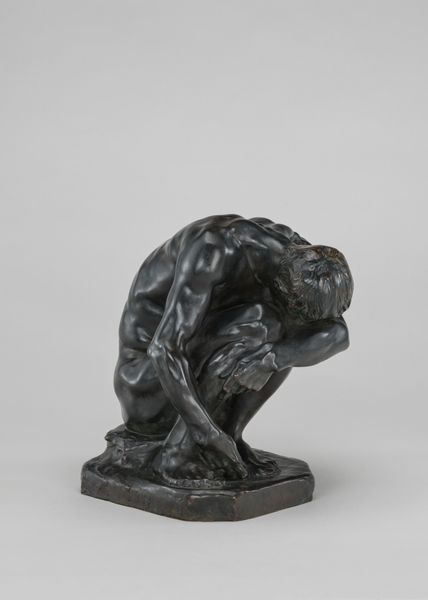
The Shadow


Listen to curator's interpretation
Curatorial notes
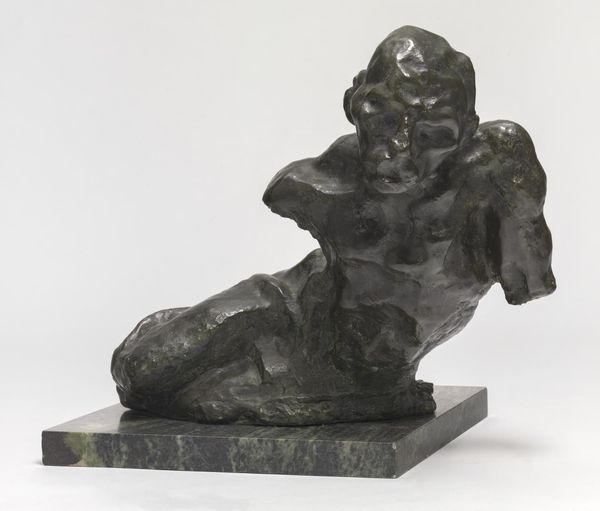
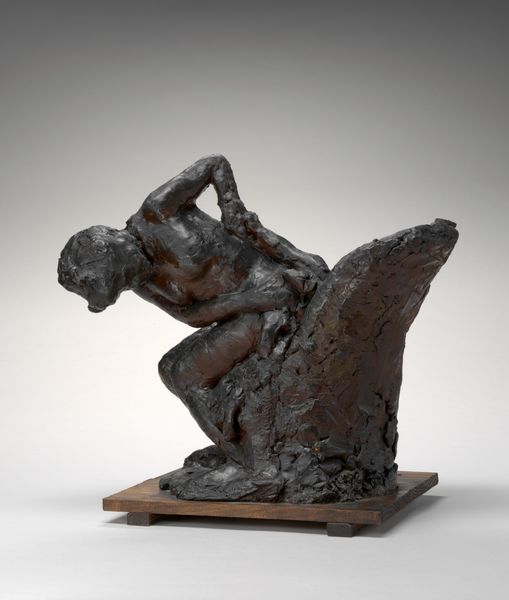
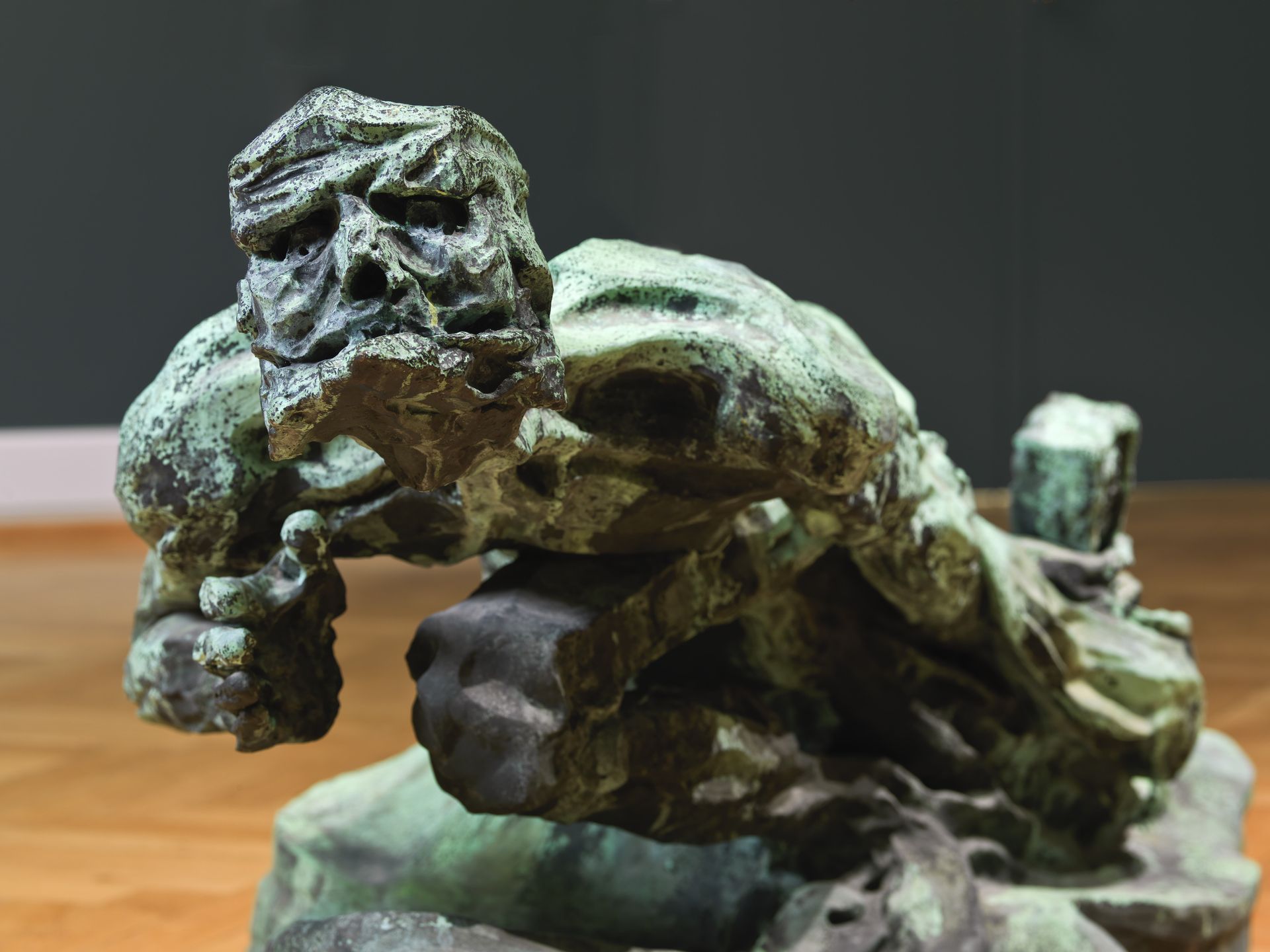
Editor: Here we have Niels Hansen Jacobsen’s “The Shadow,” a bronze sculpture created between 1897 and 1898. It feels incredibly raw, almost primal, with this tormented figure emerging from the rough-hewn base. What strikes you most about this piece? Curator: What jumps out is the figure's posture. We see this figure struggling against some unseen weight. Given its creation during a time of immense social upheaval, what does this resistance symbolize? Editor: That's a great question! Maybe the figure embodies the fight against societal expectations, the burden of the patriarchy, or even the weight of colonialism… Curator: Precisely. And consider the symbolic context. The use of bronze, often associated with strength and permanence, is deliberately subverted here. It showcases a figure in distress. The artist appears to reject conventional representations of power. What’s also critical is considering how mental health was viewed then. This could be an attempt to physically depict inner turmoil and challenge its stigmas. What effect do you think that might have on audiences of the time? Editor: It would be quite provocative, I imagine! Displaying such raw vulnerability disrupts the idealization of the human form prevalent at the time and also offers an important discourse on power, strength and the expectation of resolution. Curator: Yes, and note Jacobsen's deliberate use of rough texture. It is meant to convey an urgency of feeling and to highlight the incompleteness, a constant state of becoming rather than being. How might we, then, consider this shadow a radical act of refusal to conform to societal norms of that time? Editor: Wow, I had only seen it as a sculpture of suffering, but now I understand it's actively resisting forces around it. Curator: Exactly, seeing the art with those layers offers such important context to engage contemporary ideas around vulnerability and strength.