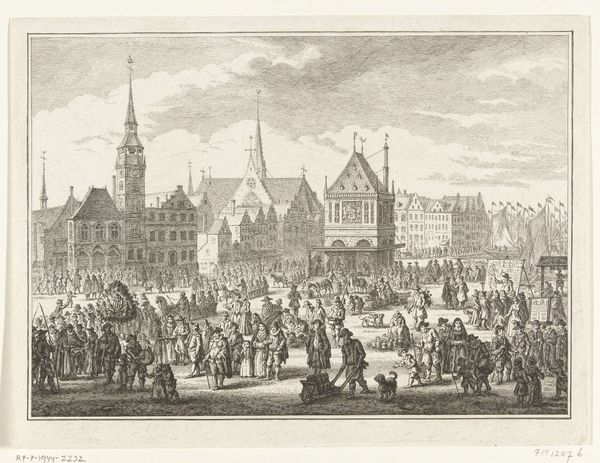
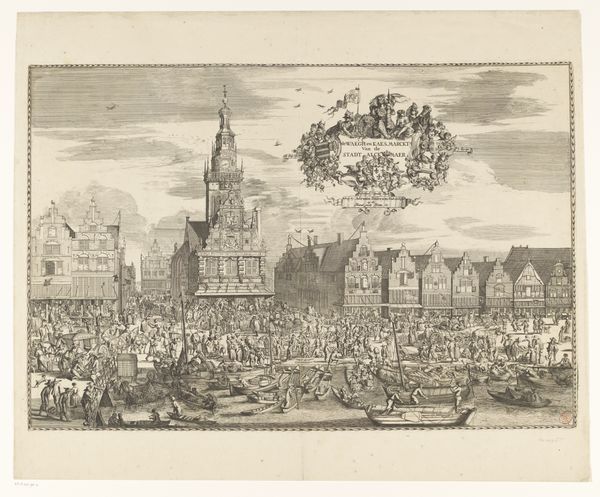
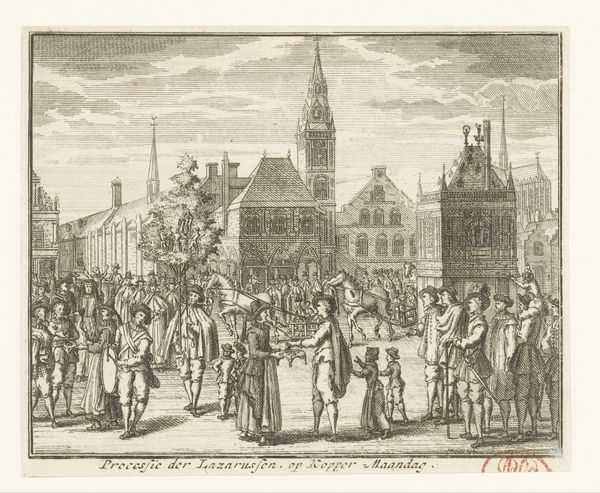
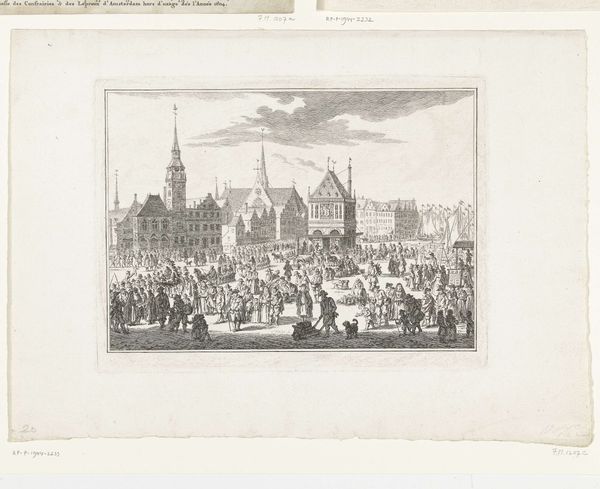
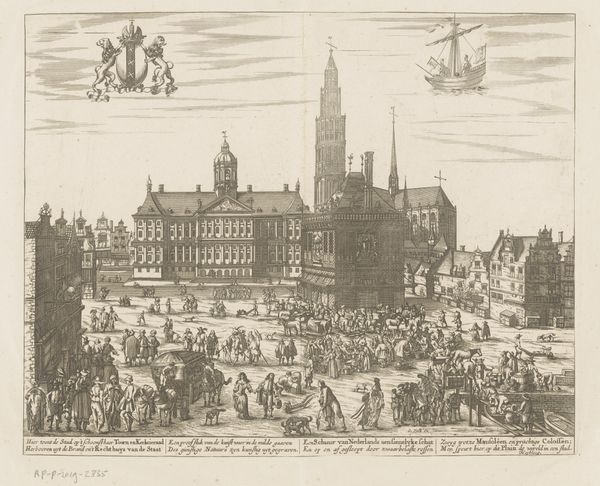
Gezicht op het Oude Stadhuis, de Wisselbank, de Nieuwe Kerk en de Waag op de Dam te Amsterdam 1611
0:00
0:00

claesjanszvisscher
Rijksmuseum
drawing, print, engraving
#
drawing
#
dutch-golden-age
# print
#
cityscape
#
engraving
#
realism
Dimensions: height 97 mm, width 157 mm
Copyright: Rijks Museum: Open Domain
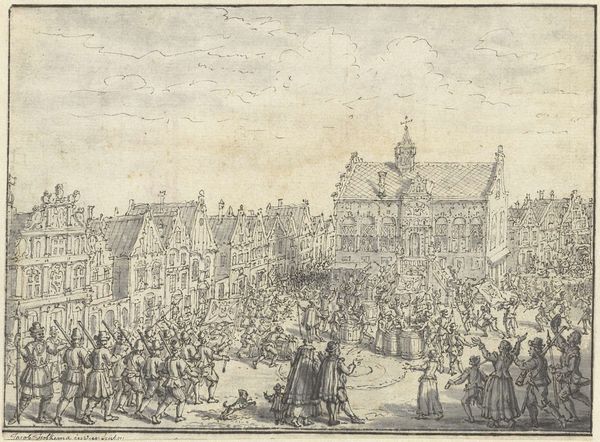
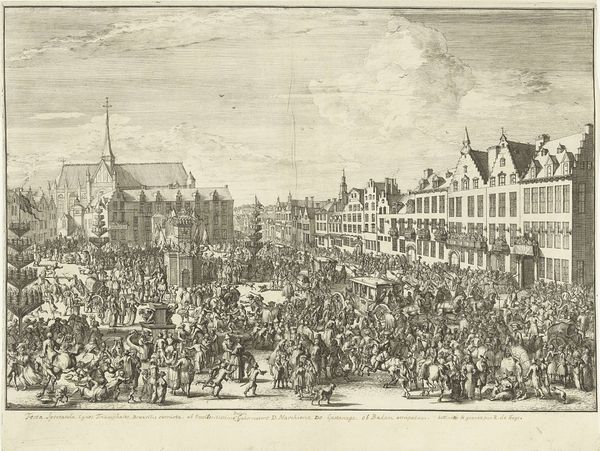
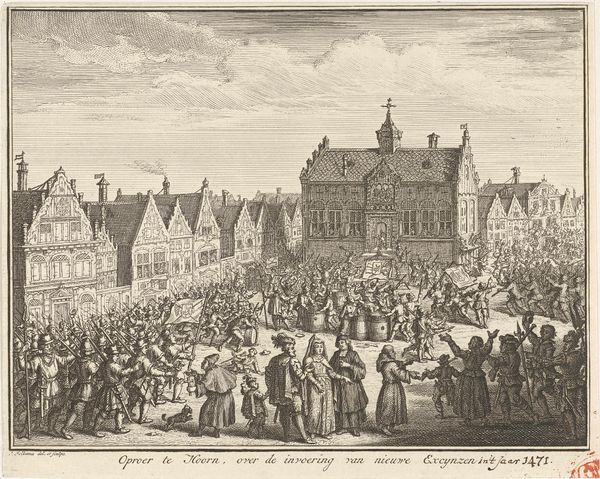
Claes Jansz. Visscher created this print of the Dam square in Amsterdam using etching and engraving techniques. These processes involve coating a metal plate with a waxy ground, drawing through it to expose the metal, and then immersing the plate in acid. The acid bites away at the exposed lines, creating grooves that hold ink. The physical characteristics of the metal plate are crucial. Its hardness allows for fine detail, seen in the architectural rendering and the figures in the crowd. The etched lines create a sense of depth and texture, while the engraved lines add precision and clarity. Visscher would have needed considerable skill to control the acid and create such a detailed image. Prints like this played a vital role in disseminating information and shaping public perception. They were relatively inexpensive to produce, which made them accessible to a broad audience. The print’s existence speaks to the commercial and social importance of Amsterdam as a center of trade and culture. It is a reminder that art is always shaped by the available materials, the skills of the maker, and the social context in which it is produced.
Comments
No comments
Be the first to comment and join the conversation on the ultimate creative platform.
 Collect
 React
React Comment
More like this