engraving, architecture
#
baroque
#
landscape
#
engraving
#
architecture
Dimensions: height 162 mm, width 191 mm
Copyright: Rijks Museum: Open Domain
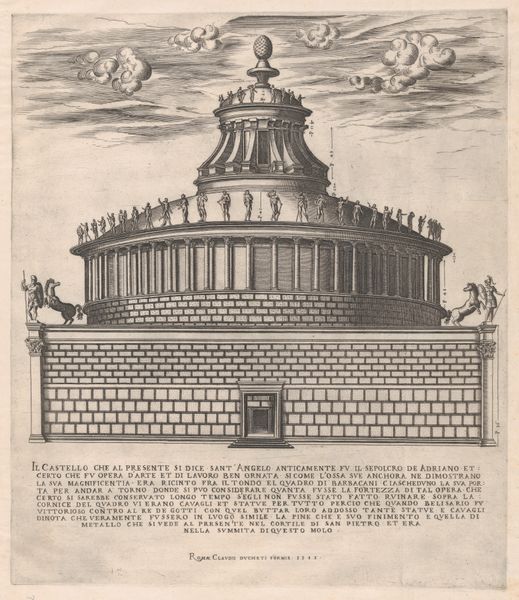
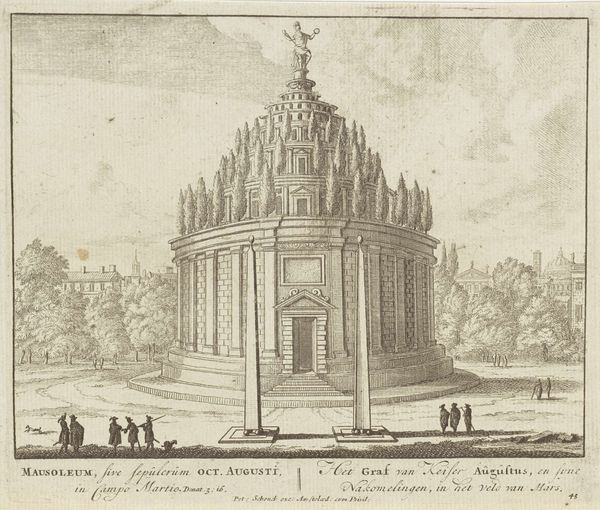
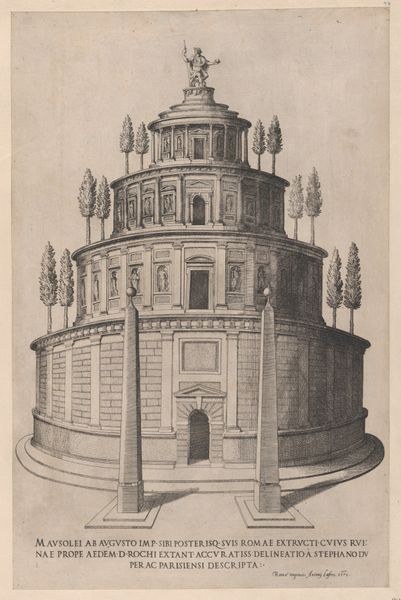
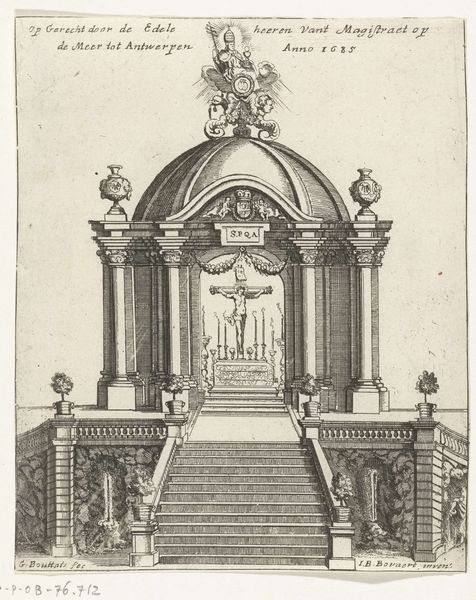
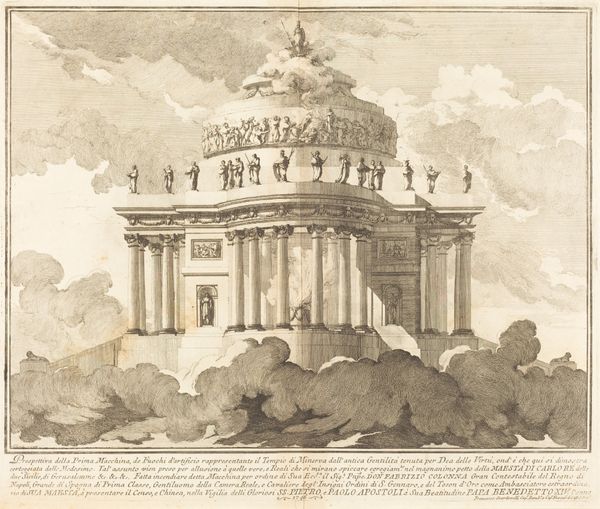
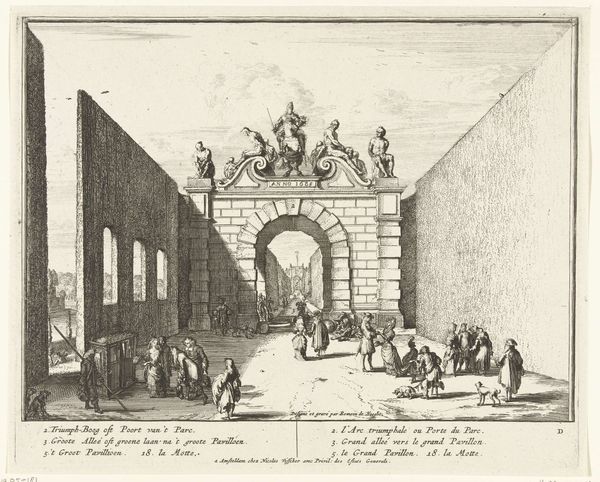
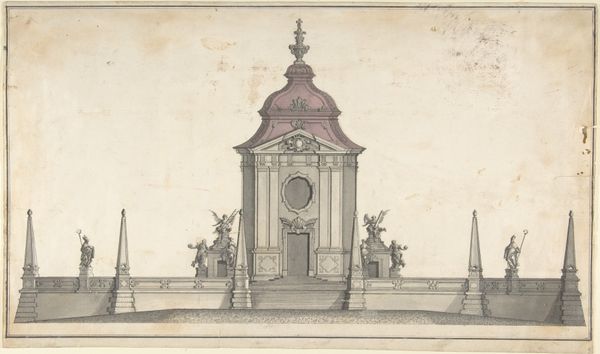
This etching by Pieter Schenk depicts Hadrian's Mausoleum, a grand monument initially conceived as a tomb for the Roman Emperor and his family. Its architectural form is replete with historical symbolism. Note the statues of warriors atop the structure, protectors of the dead, reminiscent of ancient Greek and Roman funerary art. This motif echoes across time; we see similar figures guarding tombs in Etruscan art and even in medieval Christian cemeteries. The layered cylindrical form, surmounted by a dome, is a visual echo of power and imperial authority. The mausoleum stands not merely as a final resting place, but as a statement of enduring legacy, a visual anchor to the earthly realm, embodying our primal fear of oblivion and our desire for remembrance. This architectural language speaks to our collective subconscious, a continuous thread in the human narrative.
Comments
No comments
Be the first to comment and join the conversation on the ultimate creative platform.
 Collect
 React
React Comment
More like this