drawing, ink
#
abstract-expressionism
#
drawing
#
ink drawing
#
ink painting
#
ink
#
linocut print
#
geometric-abstraction
#
abstraction
#
line
Dimensions: overall: 45.6 x 30.6 cm (17 15/16 x 12 1/16 in.)
Copyright: National Gallery of Art: CC0 1.0
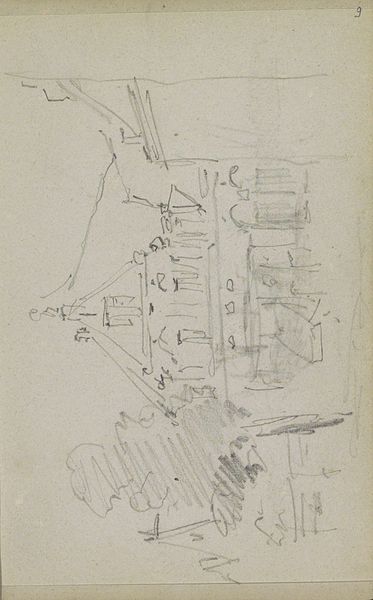
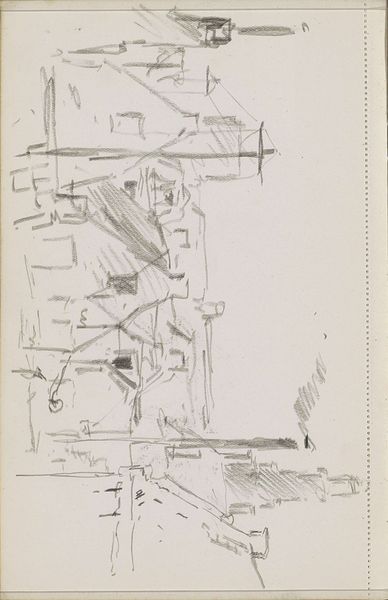
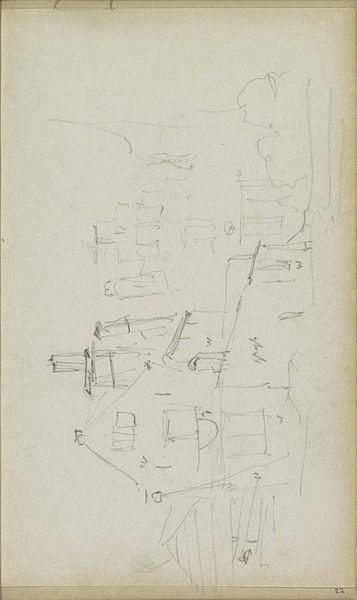
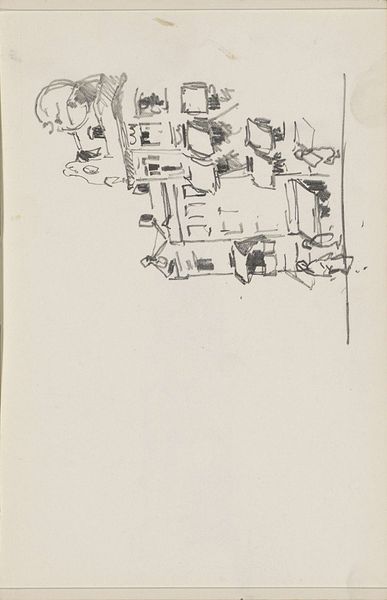
Curator: Fannie Hillsmith's "Interior 1, 2, 3," created in 1961 using ink, is an intriguing abstract expressionist drawing we are looking at. Editor: My initial impression is organized chaos, almost a grid structure trying to contain a riot of marks and symbols. The numerals scattered throughout create a strange sort of rhythm. Curator: Hillsmith worked during a time of immense social upheaval, the Civil Rights movement gaining momentum, and second-wave feminism taking shape. I find myself considering the significance of the 'interior' in the title. Is this the artist representing an inner, fragmented psychological state in response to external pressures? Editor: Absolutely, and I’m curious about what interior might mean in the art world. As abstract expressionism lost favor, artists questioned established hierarchies and modes of art production. Viewing it now, I am wondering, how did contemporary art institutions and critics receive it at the time? Curator: The placement of the numerals – sometimes boldly visible, other times obscured – perhaps highlights issues of representation, what gets seen and what remains hidden in the dominant narratives of the time. Look how those darker ink blots, especially around '10' and '11', are they perhaps symbolizing the heavy weight of social constraints and political tensions weighing on the individual? Editor: I wonder about the act of obscuring and revealing. Do those bold numbers push the boundaries, challenging conventional notions of abstraction versus representation? The social function of art shifts. How do institutions respond? Curator: It certainly opens a space to think about how societal expectations constrain personal expression and visibility, especially for marginalized voices in that era. The way the numbers interact with the blurred, darker strokes of ink seems very telling of the struggles of the time. Editor: Exactly, art becomes a platform for dialogue about representation and participation. What might have seemed "inaccessible" abstraction gains a new public role in reflecting socio-political issues. It prompts reflection on the historical evolution of artistic intentions. Curator: Reflecting on "Interior 1, 2, 3", I'm struck by the layered meanings Hillsmith imbues it with; not merely an abstraction, but a commentary on identity and society in flux. Editor: I appreciate your point about it speaking directly to the political climate; seeing art and Fannie Hillsmith more broadly as social documents is critical.
Comments
No comments
Be the first to comment and join the conversation on the ultimate creative platform.
 Collect
 React
React Comment
More like this