photography
#
cloudy
#
contemporary
#
black and white photography
#
grey scale
#
landscape
#
black and white format
#
photography
#
low atmospheric-weather contrast
#
black and white
#
monochrome photography
#
monochrome
#
grey scale mode
#
realism
#
shadow overcast
Dimensions: image: 22.7 × 28.9 cm (8 15/16 × 11 3/8 in.) sheet: 27.8 × 35.5 cm (10 15/16 × 14 in.)
Copyright: National Gallery of Art: CC0 1.0
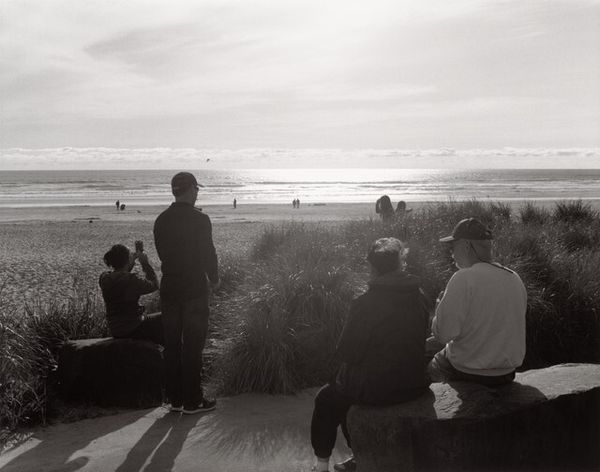
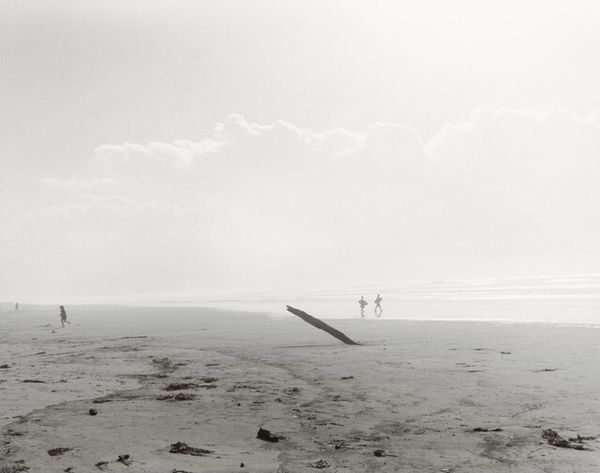
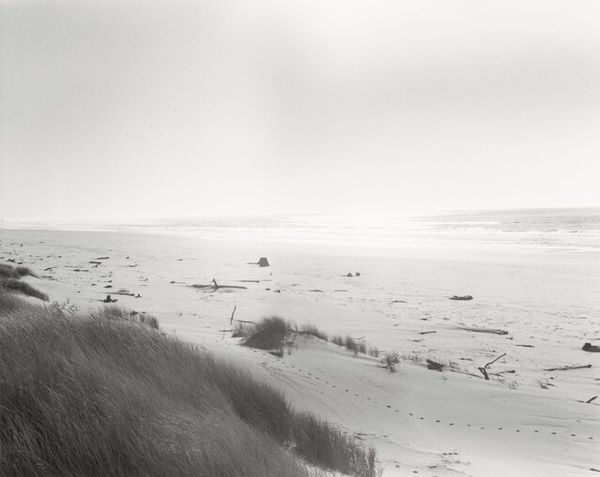
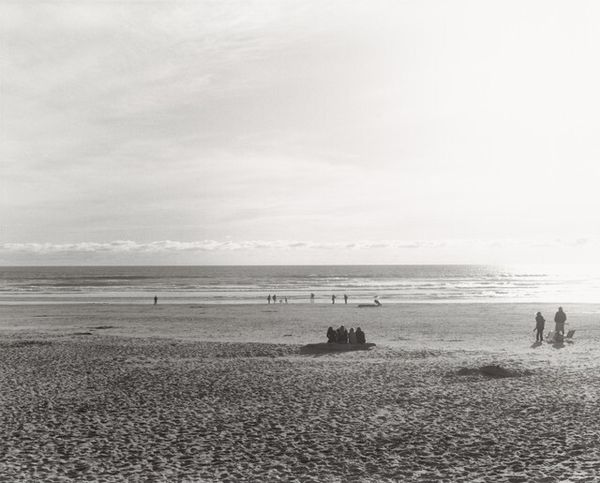
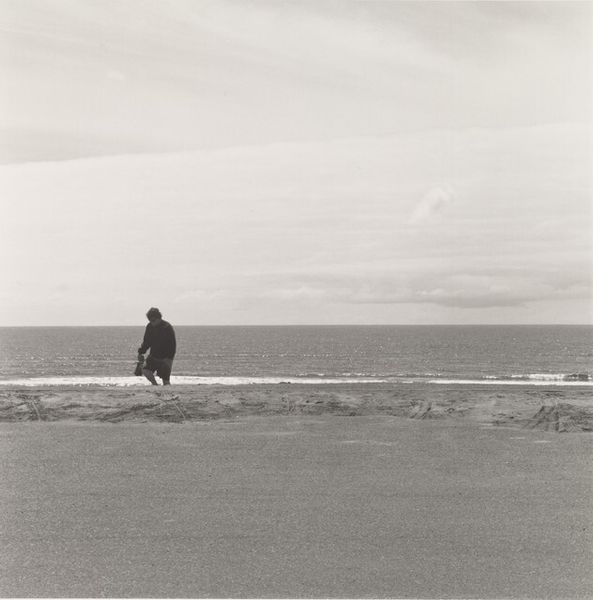
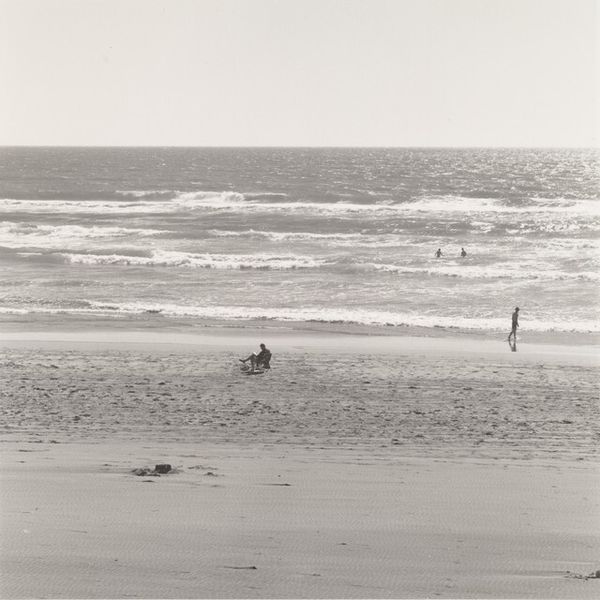
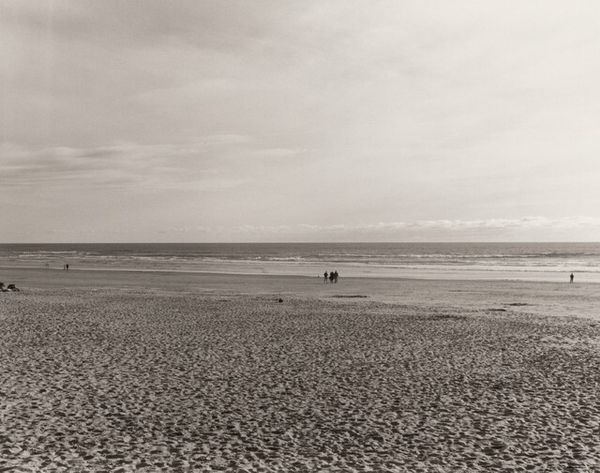
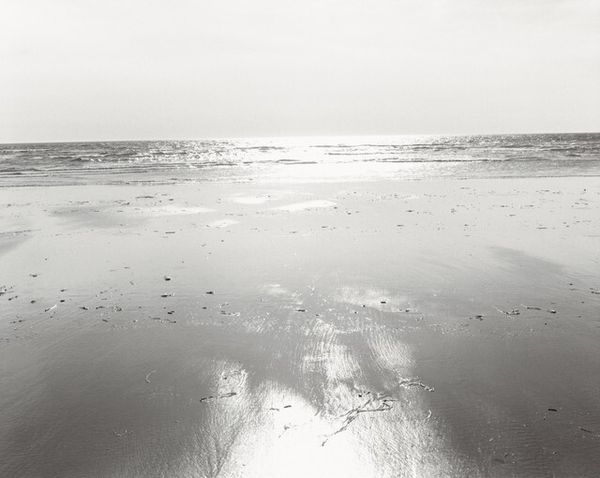
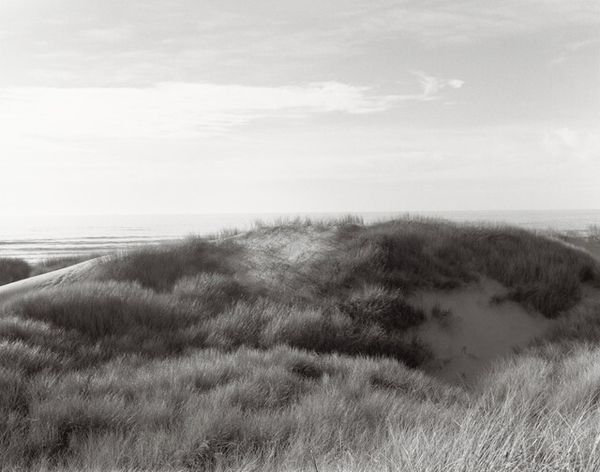
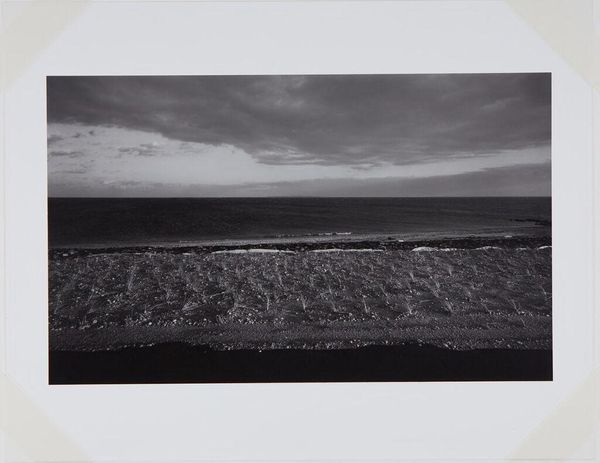
Curator: Robert Adams' "The Sea Beach," a black and white photograph from 2015, presents a seemingly simple vista. What impressions does it leave you with? Editor: Initially, a quiet sort of melancholy. The grey scale washes everything with a uniform emotional tone; it’s the sort of day where the world itself seems to be sighing. There's also a beautiful simplicity here; figures receding into a blurred background. Curator: Indeed. Adams often worked with black and white to strip away distractions and reveal deeper, often somber, truths about the American landscape. In "The Sea Beach," he's capturing more than just a coastal scene; it seems like a commentary on our place within a vast, indifferent natural order. Editor: Right, there is a sort of detachment. Notice how the figures on the beach in the background are so small, almost dissolving into the landscape. They remind me of ants – and how even at our most 'leisured', we are tiny insignificant specks in the face of immensity. Curator: I find it interesting to think of the beach itself as a recurring symbol in human consciousness. Historically and psychologically, the shore represents a meeting point, the edge between the known and unknown. Adams presents this threshold without romanticizing it, don’t you think? Editor: I do. There is a strange and unsentimental quiet here. And in this photo’s context, it suggests the fragility and impermanence of human endeavors when placed alongside the raw power of the sea. You know, I almost smell the saltwater in the air! Curator: A fitting interpretation. Ultimately, "The Sea Beach," rendered in stark monochrome, serves not only as a snapshot of a time and place but also as a poignant meditation on our transient existence. Editor: Exactly. I'm leaving with a reflective awareness now, which wasn’t initially so clear. It sneaks up on you with each gaze. Wonderful piece!
Comments
No comments
Be the first to comment and join the conversation on the ultimate creative platform.
 Collect
 React
React Comment
More like this