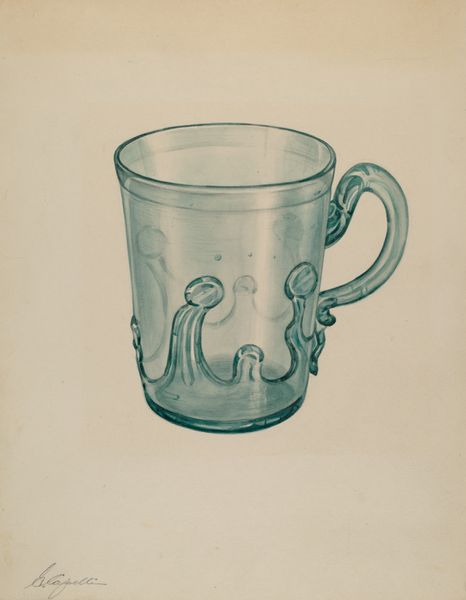
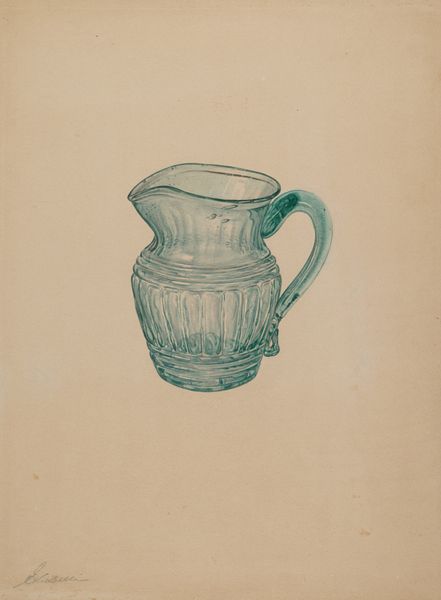
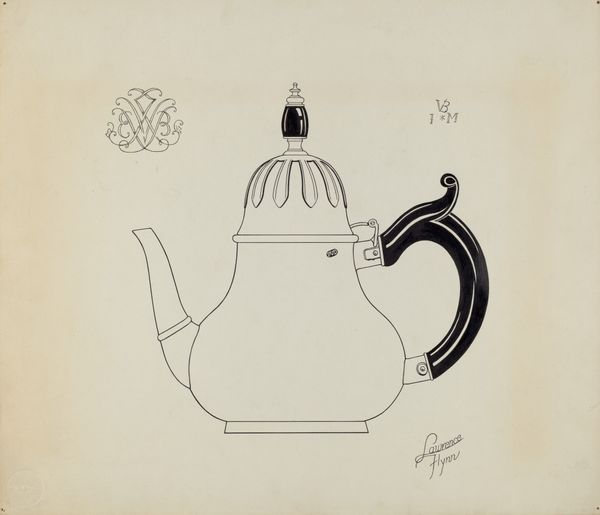
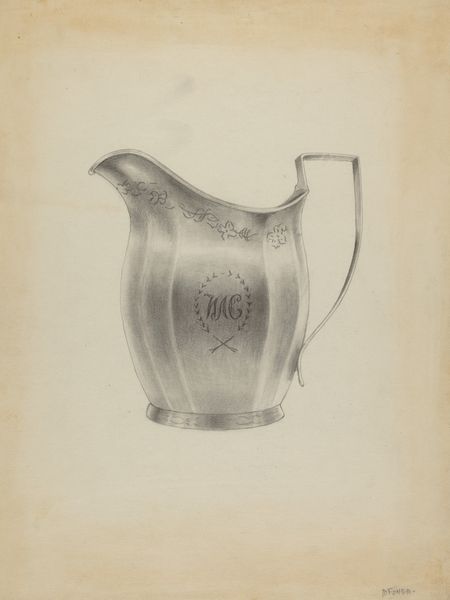
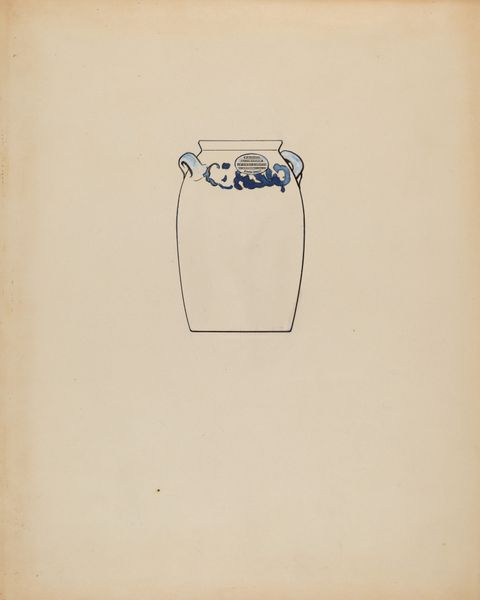
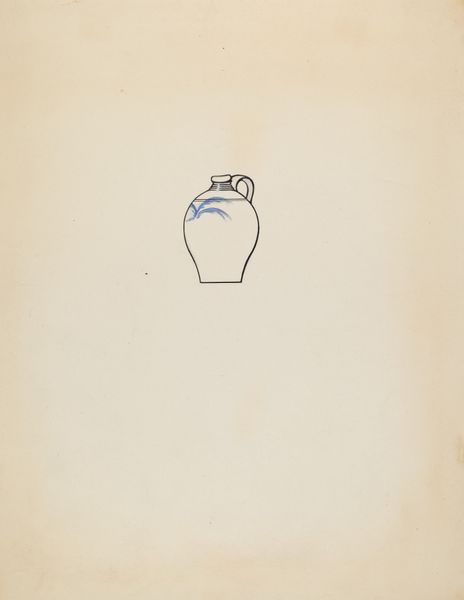
drawing, ink
drawing
blue ink drawing
ink
line
watercolour illustration
Dimensions: overall: 29.3 x 22.7 cm (11 9/16 x 8 15/16 in.) Original IAD Object: 9" high; 7 1/2" in diameter
Copyright: National Gallery of Art: CC0 1.0
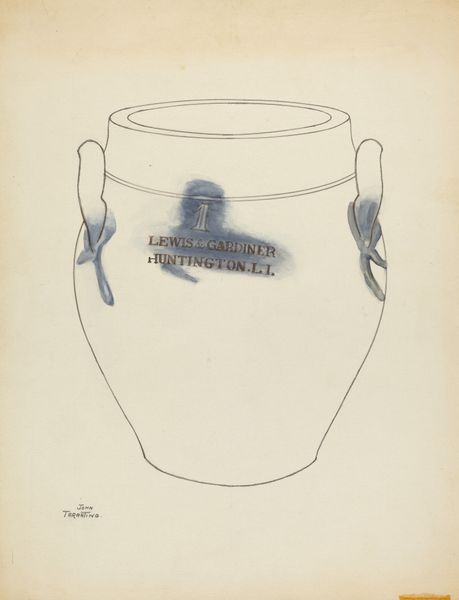
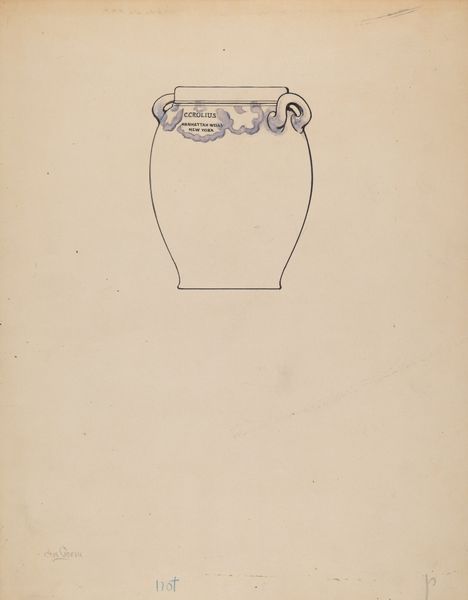
Curator: Looking at John Tarantino’s drawing "Crock," created circa 1953 using ink, I’m immediately struck by the almost reverent depiction of what appears to be a very ordinary object. Editor: It’s got this wonderful quiet dignity about it. The subtle variations in the blue ink washes create depth where there really shouldn't be any. I like the suggestion of age, the ghostliness of the lines, that kind of speaks volumes about everyday things holding history and memories. Curator: Absolutely, and consider what a crock would have represented in a mid-century American home. It's more than just a container. It speaks to a history of domestic labor, food preservation, and self-sufficiency in a post-war context that idealized domesticity. How are these everyday things made and how are they presented to us? Tarantino's drawing is about those histories. Editor: You're spot on about the domestic aspect, but it is interesting to me that Tarantino made an art object to record the likeness of this common vessel. We see how the imagery surrounding domestic objects—and even folksy Americana like this—served the political interests of nation-building. And this drawing is just one component in an ecosystem of material imagery. It certainly served a purpose beyond the aesthetic. Curator: Yes, and look at the material choices Tarantino made. The ink rendering, with its subtle imperfections, resists a slick, mass-produced aesthetic. This elevation of the handmade resonates within a lineage of artists thinking about the role of craft in society and the increasing dominance of manufacturing. It's a thoughtful articulation of art versus the mass production it opposed. Editor: You’re right; by selecting these processes of image-making—and specifically not more mechanical reproduction methods, he invites us to question the way art is presented, circulated and, ultimately, valued within a complex social apparatus that involves galleries, museums, and critical interpretation. Curator: This drawing urges us to examine not only the vessel depicted but also the artistic and societal values inherent in its depiction. It provokes us to question production and consumption in this country at the time it was made. Editor: It certainly does that. What might appear as a straightforward object rendering reveals, upon closer consideration, layered narratives about production, culture, and power. A deceptively simple, evocative piece!
Comments
No comments
Be the first to comment and join the conversation on the ultimate creative platform.
 React
React Comment