1764 - 1791
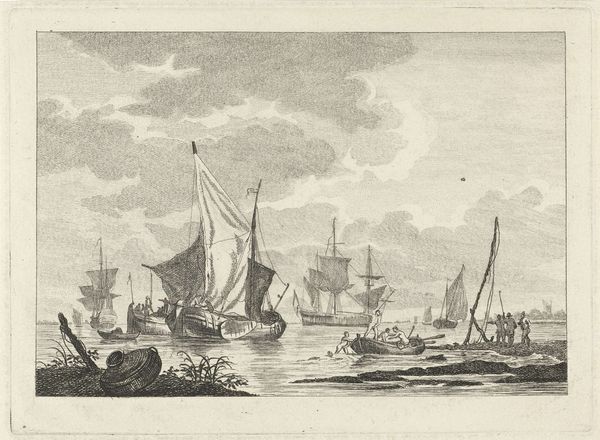
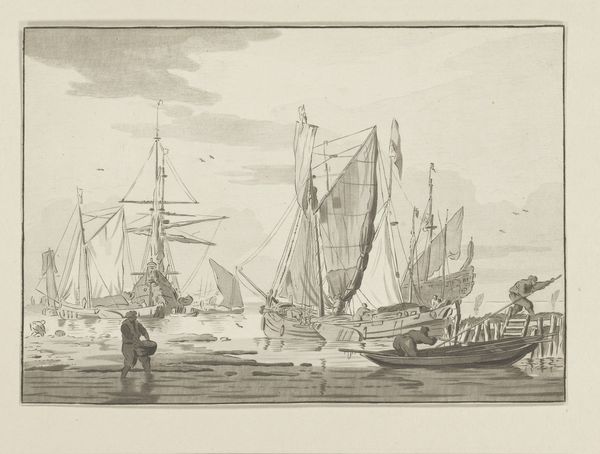
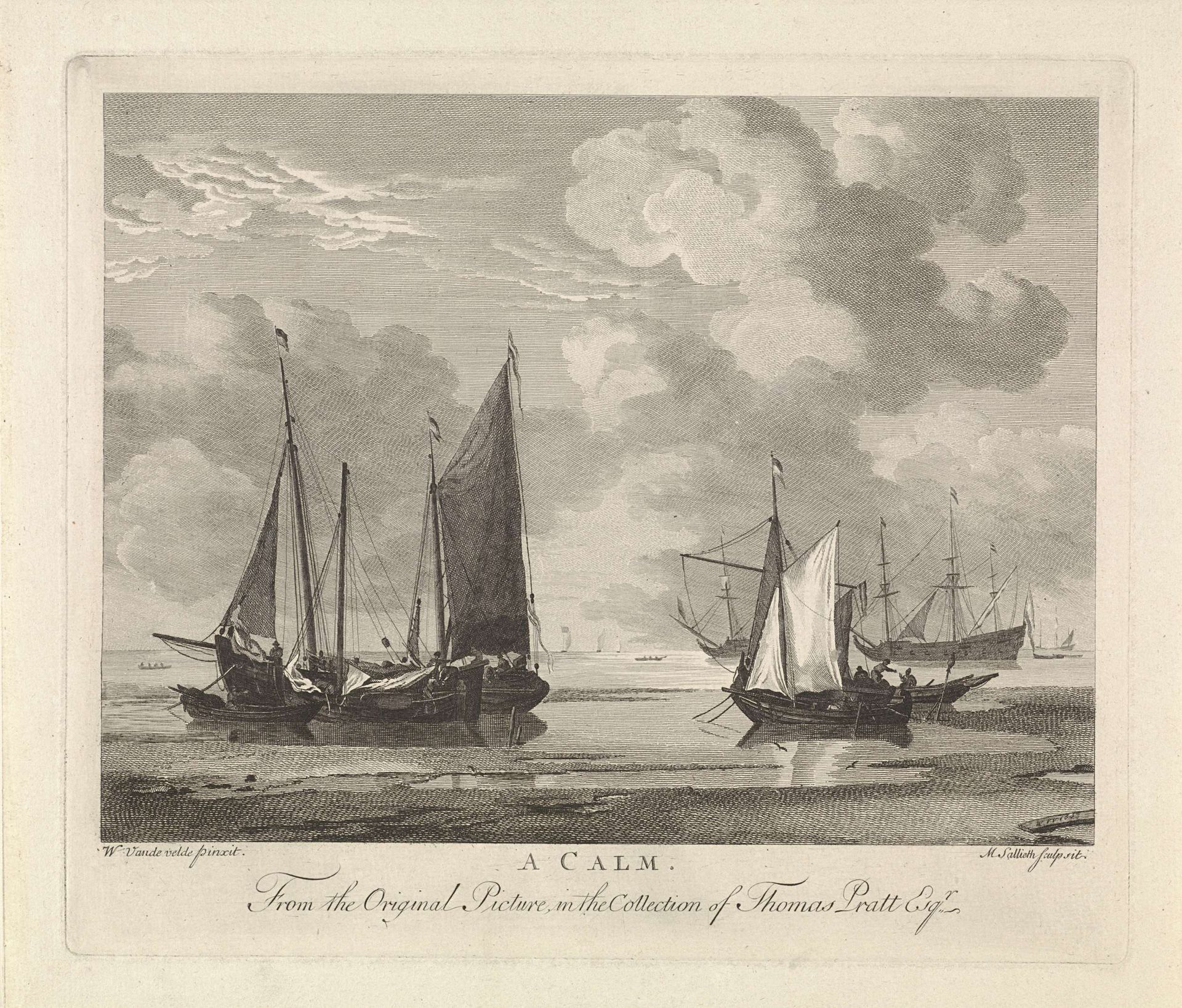
Rustig water met vissersboten

Mathias de Sallieth
1749 - 1791Location
RijksmuseumListen to curator's interpretation
Curatorial notes
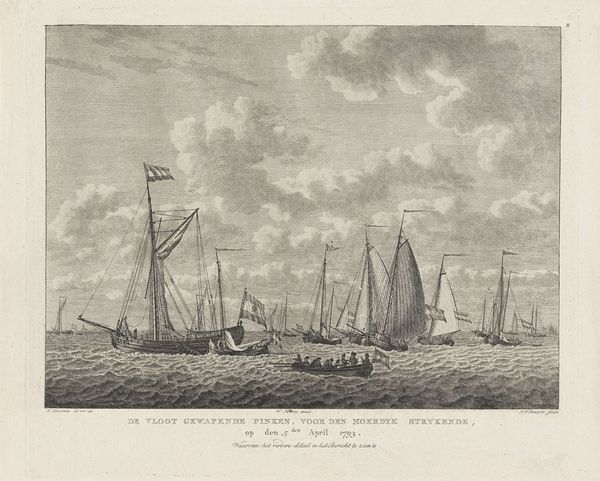
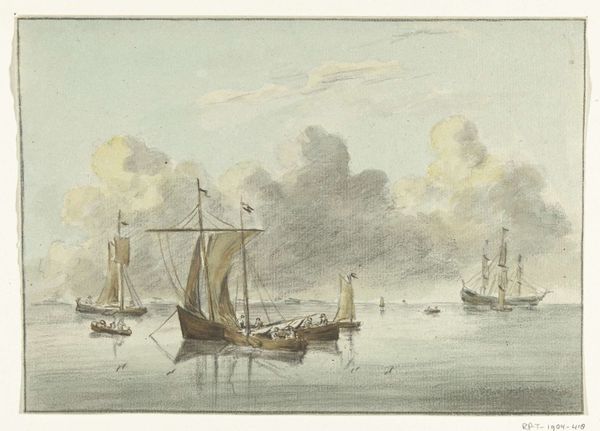
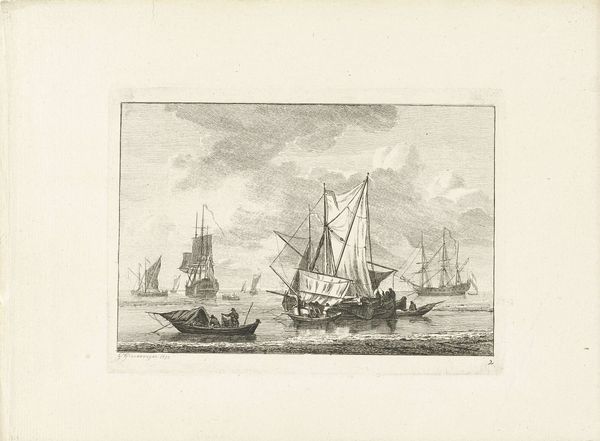
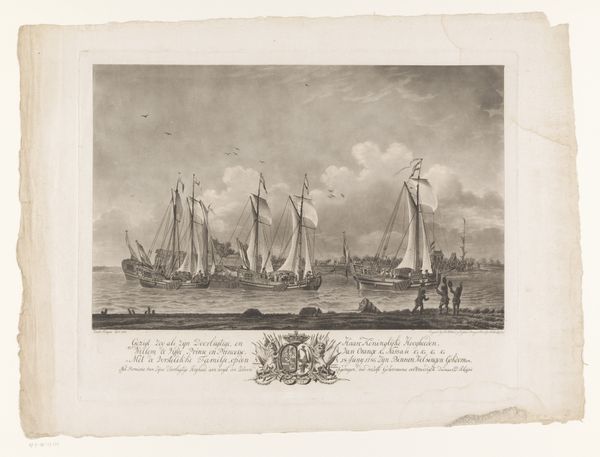
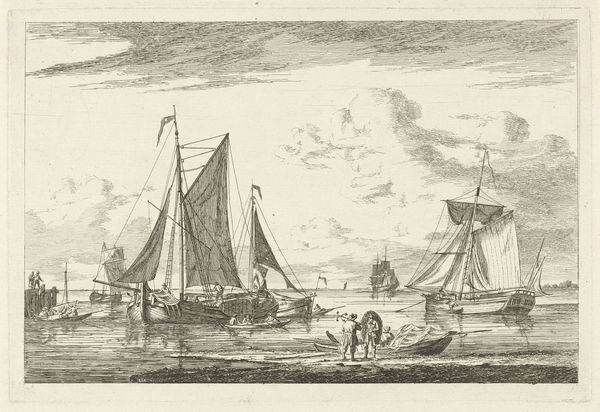
Editor: This is "Rustig water met vissersboten," or "Calm Water with Fishing Boats," by Mathias de Sallieth, dating from sometime between 1764 and 1791. It's an engraving. There's such a sense of stillness. What stands out to you in this print? Curator: I see more than just stillness. Think about the context: the late 18th century. What did maritime settings signify for the Netherlands then? The Dutch Golden Age, built on sea trade, was fading. This image presents a ‘calm’ but also hints at a world reliant on increasingly fragile, racialized and gendered labour systems propped up by maritime exploits. Does the seemingly peaceful surface belie a more complex reality? Editor: So, this seemingly calm scene actually references a time of immense economic and social upheaval? How can a landscape do that? Curator: By subtly highlighting absence. Where are the grand merchant ships that once dominated Dutch seas? Why focus on smaller fishing boats? Is this ‘calm’ a deliberate choice, a visual turning away from the legacy of colonialism and its uncomfortable truths? It raises questions about who benefits from this "calm" and at what cost. Editor: I never would have considered those implications just from looking at the image! It's a powerful perspective. Curator: Art often reflects not just what's present, but what is strategically omitted. It encourages us to look beneath the surface and question dominant narratives. I wonder if this piece serves as a reminder that idyllic scenes may mask deeper, structural inequalities. Editor: This has totally reshaped how I view the artwork. I’m now considering those undercurrents and the political implications in something that appears so serene.