About this artwork
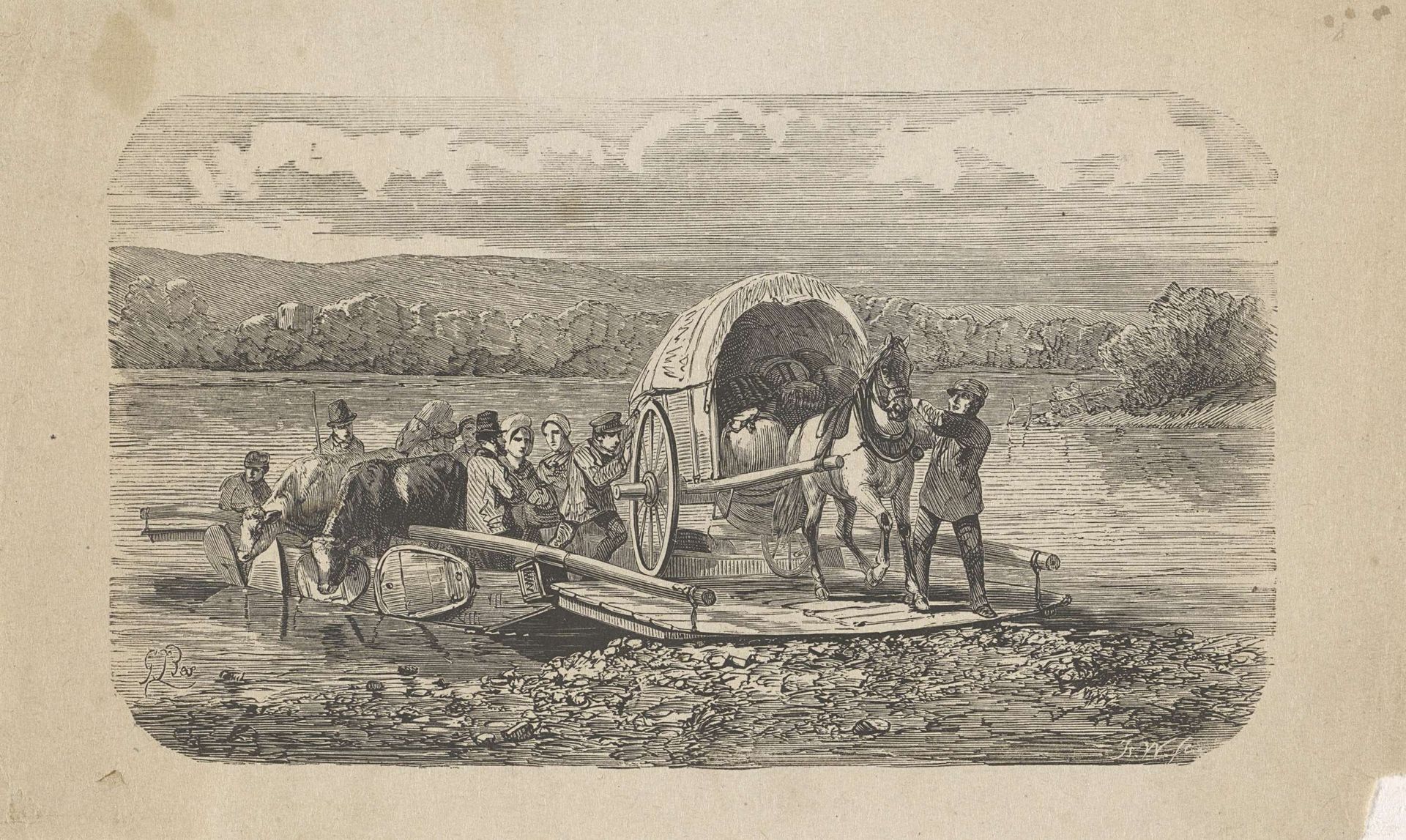
This print, "Arriverende pont met daarop mannen, vrouwen, twee koeien en een huifkar met een paard," was made by Isaac Weissenbruch sometime in the 19th century. It is a modest work, just a few inches in either direction, and made with the straightforward technique of etching. The magic of etching lies in the way a metal plate is bitten by acid, line by line, according to the artist's will. It is an indirect process that is inextricably linked to the rise of industrialization and mass media. Look closely, and you will see the artist has used tight hatching to give tone and shadow, as well as a definite sense of atmosphere. It's a fascinating translation of the world, from lived experience into repeatable image. The subject speaks to the print's role as a form of vernacular communication. The image shows a group of ordinary people, along with their livestock and cart, crossing a river by pont. The artist invites us to reflect on how the hard work and skill of image-making can elevate everyday life.
Arriverende pont met daarop mannen, vrouwen, twee koeien en een huifkar met een paard
1836 - 1912

Isaac Weissenbruch
1826 - 1912Location
RijksmuseumArtwork details
- Medium
- print, engraving
- Dimensions
- height 115 mm, width 195 mm
- Location
- Rijksmuseum
- Copyright
- Rijks Museum: Open Domain
Tags
Comments
Share your thoughts
About this artwork
This print, "Arriverende pont met daarop mannen, vrouwen, twee koeien en een huifkar met een paard," was made by Isaac Weissenbruch sometime in the 19th century. It is a modest work, just a few inches in either direction, and made with the straightforward technique of etching. The magic of etching lies in the way a metal plate is bitten by acid, line by line, according to the artist's will. It is an indirect process that is inextricably linked to the rise of industrialization and mass media. Look closely, and you will see the artist has used tight hatching to give tone and shadow, as well as a definite sense of atmosphere. It's a fascinating translation of the world, from lived experience into repeatable image. The subject speaks to the print's role as a form of vernacular communication. The image shows a group of ordinary people, along with their livestock and cart, crossing a river by pont. The artist invites us to reflect on how the hard work and skill of image-making can elevate everyday life.
Comments
Share your thoughts