About this artwork
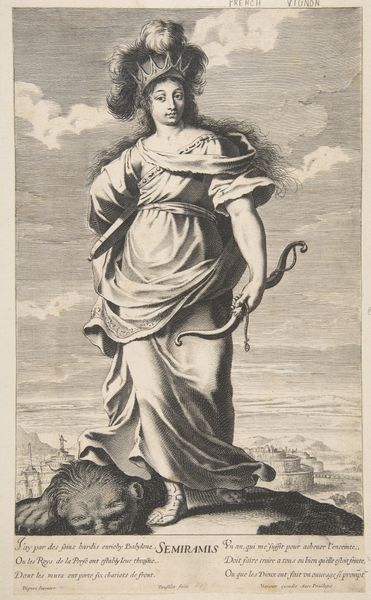
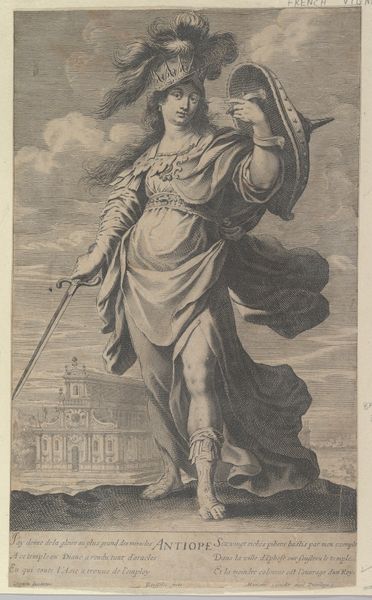
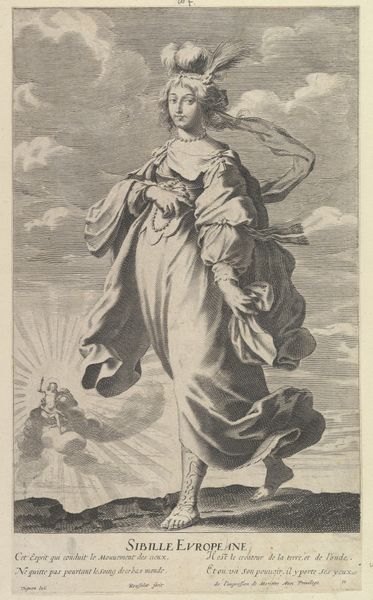
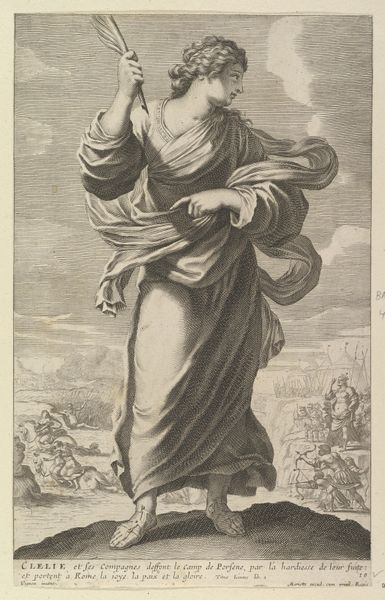
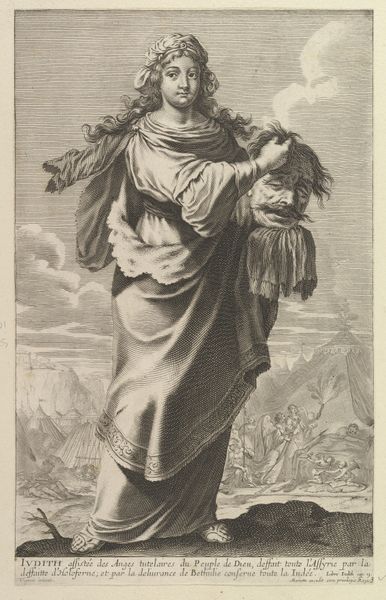
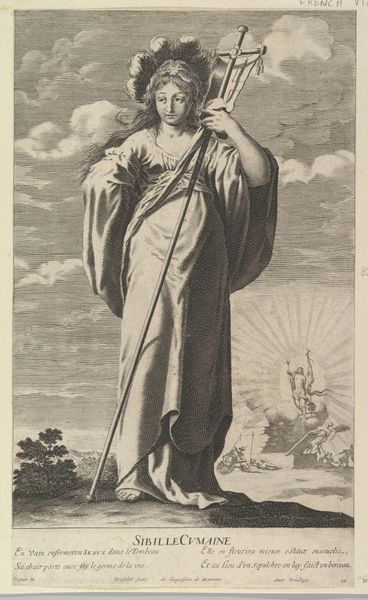
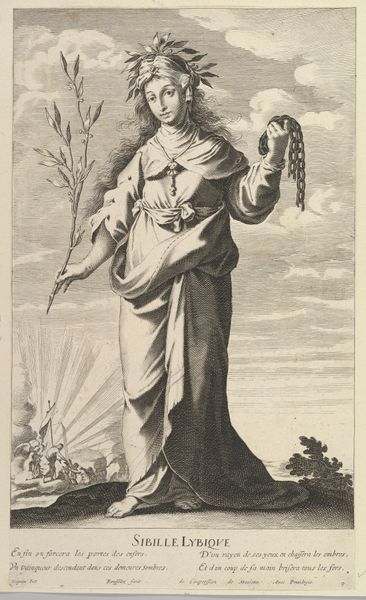
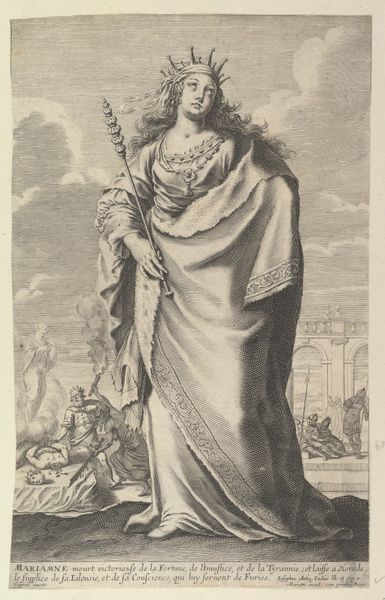
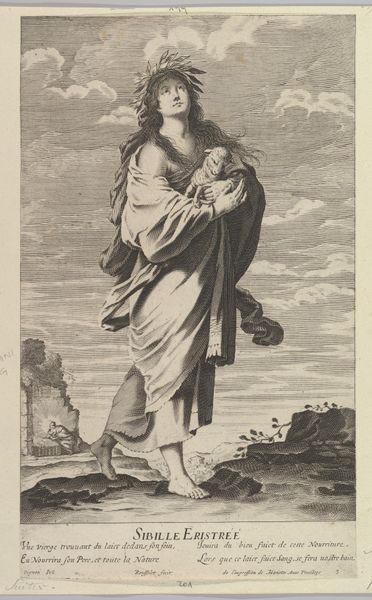
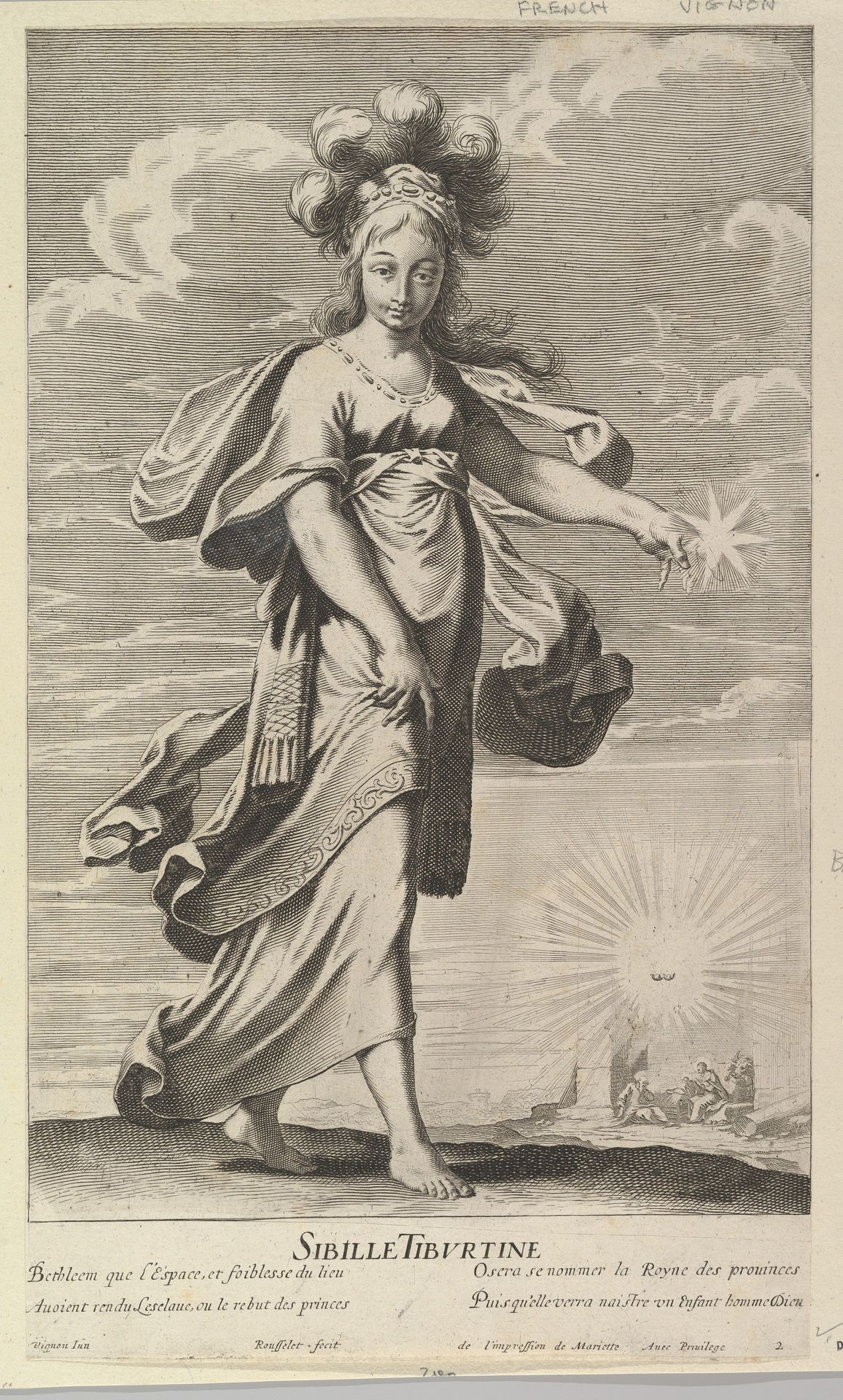
This print, Sibylle Tiburtine, was made by Gilles Rousselet in the 17th century, using engraving techniques. Look closely, and you can see a network of fine lines incised into the metal plate, capturing light and shadow. Engraving was a labor-intensive process. The artist used a tool called a burin to cut lines into a copper plate. The depth and thickness of each line determined the amount of ink it would hold, and thus the darkness of the printed mark. Rousselet would have needed immense skill and patience. He used these linear marks to define the figure, the drapery, and even the background clouds, giving the print a sense of depth and texture. The medium of printmaking also allowed Rousselet to circulate his images widely, making them accessible to a broad audience, and situating it within a growing market for art. So, by considering the materials and making of this artwork, we gain insight into the artist's skill, the cultural values of the time, and the relationship between art, labor, and commerce.
Sibylle Tiburtine
1630 - 1640


Artwork details
- Medium
- drawing, print, engraving
- Dimensions
- sheet: 14 1/8 x 8 5/16 in. (35.8 x 21.1 cm)
- Location
- Metropolitan Museum of Art, New York, NY
- Copyright
- Public Domain
Tags
Comments
Share your thoughts
About this artwork
This print, Sibylle Tiburtine, was made by Gilles Rousselet in the 17th century, using engraving techniques. Look closely, and you can see a network of fine lines incised into the metal plate, capturing light and shadow. Engraving was a labor-intensive process. The artist used a tool called a burin to cut lines into a copper plate. The depth and thickness of each line determined the amount of ink it would hold, and thus the darkness of the printed mark. Rousselet would have needed immense skill and patience. He used these linear marks to define the figure, the drapery, and even the background clouds, giving the print a sense of depth and texture. The medium of printmaking also allowed Rousselet to circulate his images widely, making them accessible to a broad audience, and situating it within a growing market for art. So, by considering the materials and making of this artwork, we gain insight into the artist's skill, the cultural values of the time, and the relationship between art, labor, and commerce.
Comments
Share your thoughts