neoclacissism
realism
Dimensions: height 214 mm, width 130 mm
Copyright: Rijks Museum: Open Domain
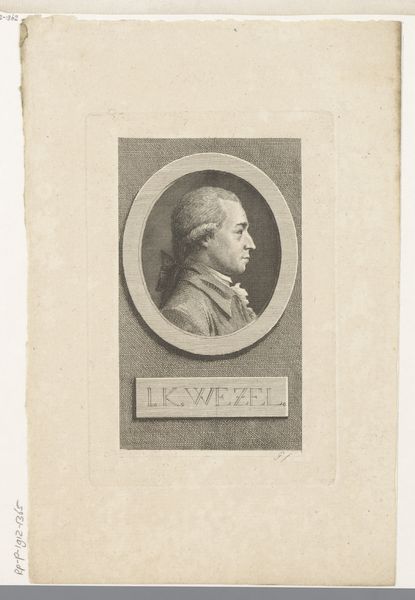
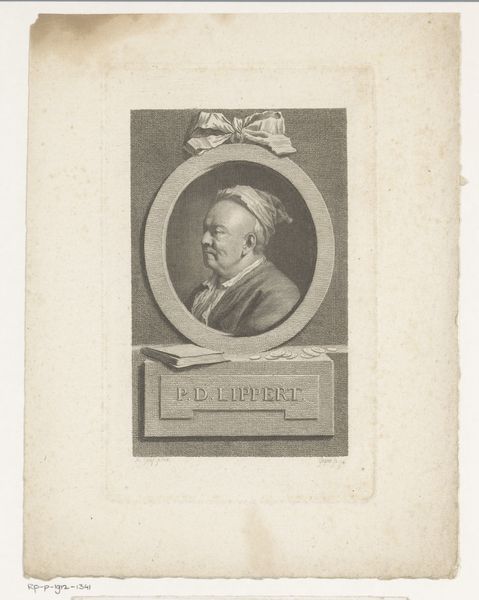
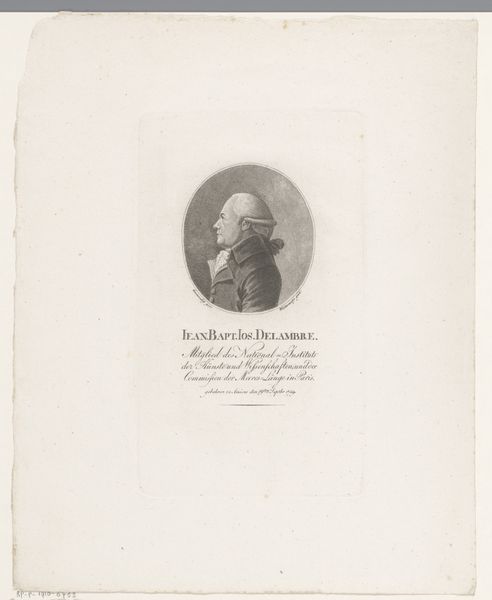
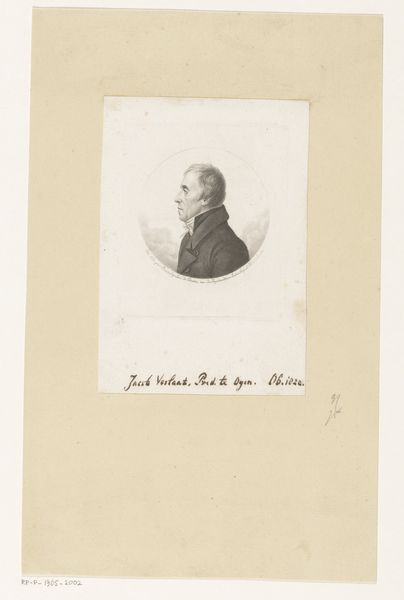
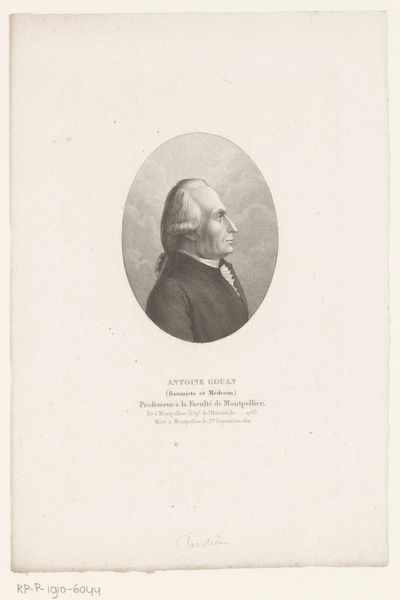
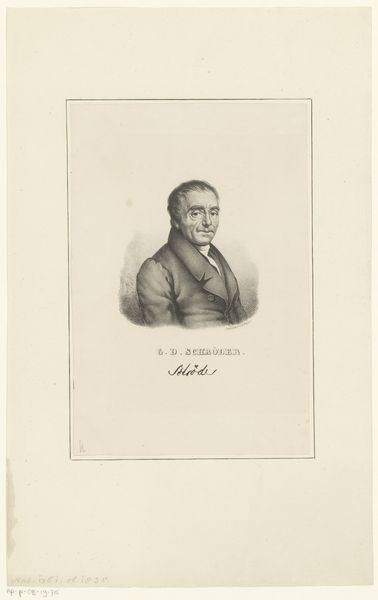
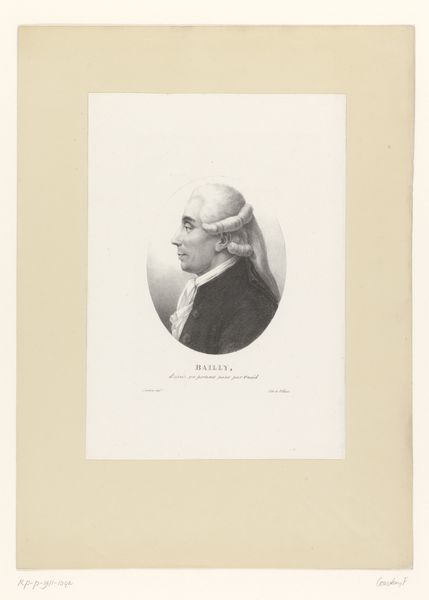
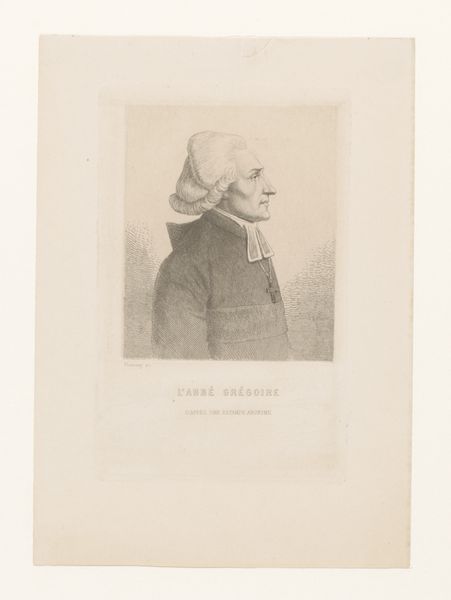
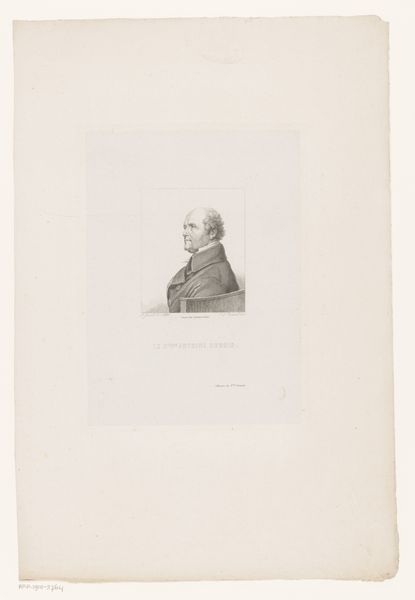
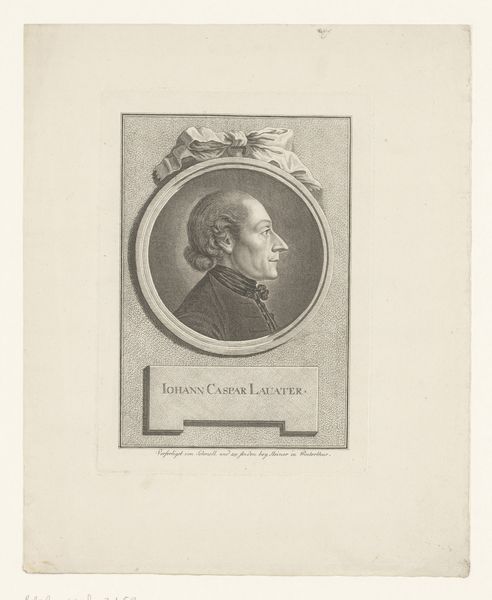
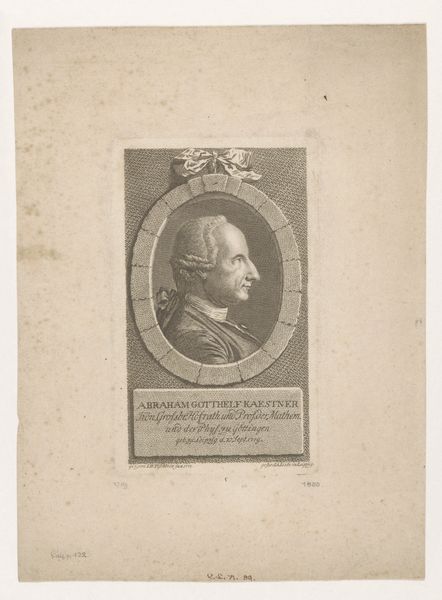
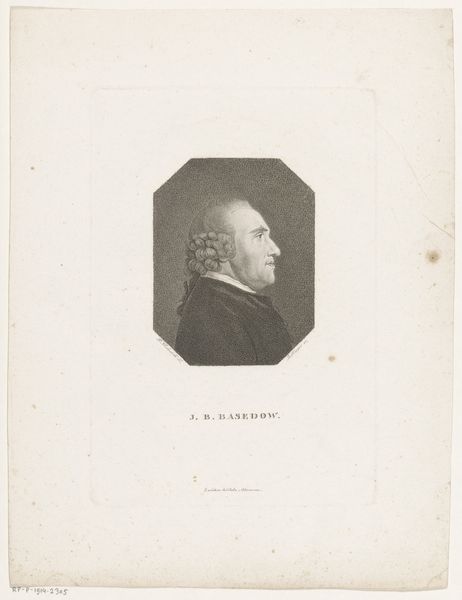
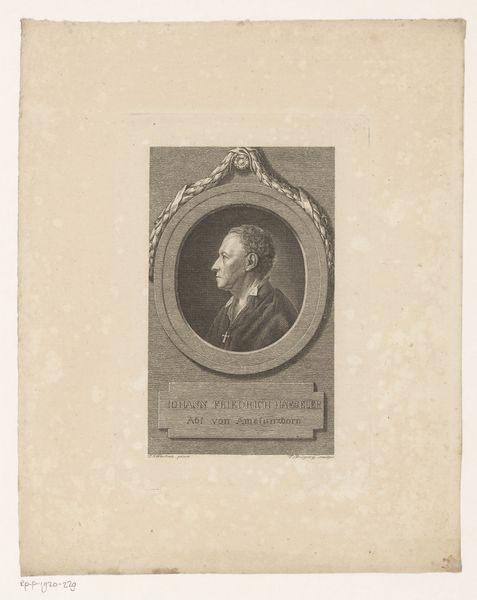
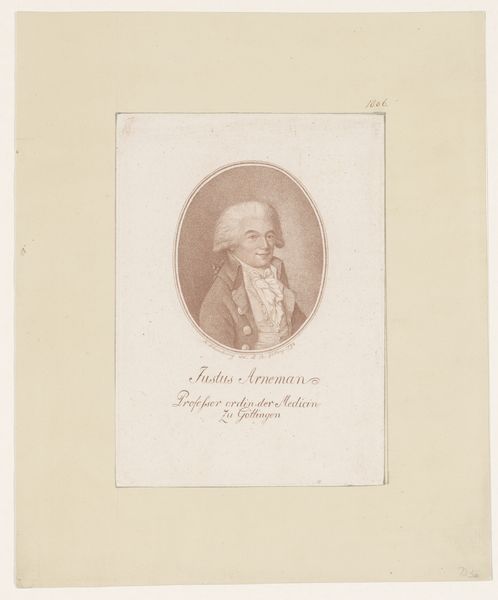
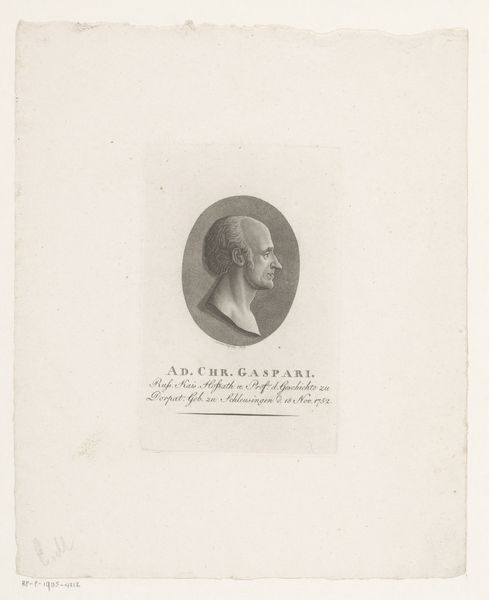
Curator: This is a print of Magnus Lehnberg, dating from around 1790 to 1862, by Johan Gustaf Ruckman. The style reminds us of Neoclassicism combined with some Realism elements, mostly because of the details. Editor: It has such a stoic feeling to it, doesn't it? The subdued grays, the tight composition of the circular frame. It feels restrained, yet powerful. Curator: Restraint is certainly part of it. The precise linework and smooth gradations of tone suggest the sitter's composed nature. See how the mountains subtly peek behind him within the frame; it suggests a backdrop while avoiding unnecessary detail. The way it’s been composed places great emphasis on capturing an individual's likeness in a rather dignified manner. Editor: The details do offer an interesting insight into this "Magnus Lehnberg.” The starched wig and elaborate medal carry weighty symbolic meanings – markers of status, achievement, and belonging, don't you think? I’m fascinated by how he seems detached. What about that specific detail strikes you? Curator: I’m drawn to the structural aspects: the way Ruckman uses the circle to compress and highlight the profile view and directs focus back to the figure itself, further emphasizing the neoclassical simplicity. It gives him the center space between him and the open backdrop. Editor: He looks almost imprisoned in his world, doesn’t he? That formal constraint adds a certain dramatic tension to what could otherwise be just a straightforward profile. And his glance left. This is the world before the picture was taken. What could it signify? Perhaps longing for times already gone or an anxious, fearful wait. I find it really intriguing, and slightly sad. Curator: But does the work communicate to us that? This form of image doesn’t usually ask the viewer to interpret such meanings. Editor: That’s interesting though, right? To acknowledge a history while appreciating artistic vision without a fixed context in mind? Curator: Indeed. This piece can function as a means for contemplating our modern assumptions, or preconceived notions, when looking at historical material. Editor: Absolutely. It all feels both revealing and concealing, doesn't it?
Comments
No comments
Be the first to comment and join the conversation on the ultimate creative platform.
 React
React Comment