About this artwork
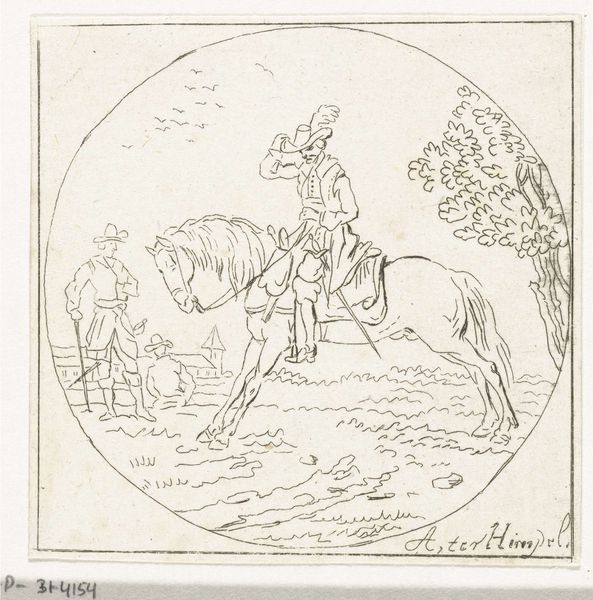
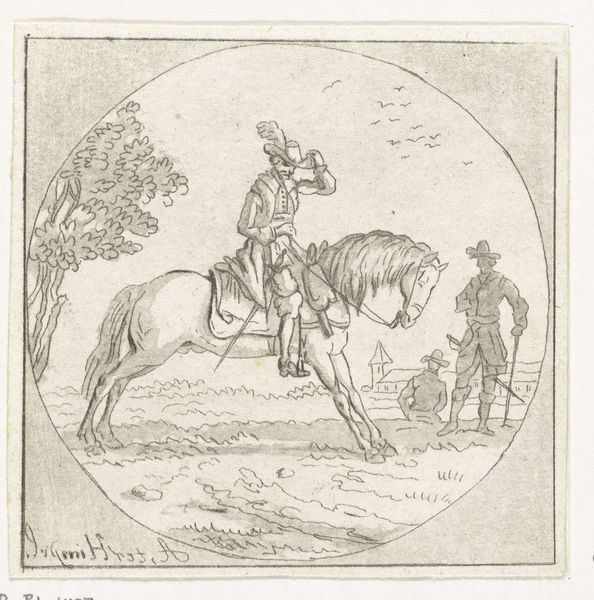
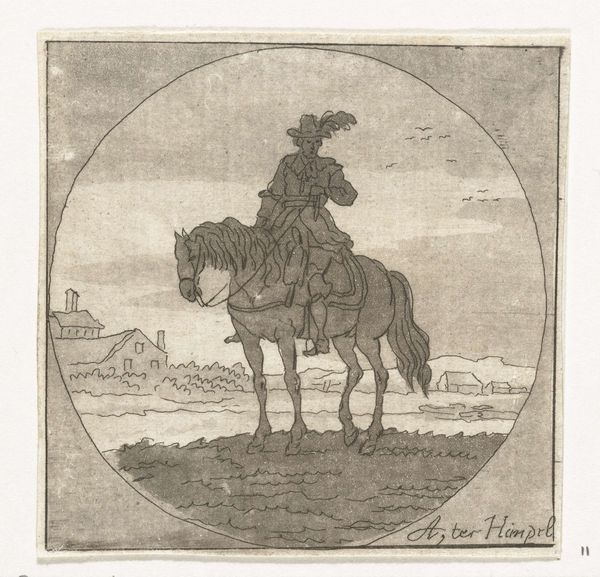
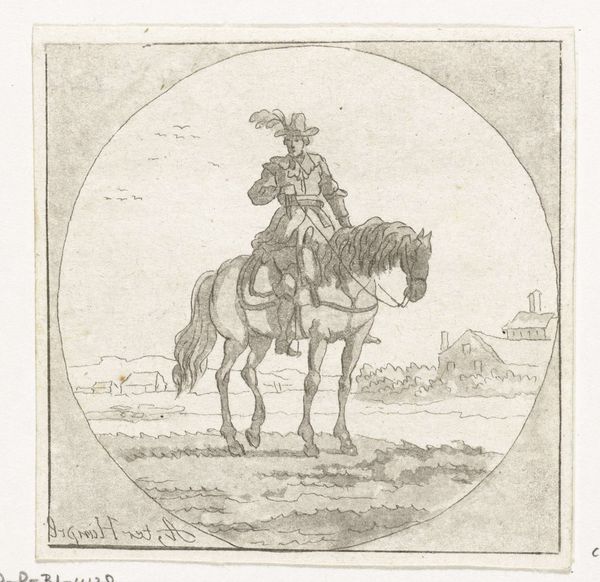
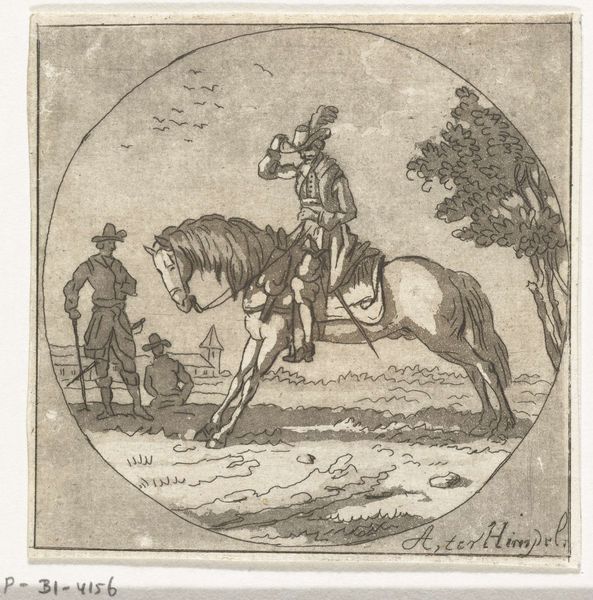
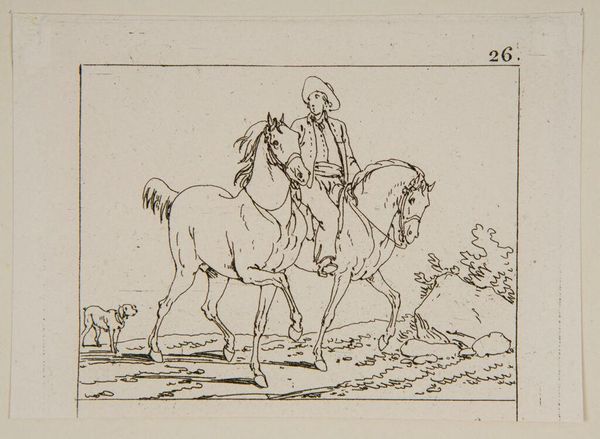
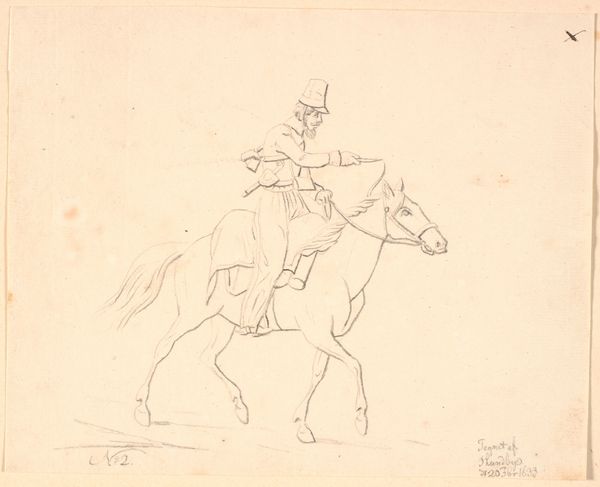
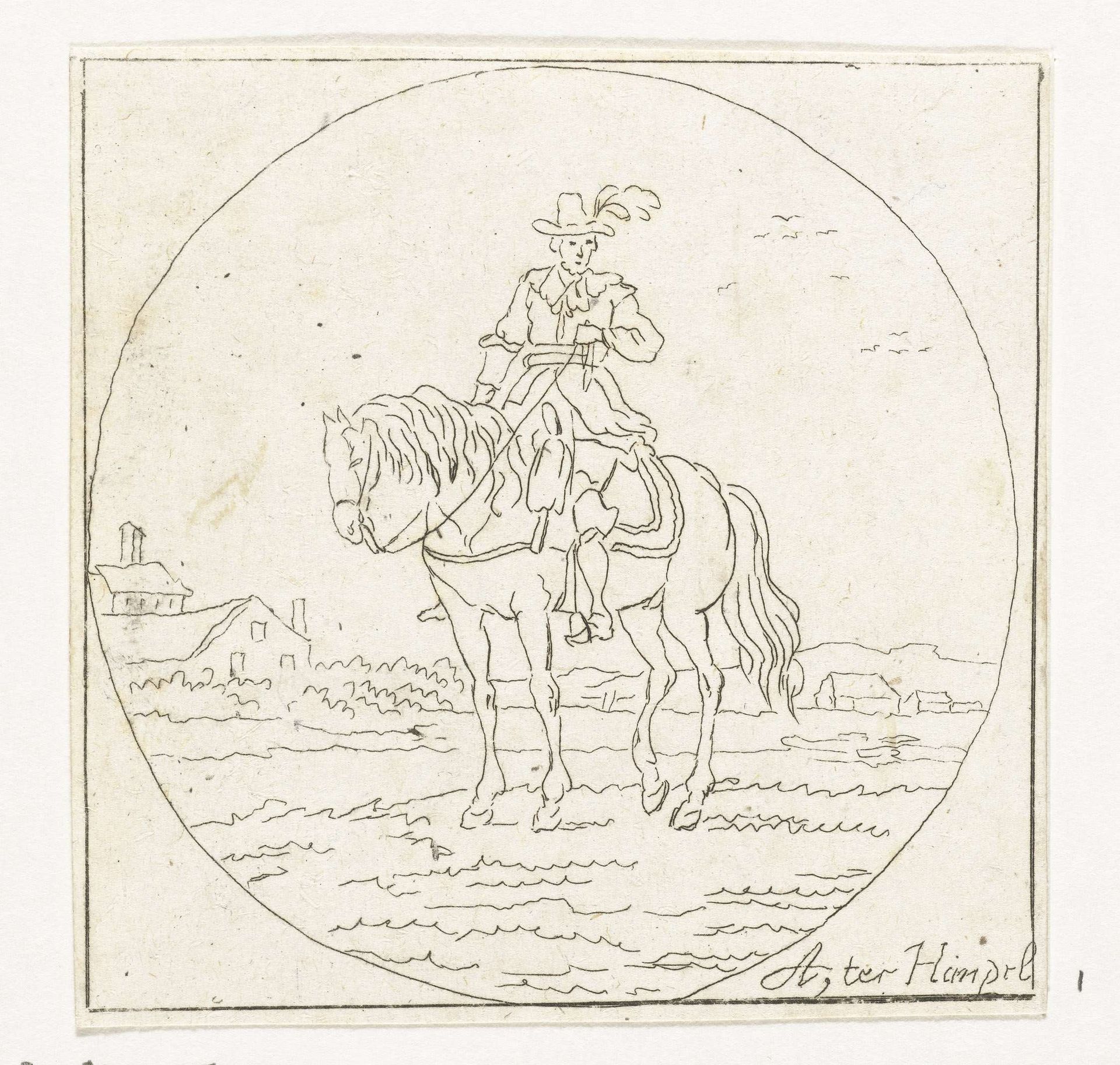
Anthonie van den Bos made this small drawing of a rider on a horse sometime between the late 18th and early 19th century. The artist uses a delicate hand to depict the rider and his steed within a circular medallion. It was made during a time when Dutch society was undergoing significant change. The old Dutch Republic had crumbled at the end of the 18th century, and the Batavian Republic was established under French influence. The artist likely drew this image for a well-to-do member of Dutch society. Depictions of men on horseback are common in art history, and are usually meant to symbolize power, nobility, and wealth. The Dutch Republic’s wealth was in decline at this time; perhaps this image alludes to a longed-for past? Historical research into the artist's life, as well as the social and economic conditions of the time, can shed more light on the significance of this small but intriguing drawing.
Ruiter op staand paard in medaillon 1778 - 1838

Anthonie van den Bos
1763 - 1838Location
RijksmuseumArtwork details
- Medium
- drawing, ink, pencil
- Dimensions
- height 75 mm, width 75 mm
- Location
- Rijksmuseum
- Copyright
- Rijks Museum: Open Domain
Tags
portrait
drawing
comic strip sketch
quirky illustration
pen illustration
landscape
cartoon sketch
figuration
personal sketchbook
ink
sketchwork
ink drawing experimentation
pencil
sketchbook drawing
storyboard and sketchbook work
academic-art
sketchbook art
Comments
No comments
About this artwork
Anthonie van den Bos made this small drawing of a rider on a horse sometime between the late 18th and early 19th century. The artist uses a delicate hand to depict the rider and his steed within a circular medallion. It was made during a time when Dutch society was undergoing significant change. The old Dutch Republic had crumbled at the end of the 18th century, and the Batavian Republic was established under French influence. The artist likely drew this image for a well-to-do member of Dutch society. Depictions of men on horseback are common in art history, and are usually meant to symbolize power, nobility, and wealth. The Dutch Republic’s wealth was in decline at this time; perhaps this image alludes to a longed-for past? Historical research into the artist's life, as well as the social and economic conditions of the time, can shed more light on the significance of this small but intriguing drawing.
Comments
No comments