About this artwork
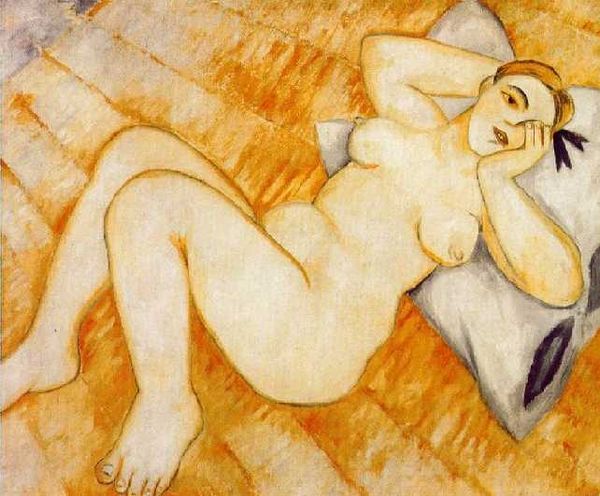
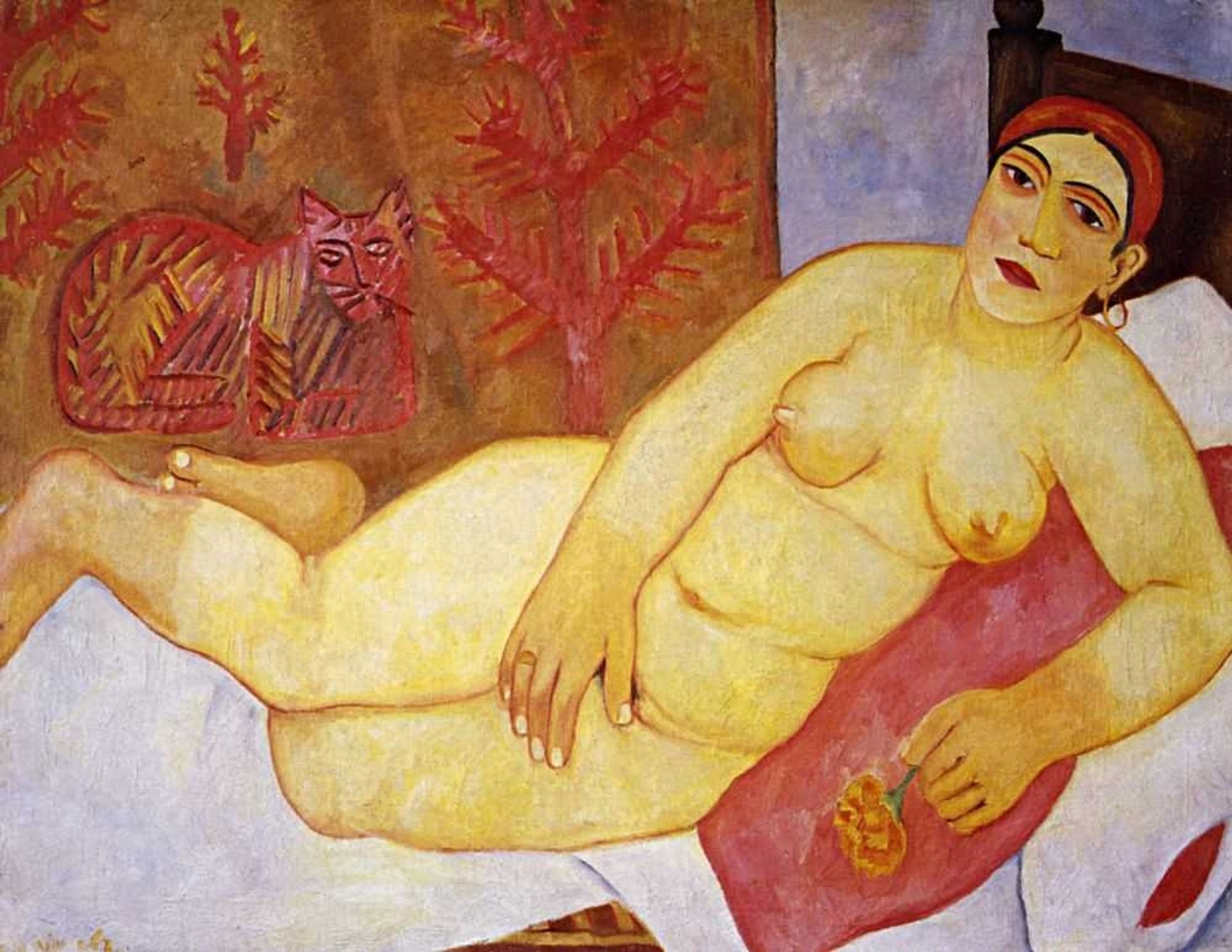
Editor: This is Mikhail Larionov's "Russian Venus" from 1912, rendered in oil paint. The color palette is very warm, and the figure has a certain...starkness to it that's pretty arresting. There's also an interesting symbolic connection happening, or maybe I'm imagining things? How do you interpret this work? Curator: I see a fascinating confluence of cultural memory and modernist experimentation. Consider the Venus archetype itself: a symbol of beauty and fertility stretching back to antiquity, reinvented countless times. Larionov places her in a distinctly Russian context. Note the patterned backdrop; reminiscent of folk art and domestic textiles, it roots the classical nude within a specific cultural identity. Editor: Yes! I see it too; is the cat meant to symbolize something? Curator: Indeed. The cat, a common motif in domestic scenes, often symbolizes independence and even a touch of the untamed feminine. It could represent an aspect of Venus herself, a goddess not just of beauty but also of fierce self-possession. Editor: It's amazing how such distinct symbols coexist! The longer I look at her, the more self-assured she appears. Curator: Precisely! And consider Rayonism, the art movement Larionov founded; he attempts to depict the rays of light. It's less about mimetic representation and more about conveying sensations. Editor: The interplay of symbolic language and avant-garde technique seems to suggest more than initially meets the eye. Thank you! Curator: My pleasure; exploring the intersection of tradition and innovation reveals so much about how cultures evolve and adapt symbols to reflect new realities.

Artwork details
- Medium
- oil-paint
- Copyright
- Public domain US
Tags
portrait
oil-paint
rayonism
figuration
oil painting
intimism
mythology
russian-avant-garde
nude
portrait art
Comments
No comments
About this artwork
Editor: This is Mikhail Larionov's "Russian Venus" from 1912, rendered in oil paint. The color palette is very warm, and the figure has a certain...starkness to it that's pretty arresting. There's also an interesting symbolic connection happening, or maybe I'm imagining things? How do you interpret this work? Curator: I see a fascinating confluence of cultural memory and modernist experimentation. Consider the Venus archetype itself: a symbol of beauty and fertility stretching back to antiquity, reinvented countless times. Larionov places her in a distinctly Russian context. Note the patterned backdrop; reminiscent of folk art and domestic textiles, it roots the classical nude within a specific cultural identity. Editor: Yes! I see it too; is the cat meant to symbolize something? Curator: Indeed. The cat, a common motif in domestic scenes, often symbolizes independence and even a touch of the untamed feminine. It could represent an aspect of Venus herself, a goddess not just of beauty but also of fierce self-possession. Editor: It's amazing how such distinct symbols coexist! The longer I look at her, the more self-assured she appears. Curator: Precisely! And consider Rayonism, the art movement Larionov founded; he attempts to depict the rays of light. It's less about mimetic representation and more about conveying sensations. Editor: The interplay of symbolic language and avant-garde technique seems to suggest more than initially meets the eye. Thank you! Curator: My pleasure; exploring the intersection of tradition and innovation reveals so much about how cultures evolve and adapt symbols to reflect new realities.
Comments
No comments