
Curatorial notes
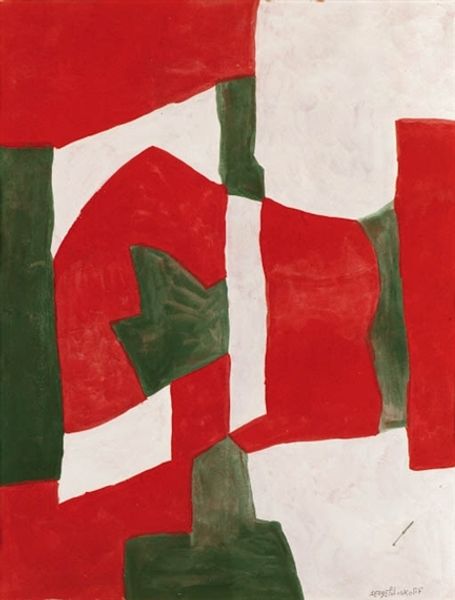
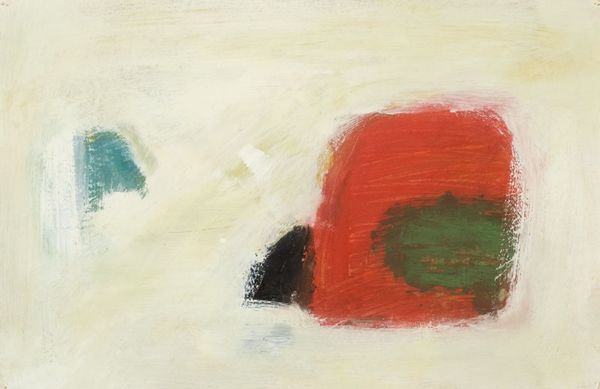
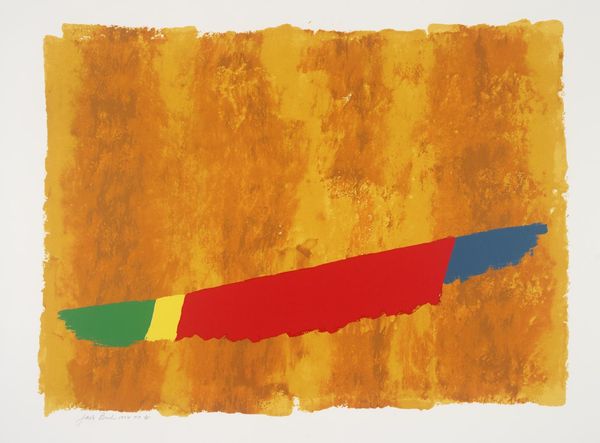
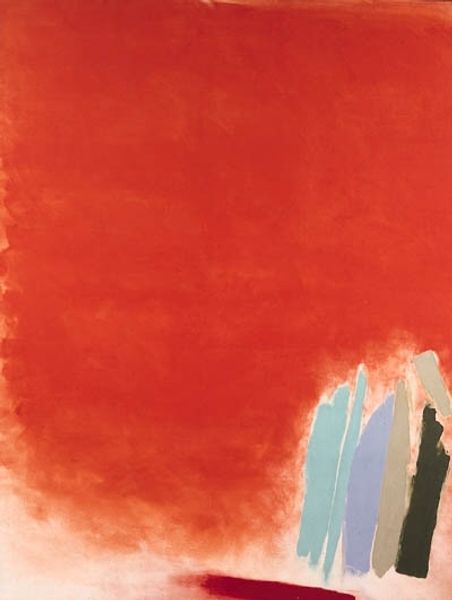
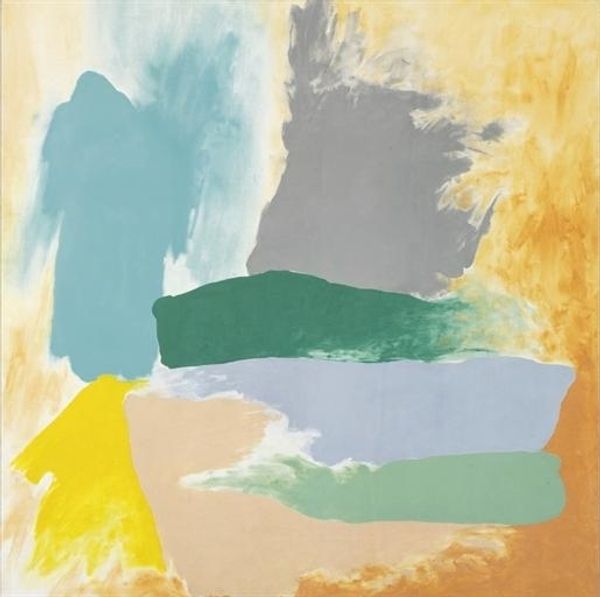
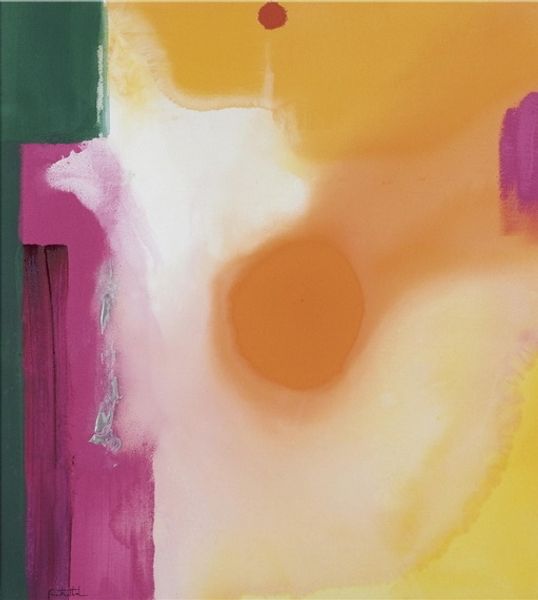
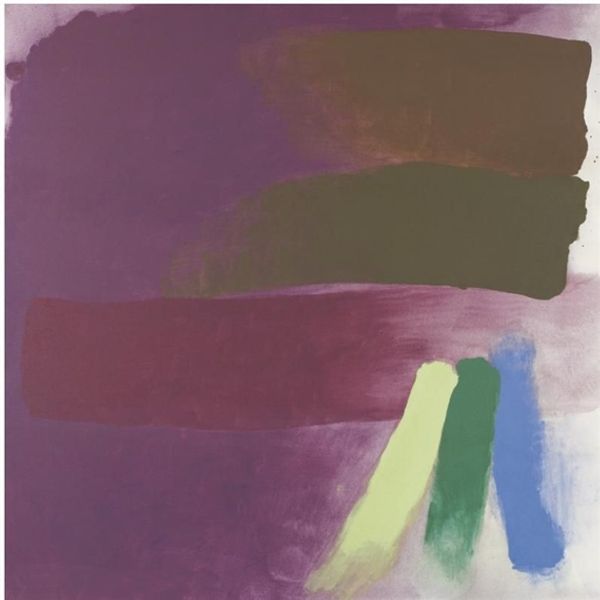
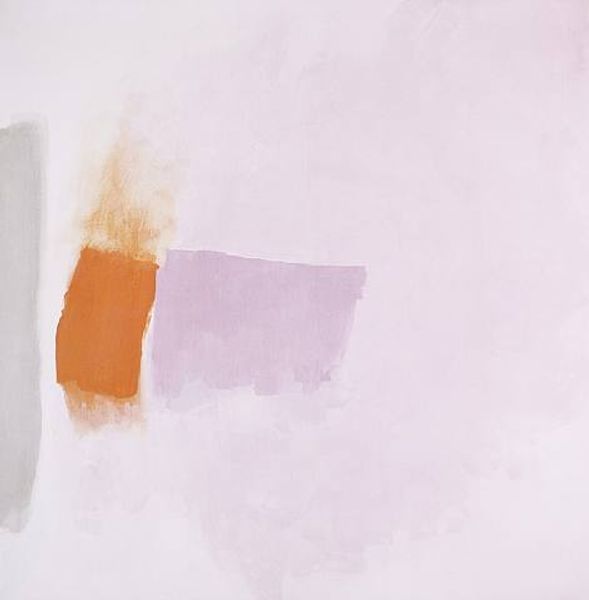
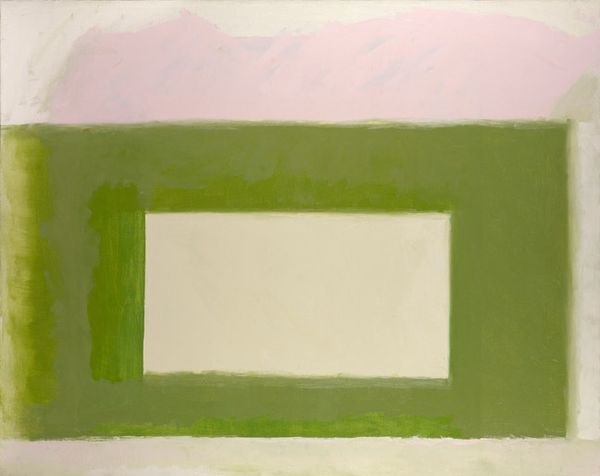
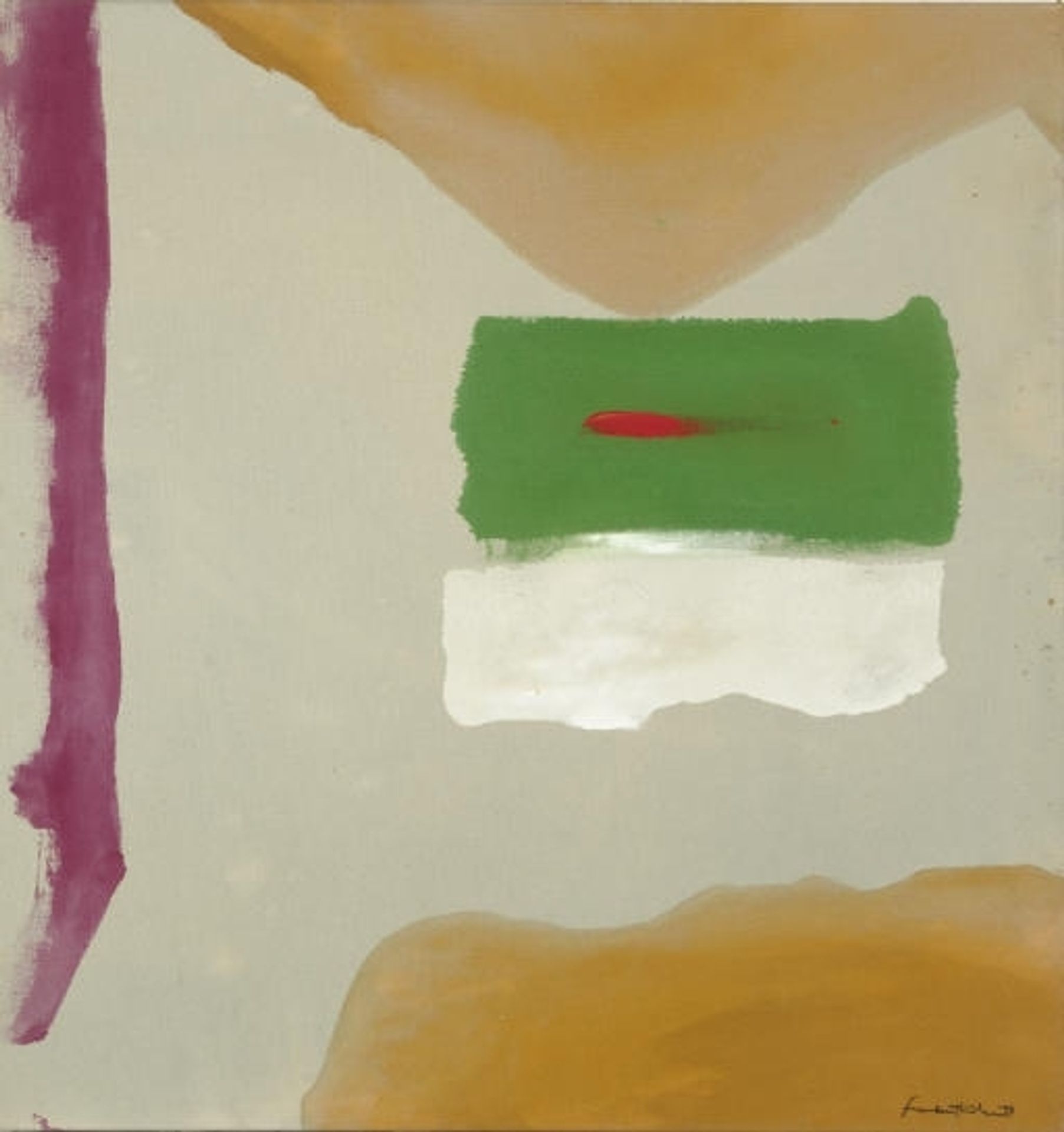
Editor: This is an untitled painting by Helen Frankenthaler, made with acrylic paint. I find the blocks of color so serene, but also a bit unsettling because they don’t seem to interact in any obvious way. What's your take on it? Curator: The apparent disconnect is key, I think. Frankenthaler emerged from a generation grappling with the legacy of Abstract Expressionism. Artists were questioning the heroic narratives often attached to large-scale, gestural painting. She, and others, sought to divorce color from that weight. Do you see how she uses the “soak-stain” technique here, where thinned paint is poured onto raw canvas? Editor: Yes, you can really see how the paint has become one with the canvas in those larger shapes, it’s not just sitting on top. Curator: Exactly! It removes the sense of the artist's hand and the bravado. The work becomes about pure color relationships and spatial dynamics. It also rejects a conventional compositional hierarchy. Consider its presentation within a gallery. Editor: It’s definitely a shift from, say, a Pollock, where you can almost feel the artist’s energy radiating from the canvas. It feels so…contained by comparison. So, the gallery’s role becomes to prompt a more reflective response, asking us to consider color, form, and space outside traditional emotional storytelling? Curator: Precisely! Its accessibility—minimal form and inviting colors—opens a different avenue for engagement, subtly influenced by where, and for whom, it is displayed. Does that shift your perspective at all? Editor: Definitely! It reframes it. I had originally thought of it on an individual level. I didn't realize its accessibility invites us to discuss it with other people! Curator: That’s the magic, isn't it? The canvas inspires collective viewing and the artwork’s cultural significance stems from many personal interactions and social discussion.