tempera, painting
#
abstract painting
#
tempera
#
painting
#
landscape
#
possibly oil pastel
#
abstract
#
geometric
#
expressionism
#
abstraction
#
cityscape
#
watercolor
#
expressionist
Copyright: Public Domain: Artvee
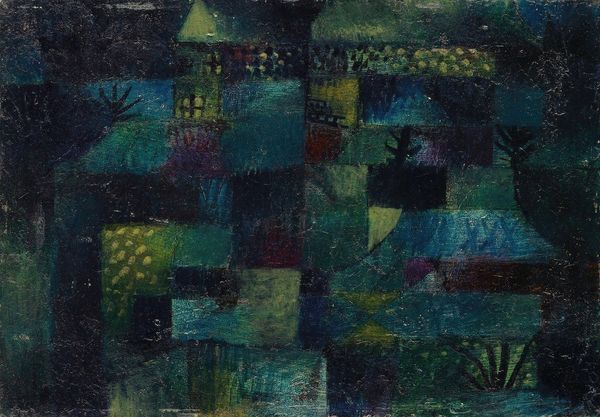
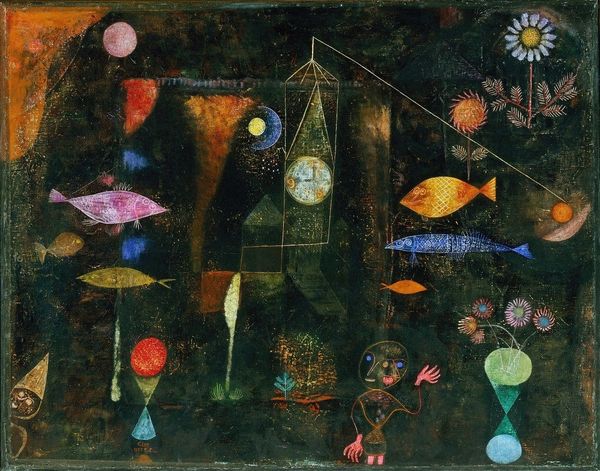
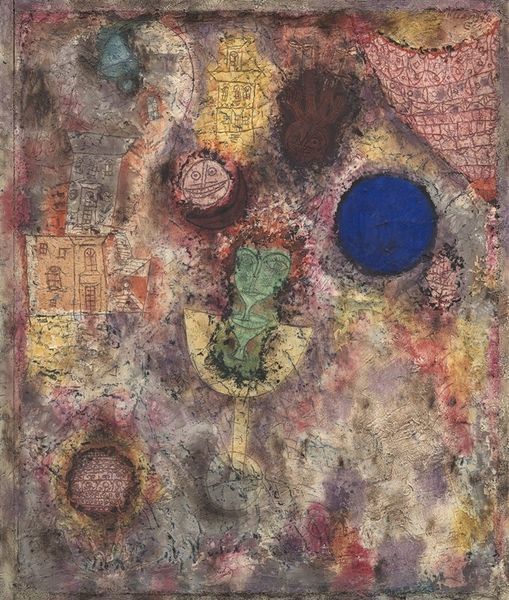
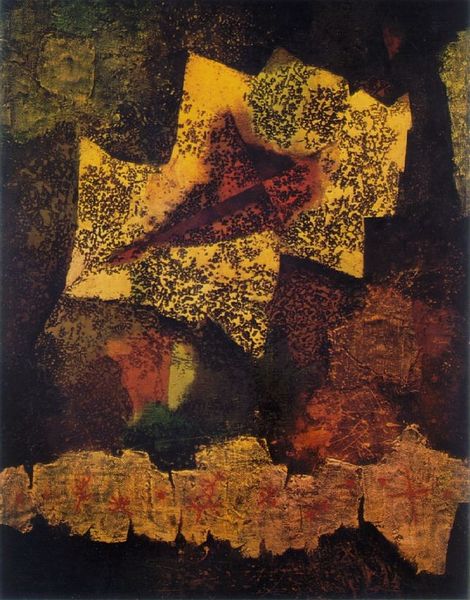
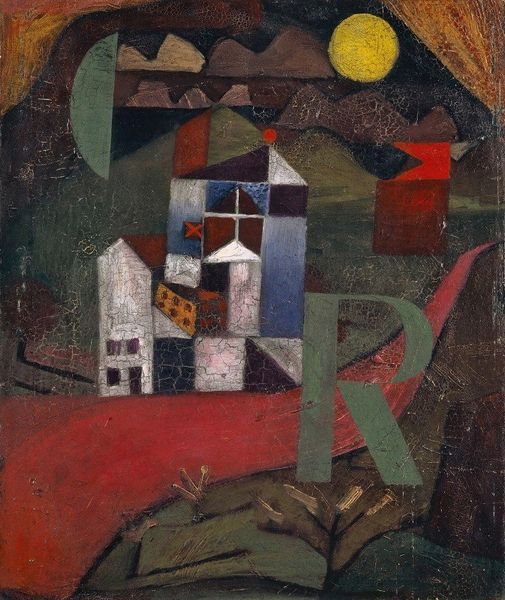
Curator: Paul Klee's "Night Feast," created in 1921 using tempera, invites us into a fantastical cityscape. Editor: My first impression is that it is dreamlike and a little unsettling, actually. There's a dense atmosphere, thick with stars and deep shadows. It feels less like a literal feast and more like a symbolic offering. Curator: Considering its historical context, Klee painted this shortly after World War I. The somewhat fractured, almost naive style can be seen as a reaction against the established order, and perhaps an attempt to rebuild a world destroyed. Editor: Absolutely. Given the sociopolitical trauma of the time, the deliberate simplicity strikes me as a move toward finding solace, even resistance. The geometric shapes read almost as coded symbols—each house or steeple bearing its own history and identity. Curator: Note how he flattens the perspective. The cityscape almost feels like a stage set, or a child's drawing. There is no illusion of depth here. This echoes Klee's interest in the art of children and the mentally ill, believing they possessed a unique kind of unmediated creativity. Editor: It challenges the traditional art canon of representation. The use of geometric shapes seems to echo similar feelings in architecture as a sense of order. Curator: This period of his work reflects his appointment as a teacher at the Bauhaus. He was experimenting with color theory and geometric forms. His works during this time were his attempts to understand and represent underlying realities. Editor: You can see in the brushwork too—thin and textured with these visible marks, giving it an intimate feel. There's a clear link with expressionism; there is something very personal happening here. I see his rejection of dominant Western artistic ideals as pushing the door open for further artistic emancipation. It makes the personal and political all part of one artistic piece. Curator: Looking at "Night Feast", we have examined Klee's interest in simplified forms and its ties to his unique worldview, particularly considering the post-war sociopolitical climate. Editor: We’ve started to understand its quiet rebellion against traditional art, and appreciate its place within larger conversations about identity, healing, and creative resistance.
Comments
No comments
Be the first to comment and join the conversation on the ultimate creative platform.
 Collect
 React
React Comment
More like this