About this artwork
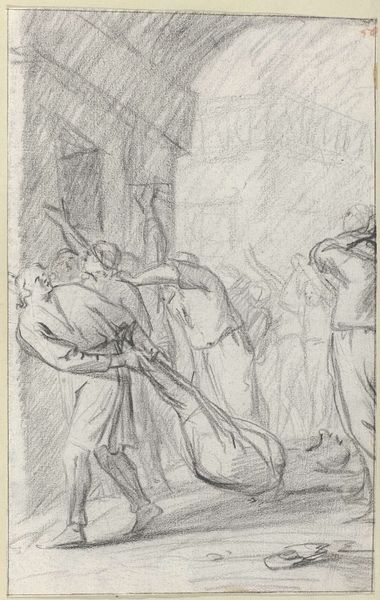
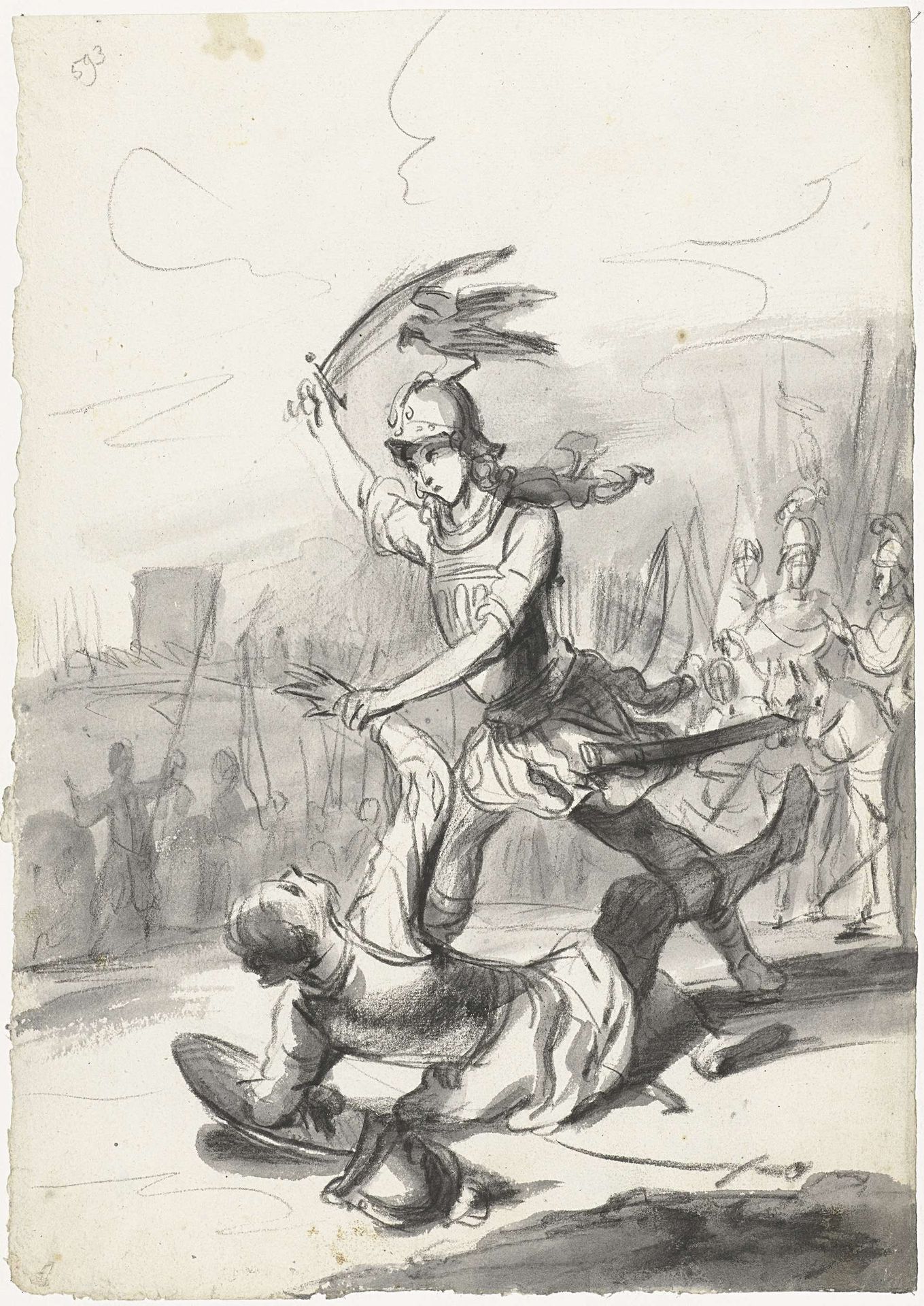
Moses ter Borch made this drawing, Marcus Valerius Corvinus defeats a Gaul, using pen in gray-brown on paper. It shows a Roman soldier towering over his Gallic opponent, ready to strike. Ter Borch likely made it around 1660 in the Netherlands, a nation-state that defined itself in opposition to foreign Catholic powers, particularly Spain. Historical subjects were popular, especially those that might glorify the nation. The Roman empire was looked to by many European states as a powerful predecessor. Dutch artists, such as Ter Borch, self-consciously adopted and revised classical precedents, particularly in their history paintings. However, we might ask to what extent artists from a small Protestant nation identified with those of a vast Empire, and how those contradictory feelings influenced the meanings of their work. To interpret images such as this, historians consult a variety of sources. For example, documents of the period, revealing the different meanings that Rome held for Dutch society.
Marcus Valerius Corvinus verslaat een Galliër
before 1667

Moses ter Borch
1645 - 1667Location
RijksmuseumArtwork details
- Medium
- drawing, pencil
- Dimensions
- height 302 mm, width 214 mm
- Location
- Rijksmuseum
- Copyright
- Rijks Museum: Open Domain
Tags
Comments
Share your thoughts
About this artwork
Moses ter Borch made this drawing, Marcus Valerius Corvinus defeats a Gaul, using pen in gray-brown on paper. It shows a Roman soldier towering over his Gallic opponent, ready to strike. Ter Borch likely made it around 1660 in the Netherlands, a nation-state that defined itself in opposition to foreign Catholic powers, particularly Spain. Historical subjects were popular, especially those that might glorify the nation. The Roman empire was looked to by many European states as a powerful predecessor. Dutch artists, such as Ter Borch, self-consciously adopted and revised classical precedents, particularly in their history paintings. However, we might ask to what extent artists from a small Protestant nation identified with those of a vast Empire, and how those contradictory feelings influenced the meanings of their work. To interpret images such as this, historians consult a variety of sources. For example, documents of the period, revealing the different meanings that Rome held for Dutch society.
Comments
Share your thoughts