1800 - 1833
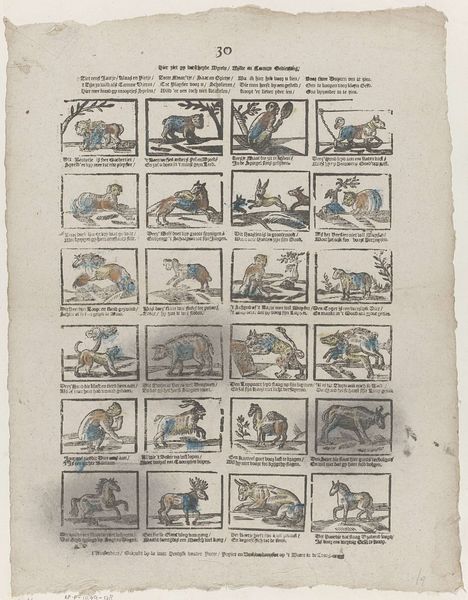
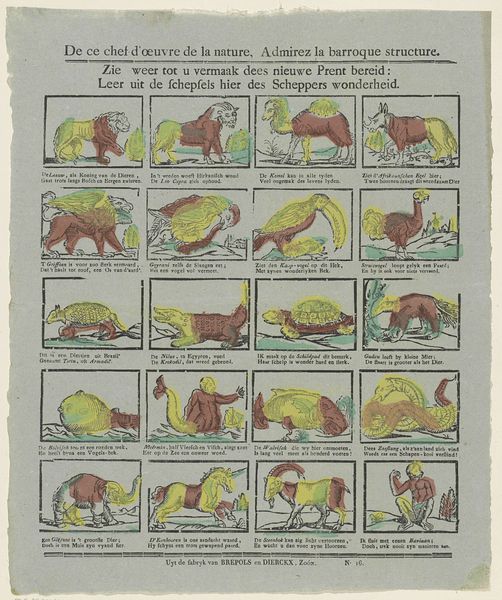
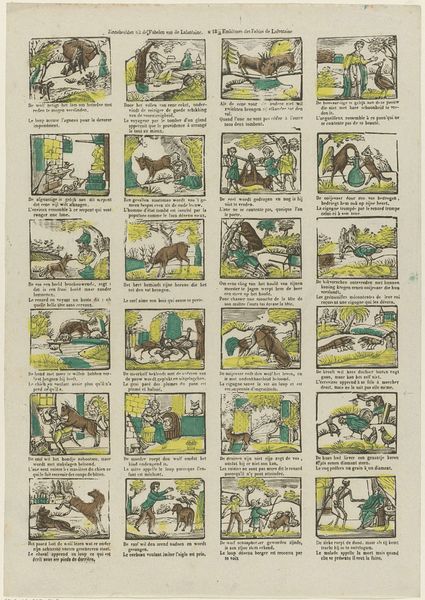
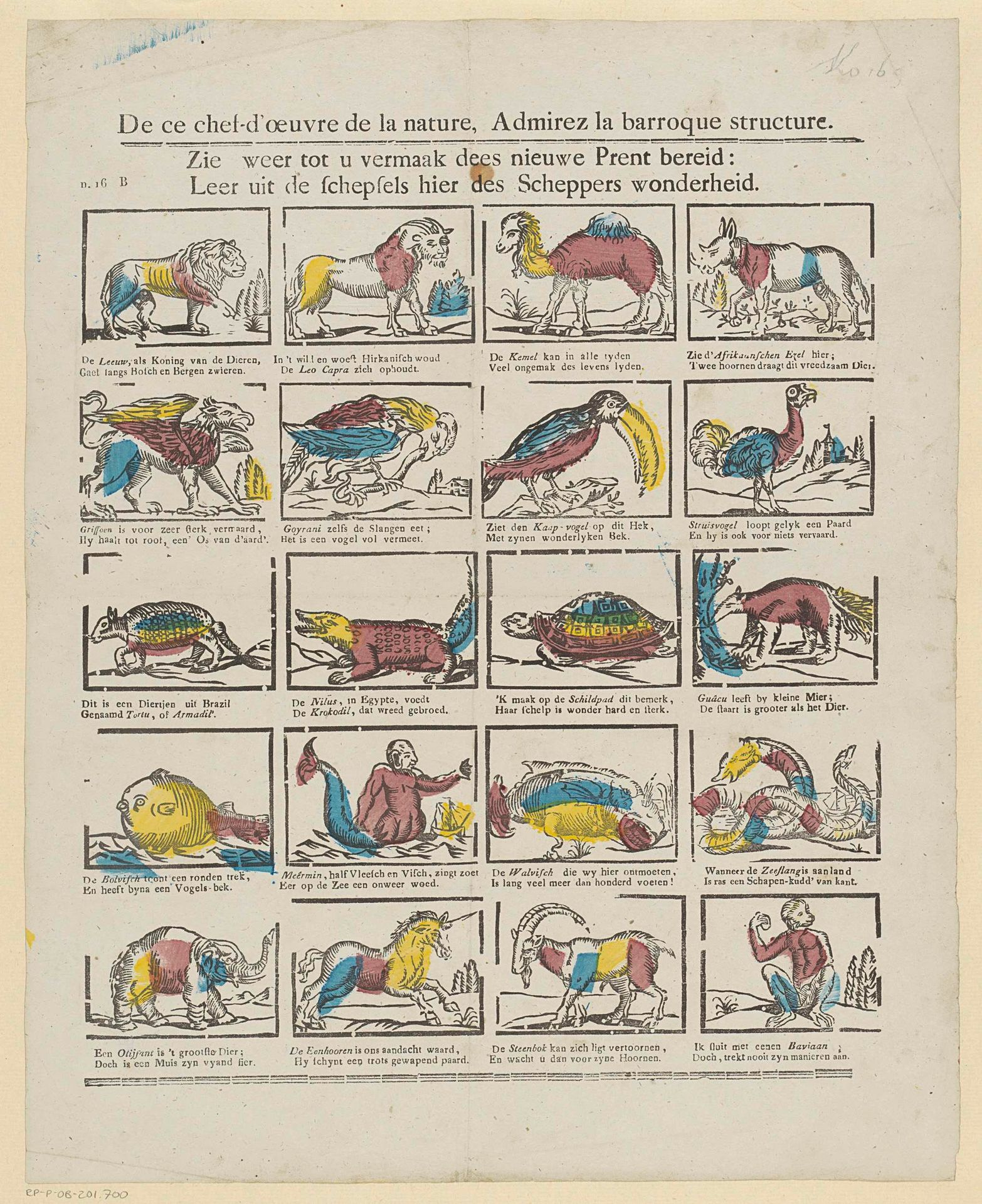
De ce chef d'oeuvre de la nature, Admirez la barroque structure / Zie weer tot u vermaak dees nieuwe prent bereid: / Leer uit de schepsels hier des scheppers wonderheid

Philippus Jacobus Brepols
1778 - 1845Location
RijksmuseumListen to curator's interpretation
Curatorial notes
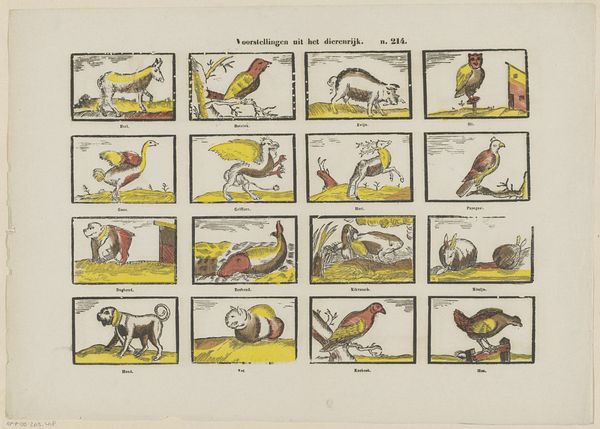
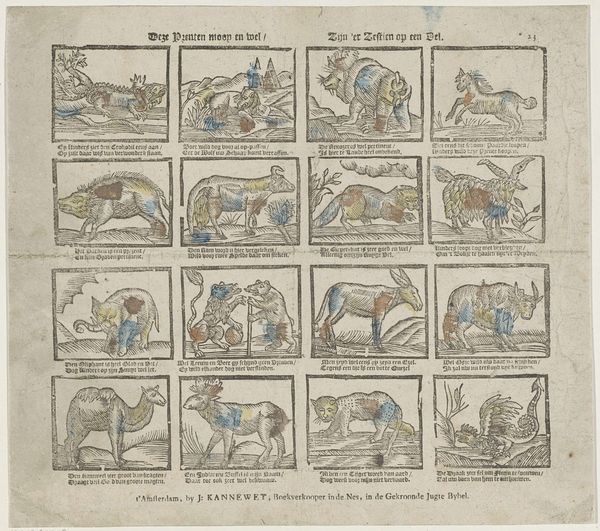
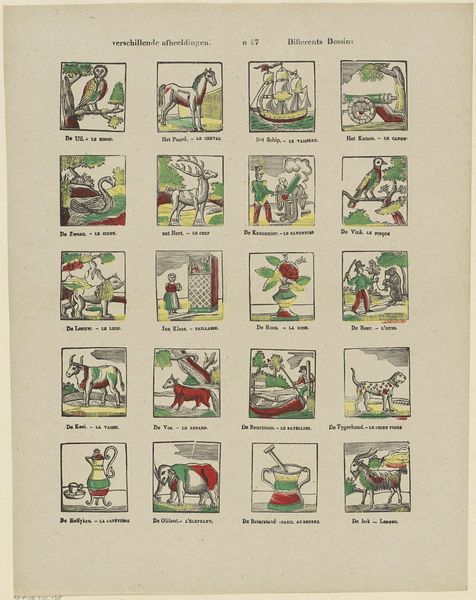
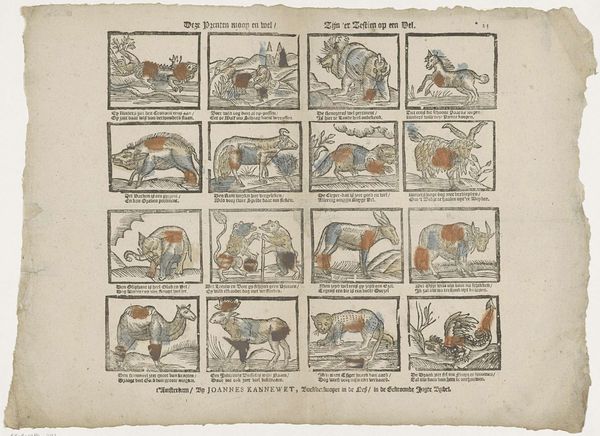
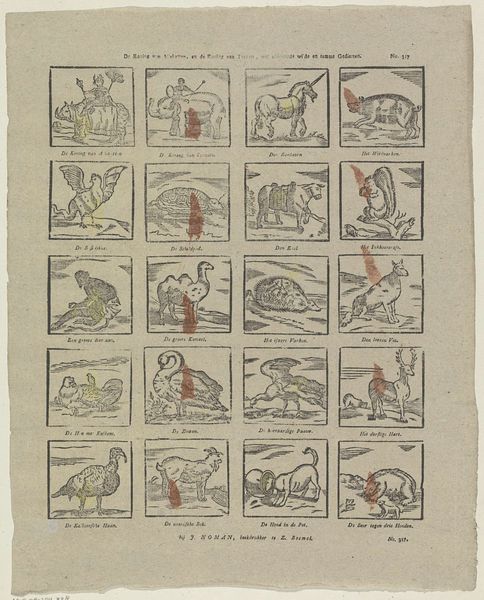
Curator: This print, "De ce chef d'oeuvre de la nature," produced sometime between 1800 and 1833, is teeming with early 19th-century perspectives on the natural world. What strikes you first? Editor: The bizarre coloring and the variety of animals arranged in a grid. It's like a sampler of sorts, but with… questionable accuracy. What do you see in this piece? Curator: It's fascinating to consider what "accuracy" meant at this time. This isn’t just about illustrating animals; it’s about power, knowledge, and the construction of a worldview. How are these animals being presented? Are they being depicted in a ‘natural’ way? Editor: No, not at all! Some look almost like mythical creatures with those color blocks. There’s this forced order imposed on a chaotic, ever-changing natural world. And the verses under each picture…they seem to assign morals? Curator: Exactly. Consider how colonial powers were cataloging and attempting to control the natural resources of colonized lands. These images, distributed as prints, contributed to a specific understanding of nature, filtered through a European lens, of course. How might the exoticized appearance of some of these creatures reinforce existing power structures? Editor: The animals are stripped of their true forms. Each verse reinforces a clear pecking order – a lesson for the common folk? Curator: Perhaps. By imposing this structure – literally a grid, but also a social structure reflected in the descriptions – viewers were taught to see the world in a specific, controlled way. It's all incredibly didactic. This reminds us how knowledge itself can be a tool. Editor: That gives me a totally new perspective. I initially saw a weirdly colored animal print; now, I see a subtle reinforcement of social norms. Curator: And hopefully, you recognize the necessity to view art, nature and everything in between through many lenses!