Dimensions: image: 314 x 476 mm sheet: 335 x 489 mm
Copyright: National Gallery of Art: CC0 1.0
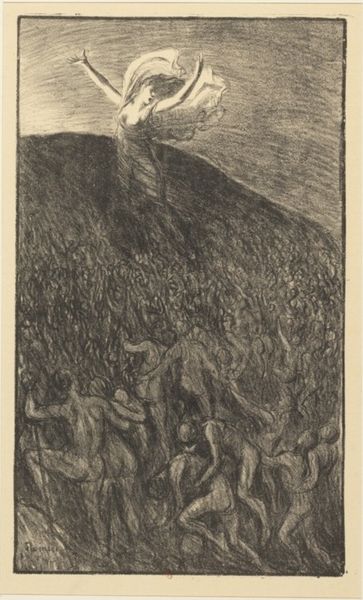
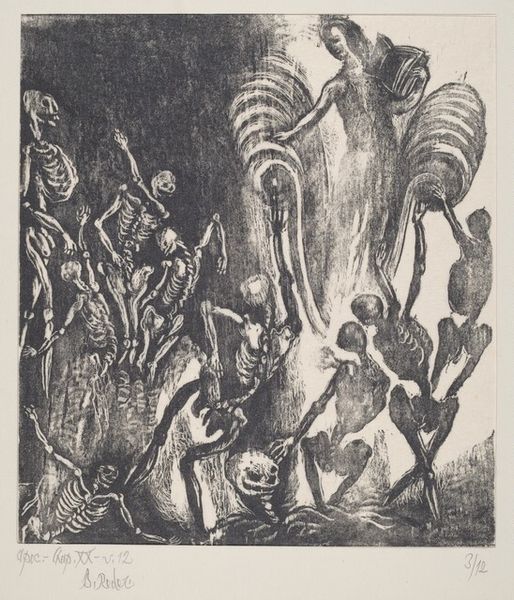
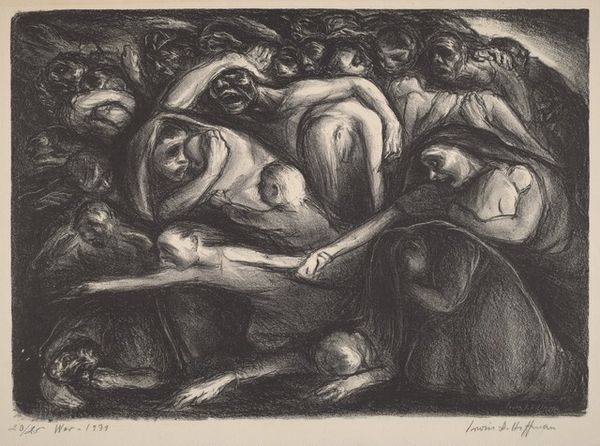
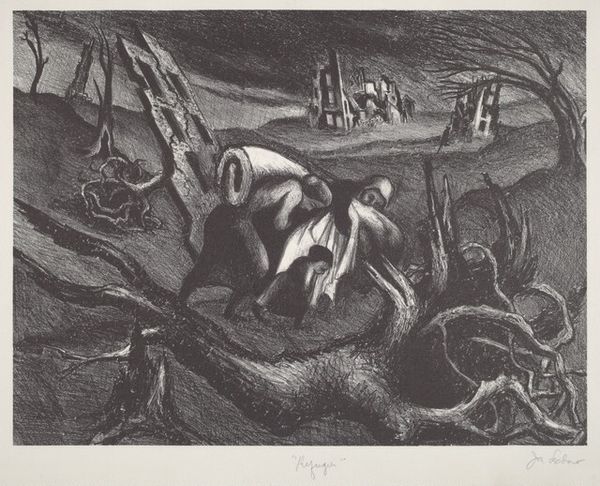
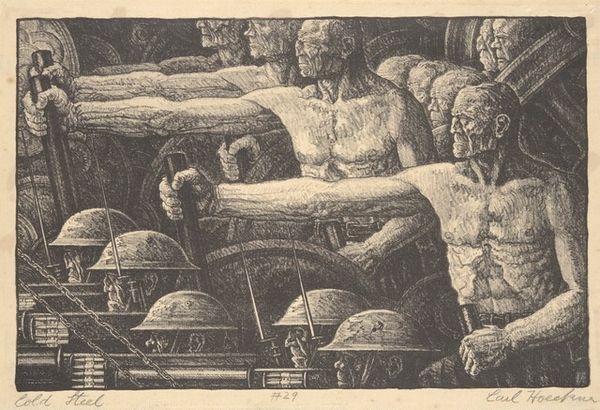
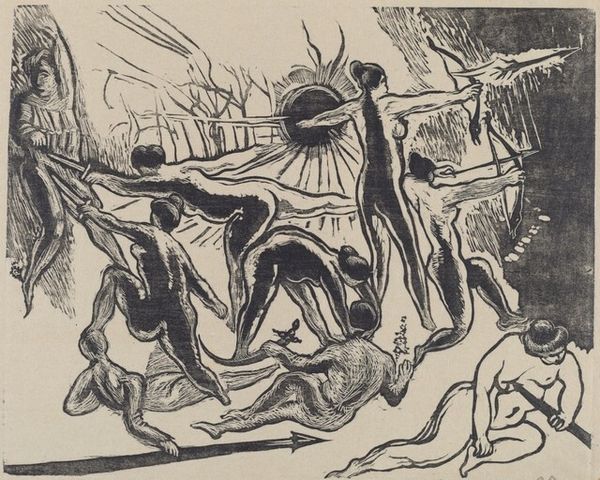
Editor: Carl Hoeckner's "The Homecoming," from 1935, is rendered with pencil, seemingly a drawing intended as a print. It’s… intensely bleak. The sheer number of figures, all emaciated, is overwhelming. What historical narratives are interwoven within this piece? Curator: Indeed. The piece presents us with the visual vocabulary of German Expressionism, a movement deeply affected by the socio-political turmoil of its time, particularly in the wake of World War I. Consider the year it was made: 1935. What sociopolitical climate does that evoke for you? Editor: The rise of Nazism in Germany… So this image wasn't created in a vacuum; it was likely made during the buildup to the Second World War? Curator: Precisely. Expressionism, which often highlights emotional distress, took on an even darker edge. Think about the imagery of a homecoming, usually joyous. Hoeckner twists that, presenting instead a skeletal parade, suggesting not triumph but perhaps the devastating human cost of conflict and perhaps, an indictment of a society marching towards its own doom. Consider who would even showcase such a piece? What kind of collector or institution? Editor: A very brave one. I mean, the political subtext feels impossible to ignore. It seems like an indictment of the militarism that was engulfing Europe at the time. What a powerful message to send in 1935 through what otherwise appears like a religious or biblical "homecoming". It seems sacrilegious and heretical! Curator: And that subversive element is what makes it so compelling. It makes us question the nature of societal "returns" to normalcy. This isn't just a technical drawing; it’s a socially potent statement. Editor: Absolutely. Now I understand that beyond a visually powerful scene, "The Homecoming" served a vital function by questioning society during one of its darkest eras. Curator: Right. And understanding art in its social, cultural and institutional setting is key. I hope we all are compelled to further explore our understanding about these figures and reflect upon their relevance today.
Comments
No comments
Be the first to comment and join the conversation on the ultimate creative platform.
 Collect
 React
React Comment
More like this