

1832
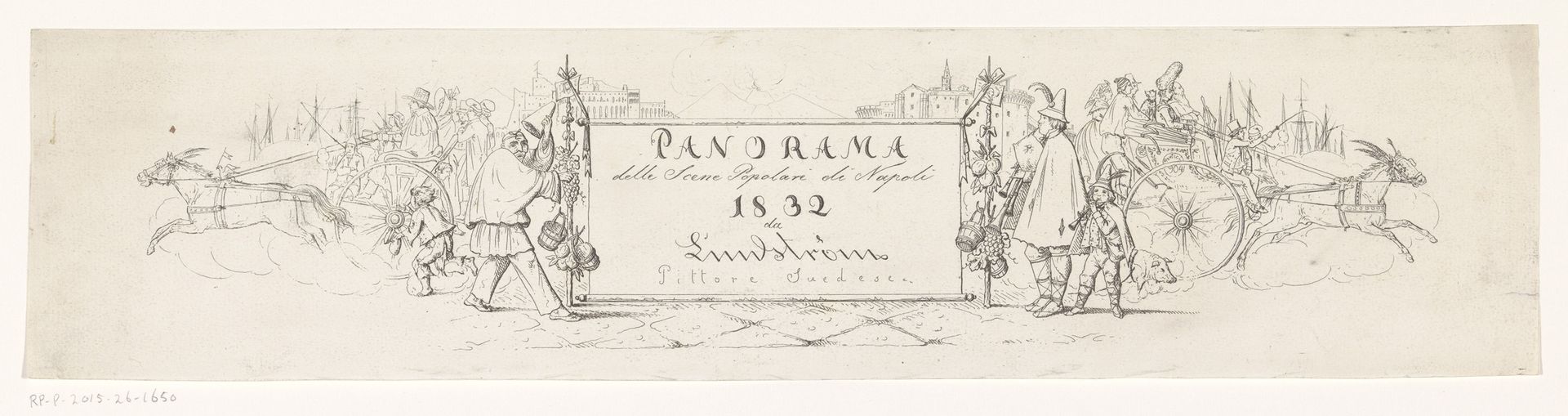
Spandoek met figuren en rijtuigen

Listen to curator's interpretation
Curatorial notes
Curator: This drawing, elegantly composed with pen and ink, is entitled "Spandoek met figuren en rijtuigen," created by Karl Johan Lindström in 1832. It translates to "Banner with figures and carriages". Editor: There's a whimsical quality to it. The lightness of the line work gives it an ephemeral feeling, like a fleeting memory captured. The carriages feel like they're floating on clouds. Curator: That’s interesting you mention clouds! It reminds me of theatre backdrops and allegorical processions – of triumphs and processions in the old world, both a symbol of power and pageantry. What do you make of the figures accompanying the central panel? Editor: Well, in this historical period, many groups felt deeply underrepresented. This work reminds me of the way the burgeoning middle class started appropriating aristocratic display as a means of signalling status. Look at the confident postures – this piece captures a performative aspect of social climbing and the aspirational energy of a transforming society. Curator: Yes, the aspirational angle makes so much sense. In Lindström’s artistic language, the horse drawn carriages are a visual manifestation of social desires and movement—they are themselves powerful emblems that cut across multiple layers of society. The fact that the name is written on a flag, gives it even more of a symbolic and communicative purpose. Editor: Absolutely, this sketch also carries a certain amount of colonial baggage, as this would have been during periods of exploitation. And although Lindström might not have wanted to actively push for violence, by producing it and sharing it he helps give the feeling that the state is somehow inevitable, justified, legitimate. And it is here to stay. Curator: Perhaps! By focusing on these status symbols, the artist almost unwittingly contributes to the ongoing discussion about visibility, representation, and power, which is ever more crucial today. This innocent seeming artwork prompts vital questions about whose stories are seen and valued, even back then. Editor: Indeed. It is crucial to contextualize historical artworks like this, allowing them to serve as catalysts for reflections and renewed questions about today's inequities.