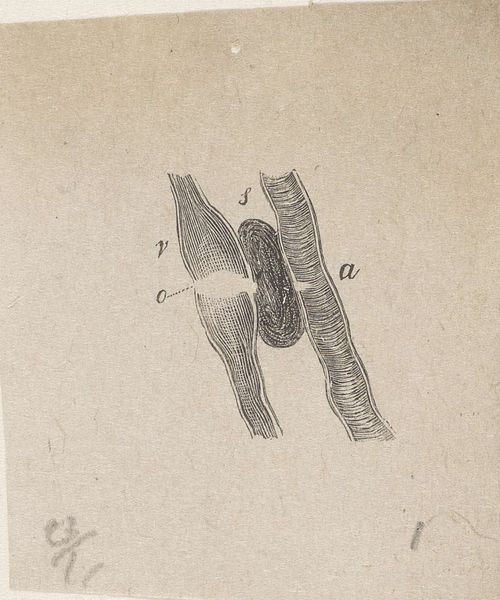
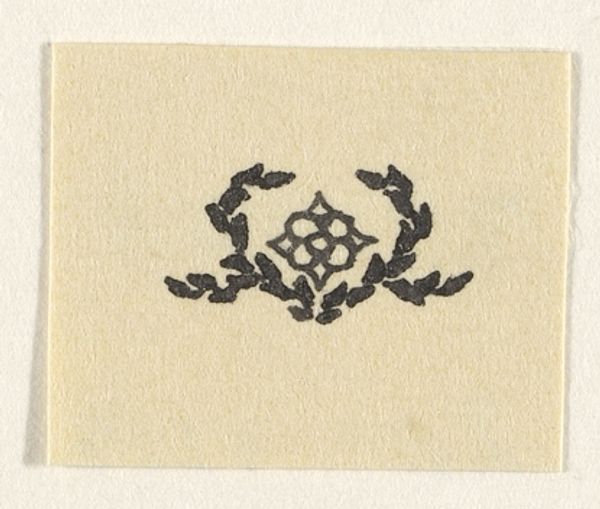
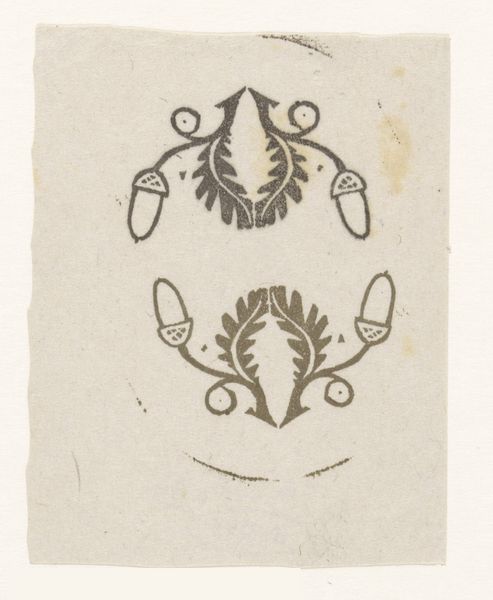
Onderdeel van het menselijk lichaam met een afwijking 1836 - 1912
0:00
0:00

isaacweissenbruch
Rijksmuseum
drawing, print, etching, graphite, engraving
#
drawing
# print
#
etching
#
form
#
line
#
graphite
#
engraving
#
realism
Dimensions: height 54 mm, width 27 mm
Copyright: Rijks Museum: Open Domain
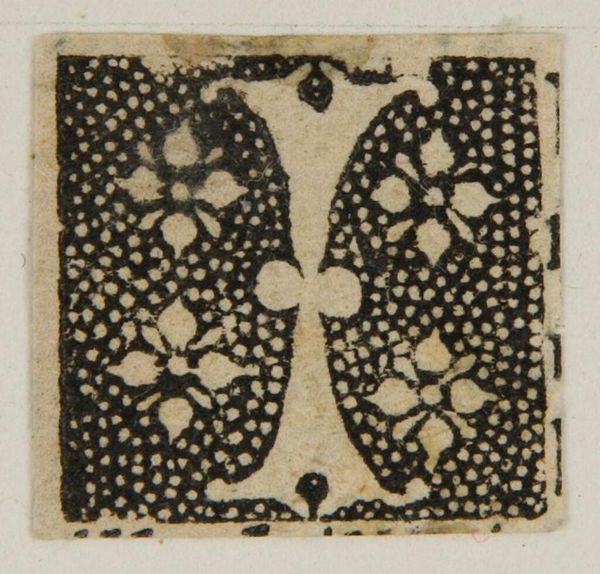
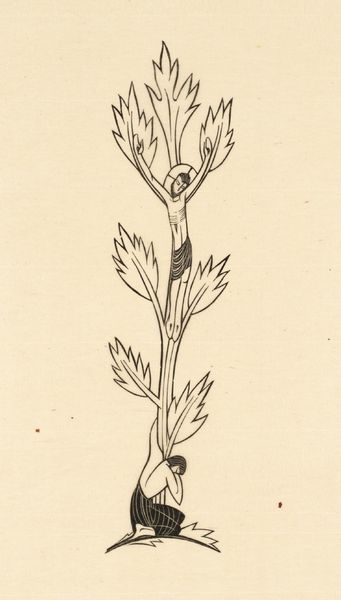
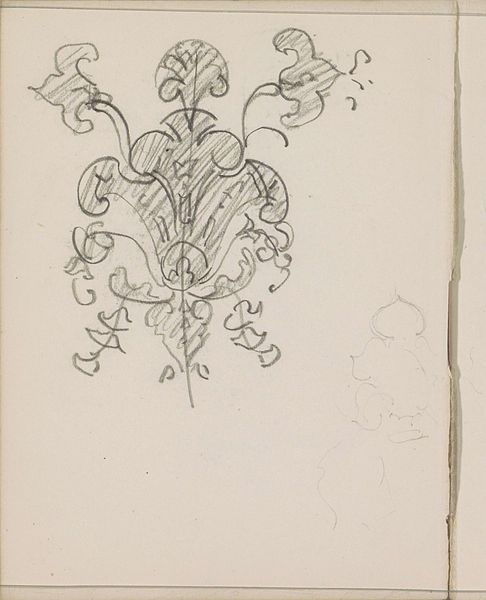
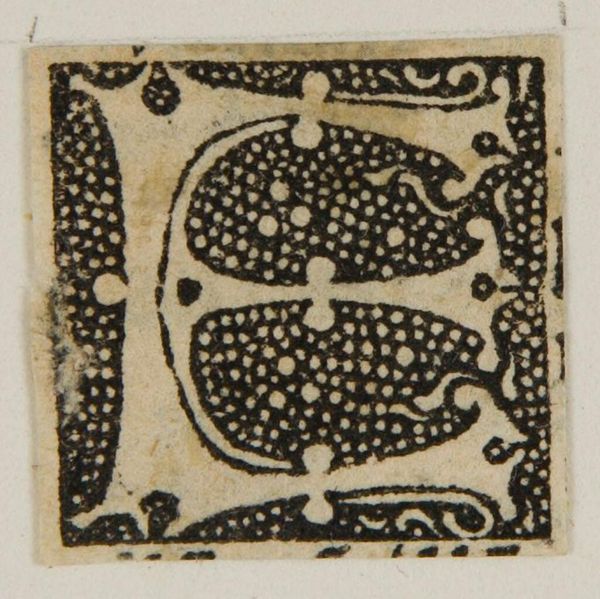
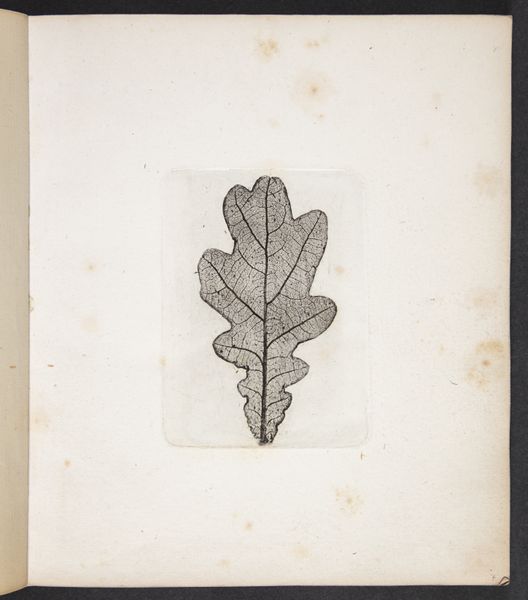
Editor: We are looking at "Onderdeel van het menselijk lichaam met een afwijking," or "Part of the Human Body with an Abnormality," made sometime between 1836 and 1912. The artist is Isaac Weissenbruch, and he used drawing, print, etching, graphite, and engraving techniques. I must say, my first impression is the delicate balance between organic form and what looks almost like geometric abstraction, and how unusual is the framing in such a long and narrow image. What do you see when you examine it? Curator: The work immediately strikes me with its exploration of form, pushing the boundaries of representational and abstract art, as well as playing with foreground and background using blank spaces and detail using graphite, print, etching, and engraving techniques, thus allowing the textures to be built one on the top of another. Note how the linear work of each process emphasizes line over tone; how does this aesthetic choice impact your interpretation? Editor: It's intriguing that you point out the absence of strong tonal contrast, especially since that would be one easy way to focus on realism. So much emphasis is on lines. I’d never considered abstraction playing out through detailed lines this way. Would you say the artist intentionally challenges our perception of realism versus abstraction? Curator: Precisely. Weissenbruch prompts us to deconstruct the essence of form through its deviation, and it is the form itself that the artist chooses to capture. Notice the subject seems more about form than the narrative; the print style itself communicates information regarding form. I would invite any art-lover to consider where realism meets form and line to redefine beauty and form. Editor: Thank you, by highlighting Weissenbruch's formal choices, you've given me a new framework for appreciating not only this specific work, but more broadly other works in this collection too! Curator: My pleasure. Understanding artistic intention via visual components encourages viewers to appreciate their work from their unique perspectives, enhancing our overall knowledge of art.
Comments
No comments
Be the first to comment and join the conversation on the ultimate creative platform.
 Collect
 React
React Comment
More like this