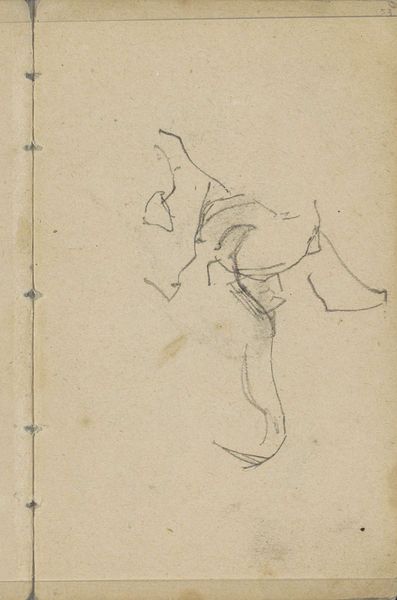
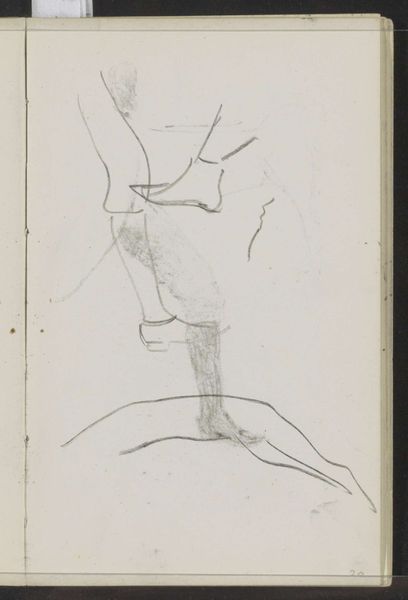
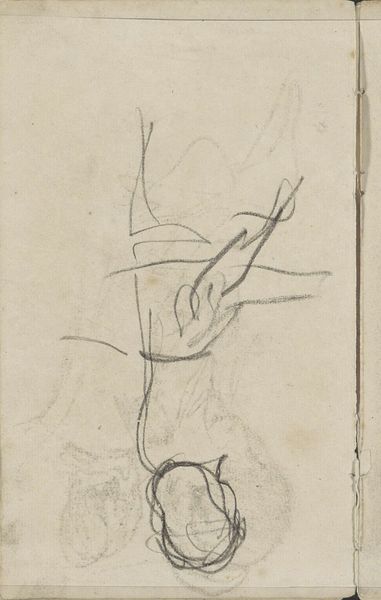
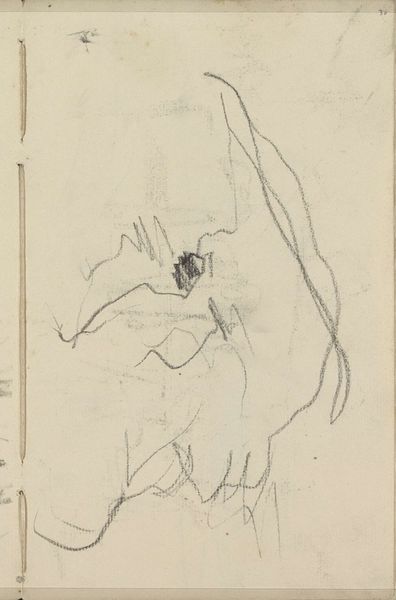
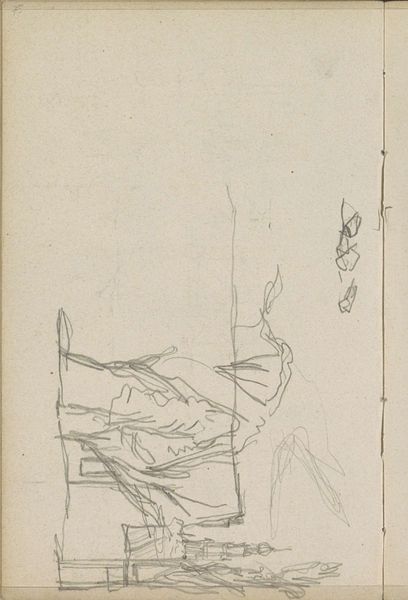
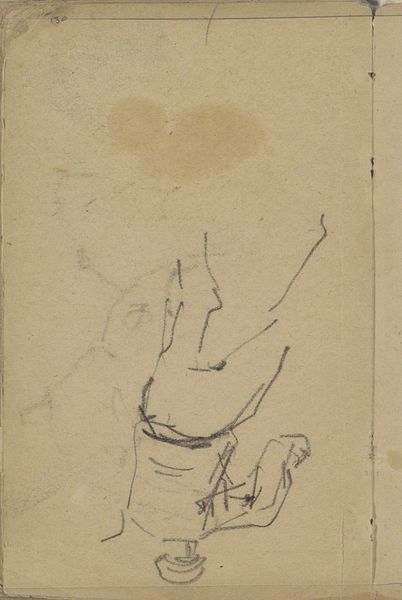
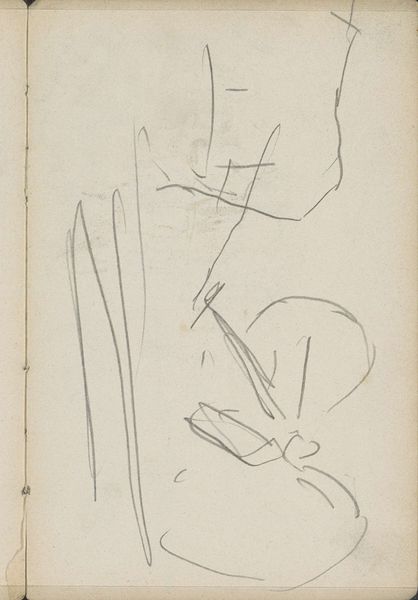
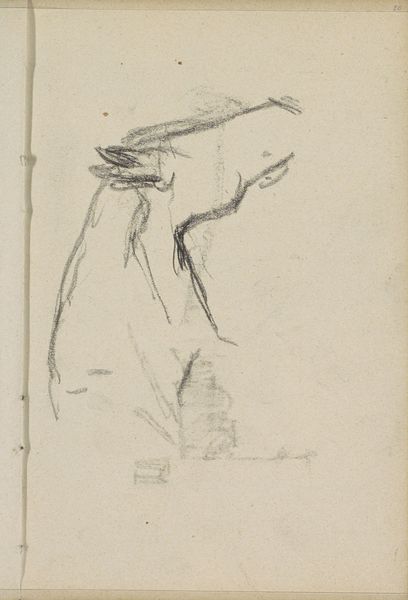
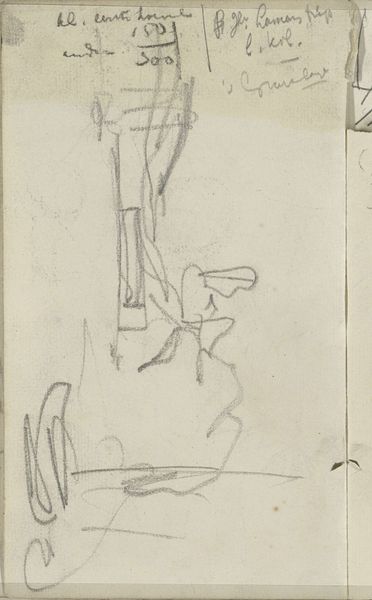
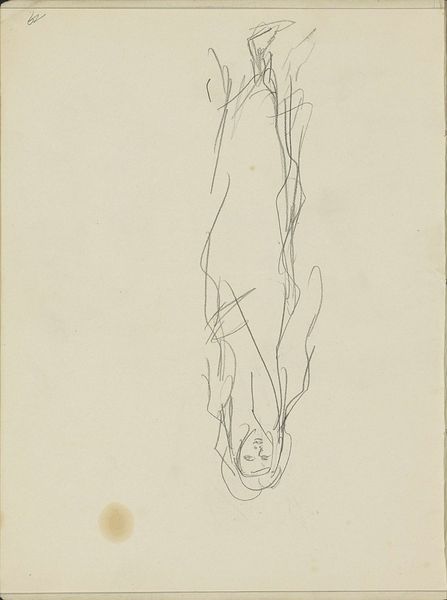
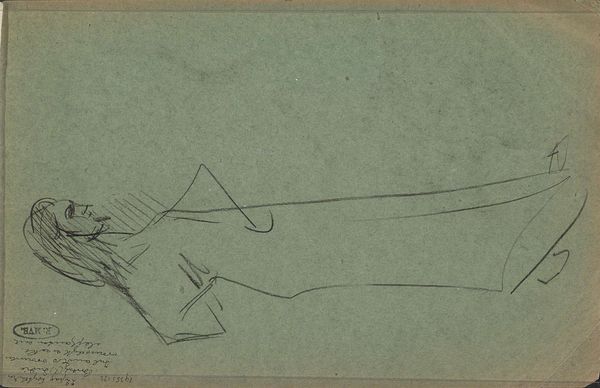
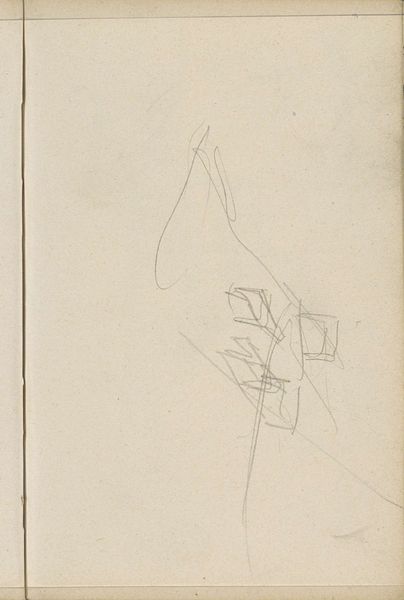
Man met zijn hand bij het achterwerk van een andere man 1886 - 1923
0:00
0:00

georgehendrikbreitner
Rijksmuseum
Copyright: Rijks Museum: Open Domain
Editor: This is George Hendrik Breitner's "Man met zijn hand bij het achterwerk van een andere man," created sometime between 1886 and 1923, using pencil on paper. It's a very quick, loose sketch, almost like a doodle. What do you see in this piece beyond its seemingly simple subject matter? Curator: Beyond the immediate depiction, this sketch prompts us to consider the dynamics of the male gaze and representation. Breitner, known for capturing Amsterdam street life, presents a provocative interaction. Considering prevailing societal norms of the late 19th century, how might this sketch challenge or subvert notions of masculinity and propriety? Editor: I hadn't really thought about it that way. It just seemed like a casual drawing, but framing it within the context of gender and social norms makes me reconsider its potential meaning. Do you think Breitner was intentionally making a statement? Curator: It's difficult to ascertain intention definitively. However, placing the sketch within the trajectory of Breitner's oeuvre and the broader artistic landscape of his time reveals a fascination with the human form and its relationship to social spaces. We must ask: Whose gaze is privileged here? How does this fleeting image speak to power dynamics, desire, and visibility? Editor: So, even a seemingly simple sketch like this can be a site of complex social and political commentary. I'll definitely look at sketches differently now. Curator: Exactly. It highlights how even preliminary artistic explorations can offer invaluable insights into the artist's world and the societal structures they inhabited.
Comments
No comments
Be the first to comment and join the conversation on the ultimate creative platform.
 Collect
 React
React Comment
More like this