mixed-media, collage, assemblage, paper
#
gouache
#
mixed-media
#
collage
#
water colours
#
assemblage
#
paper
#
modernism
#
watercolor
Copyright: Barton Lidice Benes,Fair Use
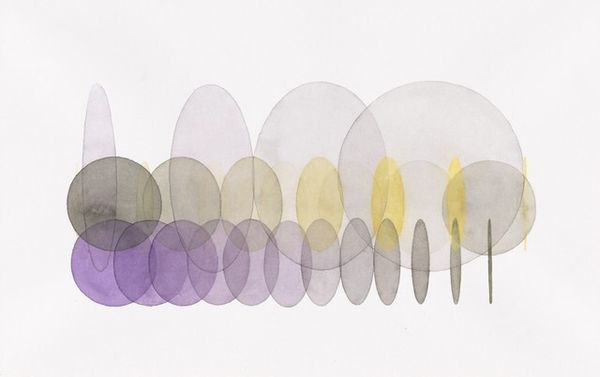
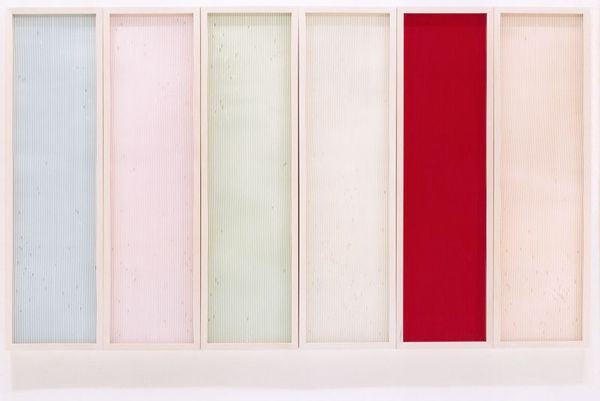
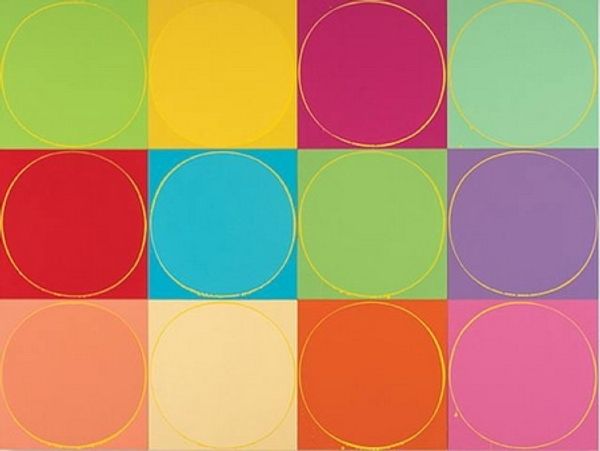
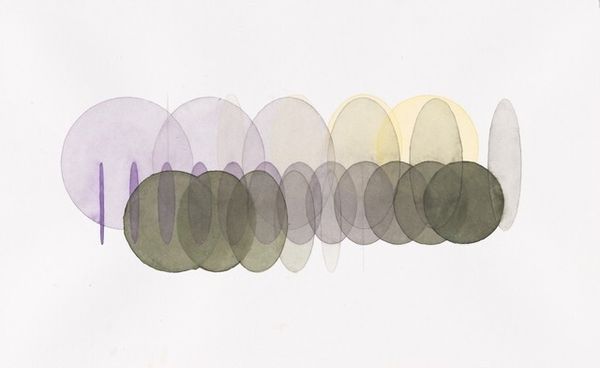
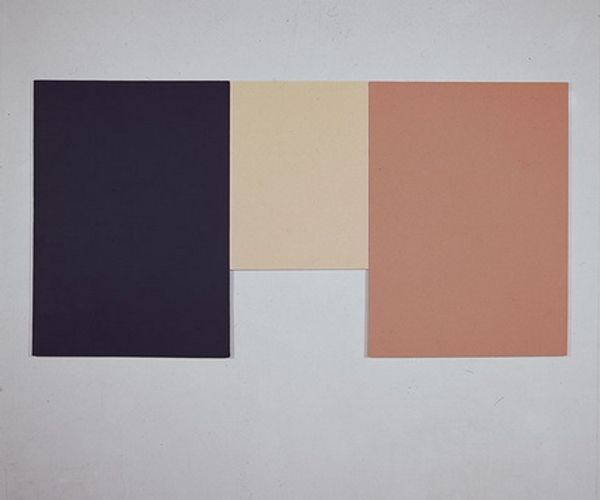
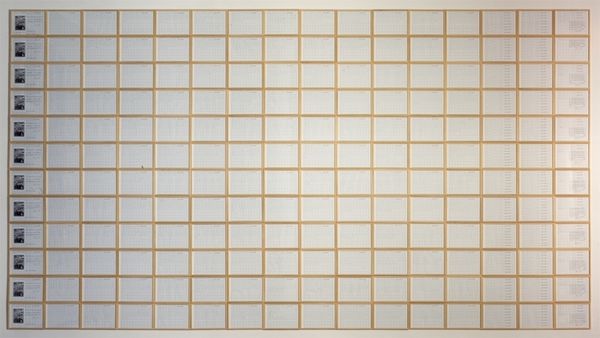
Curator: Looking at "Letter from Aunt Evelyn," I'm struck by its delicate, almost ephemeral quality. What do you see? Editor: There’s a strange fragility here, a tenderness almost. The subtle colors and repeated rounded shapes evoke a sense of longing or remembrance. Curator: Well, this mixed-media collage incorporates found paper, gouache, watercolor—materials that inherently speak to preservation, perhaps echoing sentiments of nostalgia. Consider how the use of mundane materials challenges established hierarchies within art production. Editor: True. The grid format immediately suggests organization, some attempt at control. But then you see how the 'letters' or forms are all slightly imperfect. It suggests the fallibility of memory, and the way institutions frame memory through archives and displays. What can you tell me about the materials and making? Curator: It’s an assemblage – the layering of these materials, these seemingly fragile paper elements against, what I’m presuming to be a stiff board. It plays between support and delicacy. I'm wondering how it affects the way we consume this intimate "letter" visually. Are we even meant to understand them? Editor: Probably not directly. I imagine this work asks viewers to contemplate how private, personal narratives are altered when put on display. A "letter," normally intended for one recipient, is rendered into a fragmented public piece. How do the traditions of assemblage influence art's role and visibility in public life? Curator: Assemblage broke down so many established rules about what materials were worthy for inclusion. The inherent labor of the artist, sourcing and constructing. Even that choice to encase it is crucial, and ultimately plays into this cycle of creating then presenting art in an environment like this. Editor: That encapsulation… it freezes a moment. Almost as if seeking to preserve, if imperfectly, a communication perpetually out of reach. Curator: Exactly. This layering invites us to not only consider how it was assembled but how we come to know and process information as both private and communal experience. Editor: So it really makes us think about the way art engages us socially, by prompting memories or thoughts from ordinary ephemera. Curator: Absolutely, "Letter from Aunt Evelyn" seems to gently provoke reflections on accessibility and sentimentality. Editor: A beautifully bittersweet piece. Thanks for sharing!
Comments
No comments
Be the first to comment and join the conversation on the ultimate creative platform.
 Collect
 React
React Comment
More like this