About this artwork
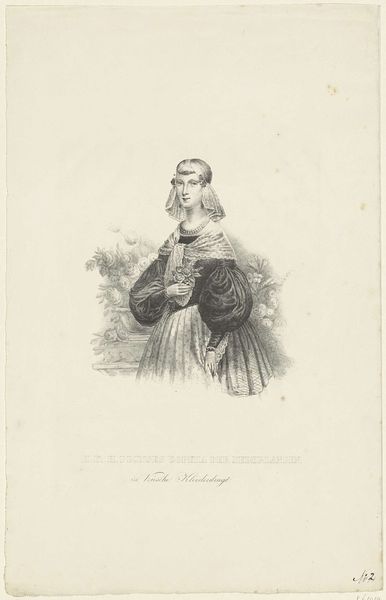
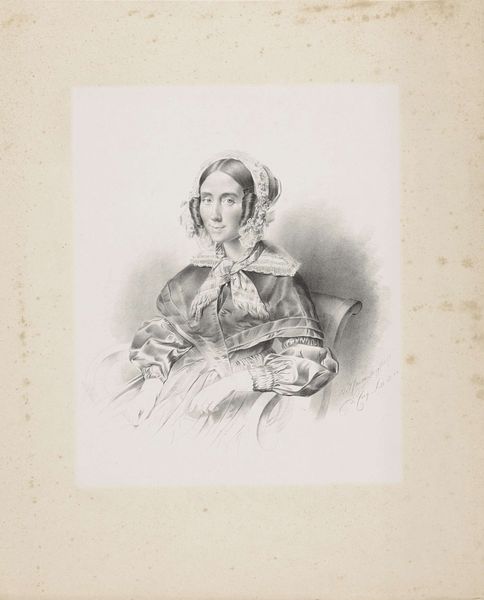
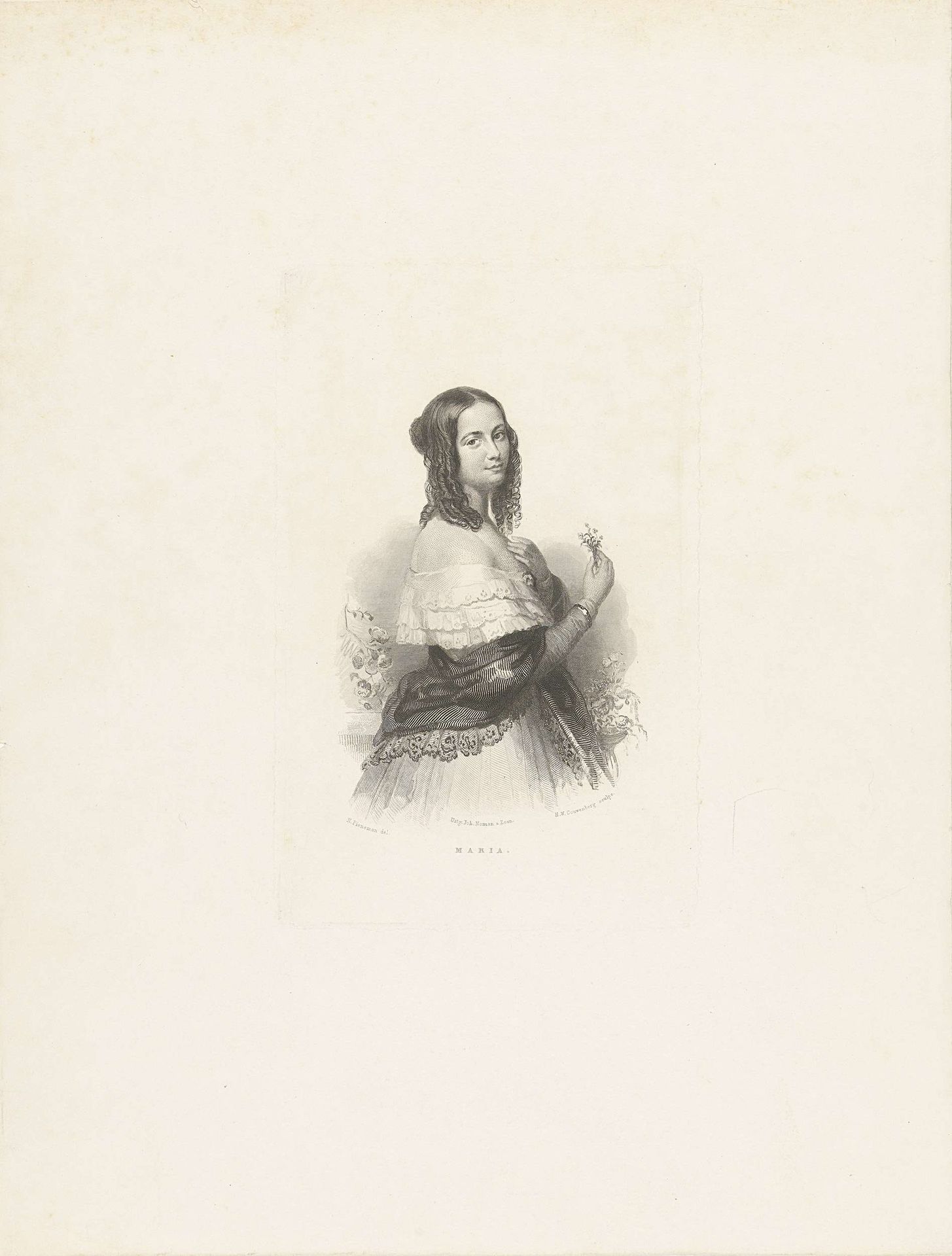
Curator: This captivating drawing at the Rijksmuseum is titled "Portrait of a Young Lady with a Bouquet in her Hands," created by Henricus Wilhelmus Couwenberg sometime between 1830 and 1845. It's rendered in pencil, which gives it a certain softness. Editor: The delicacy of the lines gives it such an intimate, almost wistful feeling, doesn't it? And the young woman’s gaze is so direct, yet somehow elusive. It feels as if she holds secrets. Curator: Absolutely. That blend of directness and elusiveness is characteristic of Romantic portraiture. Note how the flowers serve as more than just adornment; they’re symbolic. They represent beauty, of course, but also fragility, and perhaps even fleeting youth. This was an era intensely preoccupied with mortality. Editor: Right, the cult of sensibility. The public exhibition of private feelings… And I imagine, within the context of the Dutch Golden Age's emphasis on meticulous detail, the choice of pencil alone must have seemed radical, almost defiant, emphasizing emotional tone over polished execution? Curator: Interesting. Perhaps it’s less a radical departure and more a skillful adaptation. The Romantics still sought to capture a likeness, but the soft pencil work lent an air of sentimentality that aligned with their aesthetic values. The lace details around her shoulders, too, are exquisite despite the simple medium, pointing toward her social standing. But I wonder about the psychological import of such precise depictions of female beauty at this moment. Editor: It definitely plays into the construction of idealized femininity during the early 19th century, as women's roles were being so heavily debated. A portrait like this reinforces certain standards, offering both admiration and subtly enforcing a prescriptive vision. Is she powerful, because of her beauty, or limited by it? Curator: That is a perfect question. And by the mid-19th century, we see this debate playing out visually more and more overtly. The lady holds flowers; the image is quite literally in her hands. It reflects something we collectively long for and have reason to suspect, even fear. Editor: It is always a reminder that what we call art history is really the history of how humans, in relation with objects, come to shape ideas about each other. Curator: Precisely! The art continues to question and reflect, just as this young lady questions back to us across time.
Portret van een jonge dame met een boeketje in haar handen
1830 - 1845

Henricus Wilhelmus Couwenberg
1814 - 1845Location
RijksmuseumArtwork details
- Medium
- drawing, pencil
- Dimensions
- height 170 mm, width 107 mm
- Location
- Rijksmuseum
- Copyright
- Rijks Museum: Open Domain
Tags
portrait
pencil drawn
drawing
figuration
pencil drawing
romanticism
pencil
Comments
Be the first to share your thoughts about this work.
About this artwork
Curator: This captivating drawing at the Rijksmuseum is titled "Portrait of a Young Lady with a Bouquet in her Hands," created by Henricus Wilhelmus Couwenberg sometime between 1830 and 1845. It's rendered in pencil, which gives it a certain softness. Editor: The delicacy of the lines gives it such an intimate, almost wistful feeling, doesn't it? And the young woman’s gaze is so direct, yet somehow elusive. It feels as if she holds secrets. Curator: Absolutely. That blend of directness and elusiveness is characteristic of Romantic portraiture. Note how the flowers serve as more than just adornment; they’re symbolic. They represent beauty, of course, but also fragility, and perhaps even fleeting youth. This was an era intensely preoccupied with mortality. Editor: Right, the cult of sensibility. The public exhibition of private feelings… And I imagine, within the context of the Dutch Golden Age's emphasis on meticulous detail, the choice of pencil alone must have seemed radical, almost defiant, emphasizing emotional tone over polished execution? Curator: Interesting. Perhaps it’s less a radical departure and more a skillful adaptation. The Romantics still sought to capture a likeness, but the soft pencil work lent an air of sentimentality that aligned with their aesthetic values. The lace details around her shoulders, too, are exquisite despite the simple medium, pointing toward her social standing. But I wonder about the psychological import of such precise depictions of female beauty at this moment. Editor: It definitely plays into the construction of idealized femininity during the early 19th century, as women's roles were being so heavily debated. A portrait like this reinforces certain standards, offering both admiration and subtly enforcing a prescriptive vision. Is she powerful, because of her beauty, or limited by it? Curator: That is a perfect question. And by the mid-19th century, we see this debate playing out visually more and more overtly. The lady holds flowers; the image is quite literally in her hands. It reflects something we collectively long for and have reason to suspect, even fear. Editor: It is always a reminder that what we call art history is really the history of how humans, in relation with objects, come to shape ideas about each other. Curator: Precisely! The art continues to question and reflect, just as this young lady questions back to us across time.
Comments
Be the first to share your thoughts about this work.