print, watercolor
#
narrative-art
#
dutch-golden-age
# print
#
watercolor
#
orientalism
#
watercolour illustration
#
genre-painting
#
watercolor
Dimensions: height 378 mm, width 459 mm
Copyright: Rijks Museum: Open Domain
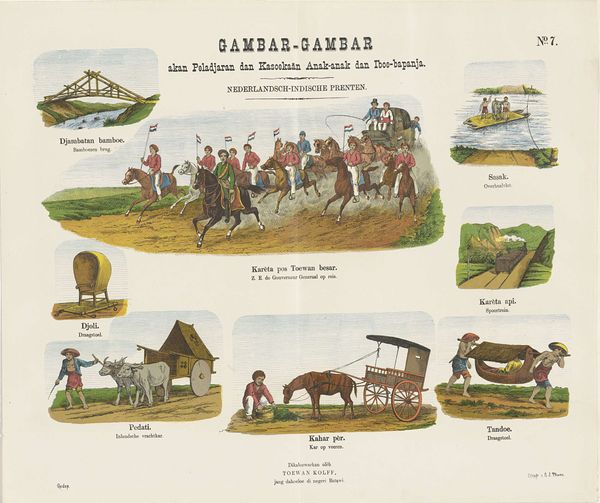
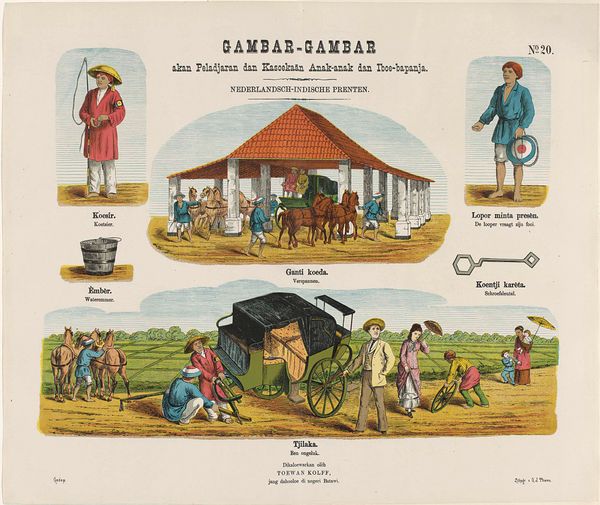
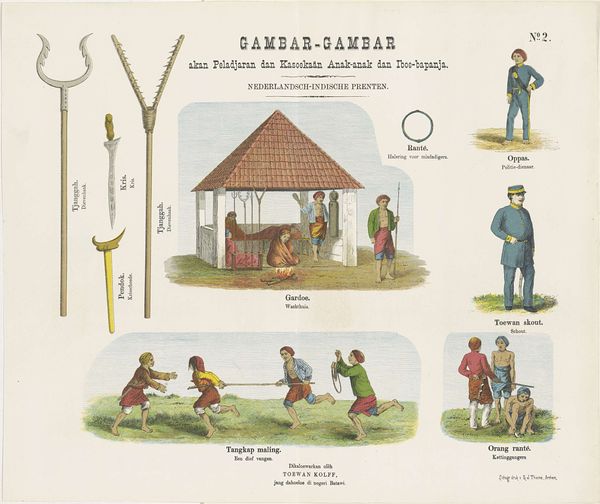
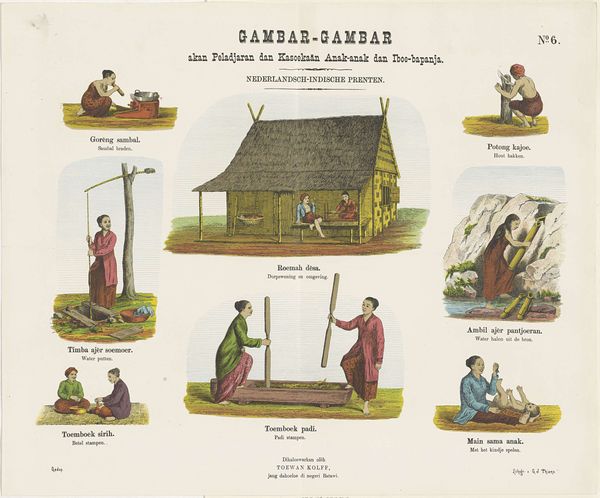
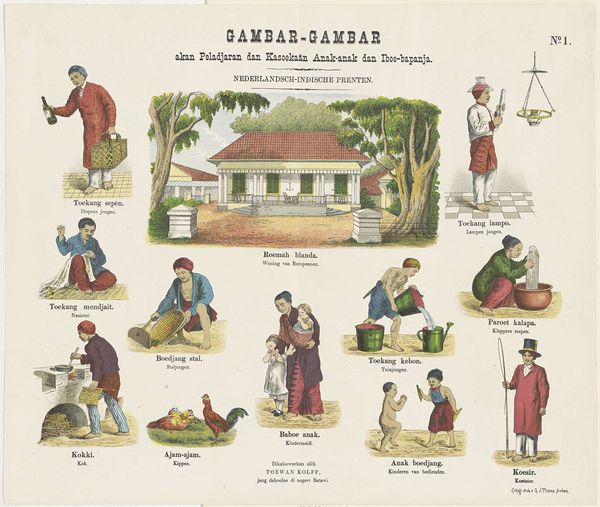
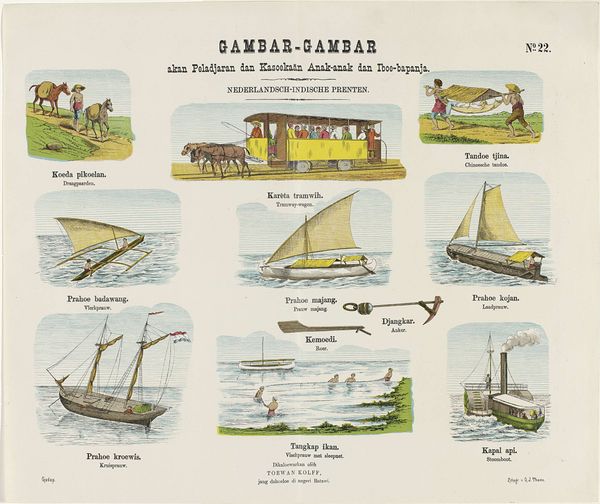
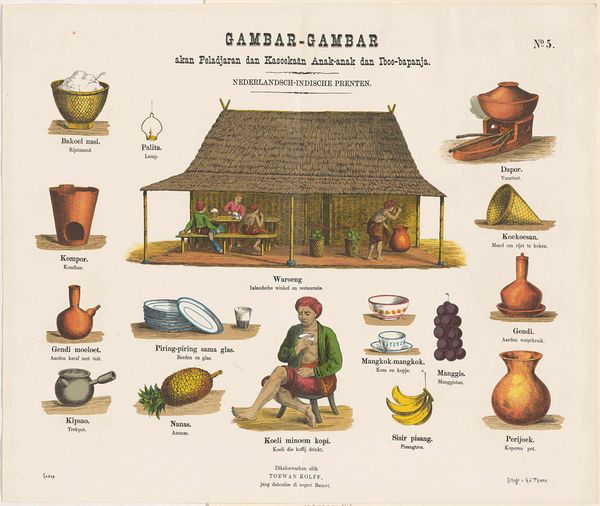
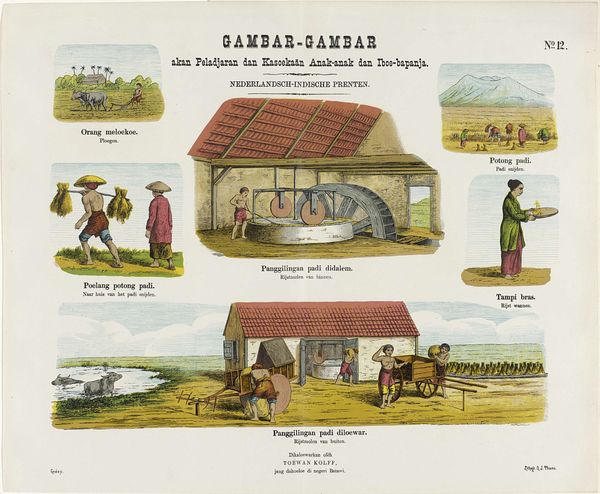
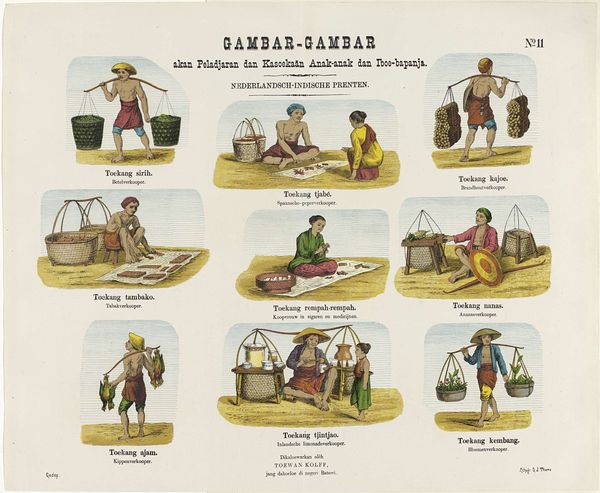
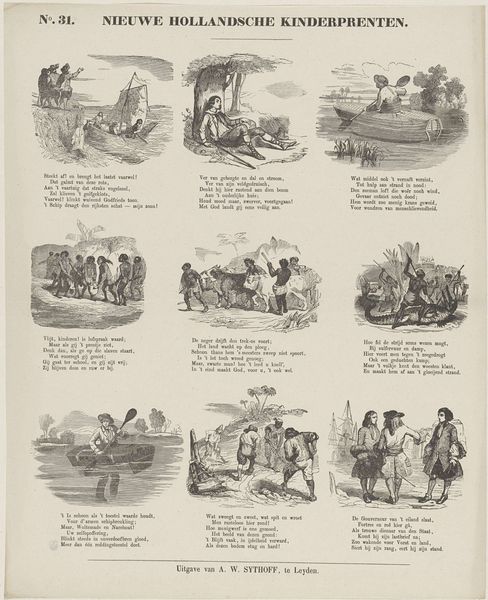
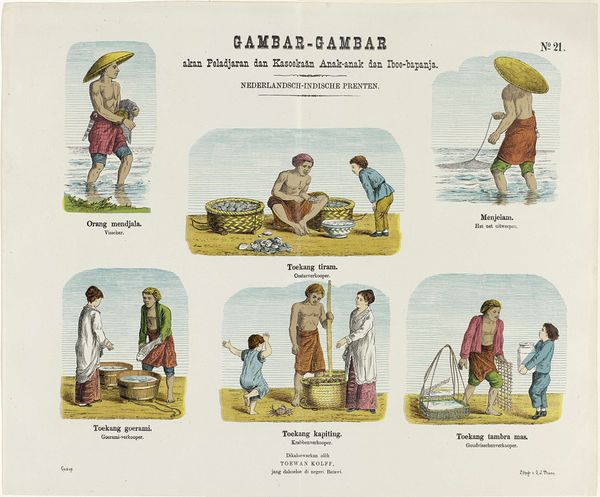
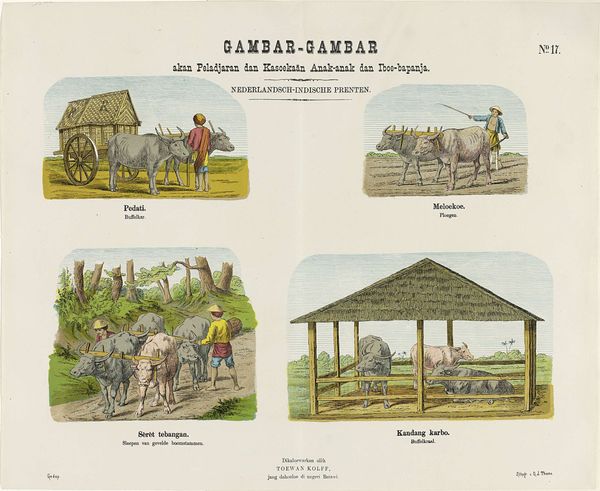
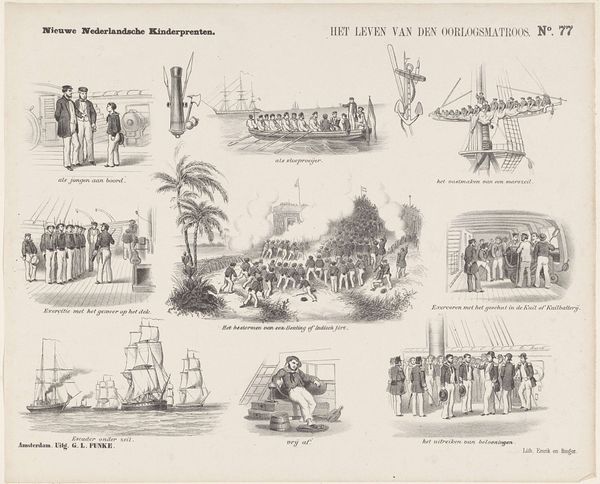
Editor: This is "Brandweer," or "Fire Brigade," by Gualtherus Kolff, dating from sometime between 1868 and 1881. It seems to be a print with watercolor. It strikes me as very organized, almost like an instructional diagram, but the scenes themselves feel quite dynamic. How do you interpret this work? Curator: I am drawn to the systematic layout, segmented presentation suggestive of a rational, almost scientific approach. Note how the composition employs discrete visual units, each meticulously rendered to convey information efficiently. Consider the use of line and colour; subdued, yet distinct, demarcating boundaries and forms within the whole. Do you see how the aesthetic choices contribute to a didactic purpose? Editor: Yes, I see that now! The separation of each element, like the buckets or the pump action, highlights its specific function. So, the art is secondary to the information being conveyed? Curator: Not entirely. The work’s artistic merit lies in its strategic deployment of visual language. The artist clearly prioritizes legibility and structure; a coherent system designed to communicate directly, devoid of superfluous ornament. This organizational logic in itself is an aesthetic statement, isn’t it? How does it resonate with your understanding? Editor: It really challenges my ideas about what constitutes art. The emphasis on pure function and clarity is fascinating. I suppose I often think of art as primarily expressive. Curator: Precisely! And this piece demonstrates that even in apparent functionality, an underlying aesthetic framework shapes our experience. By analysing the structural choices, we gain a deeper understanding of how meaning is constructed, and, thereby, what art can truly be. Editor: I’ve definitely learned to appreciate the artistry in organization. Thanks for that new perspective.
Comments
No comments
Be the first to comment and join the conversation on the ultimate creative platform.
 Collect
 React
React Comment
More like this