1821 - 1823
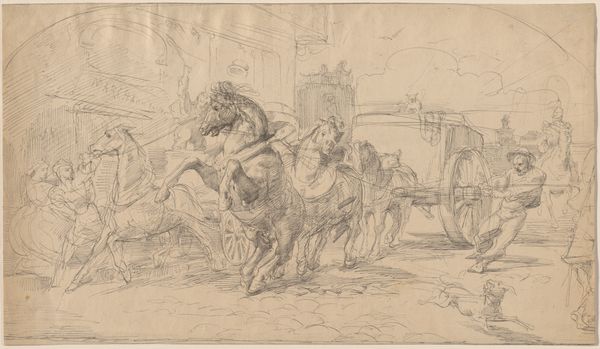
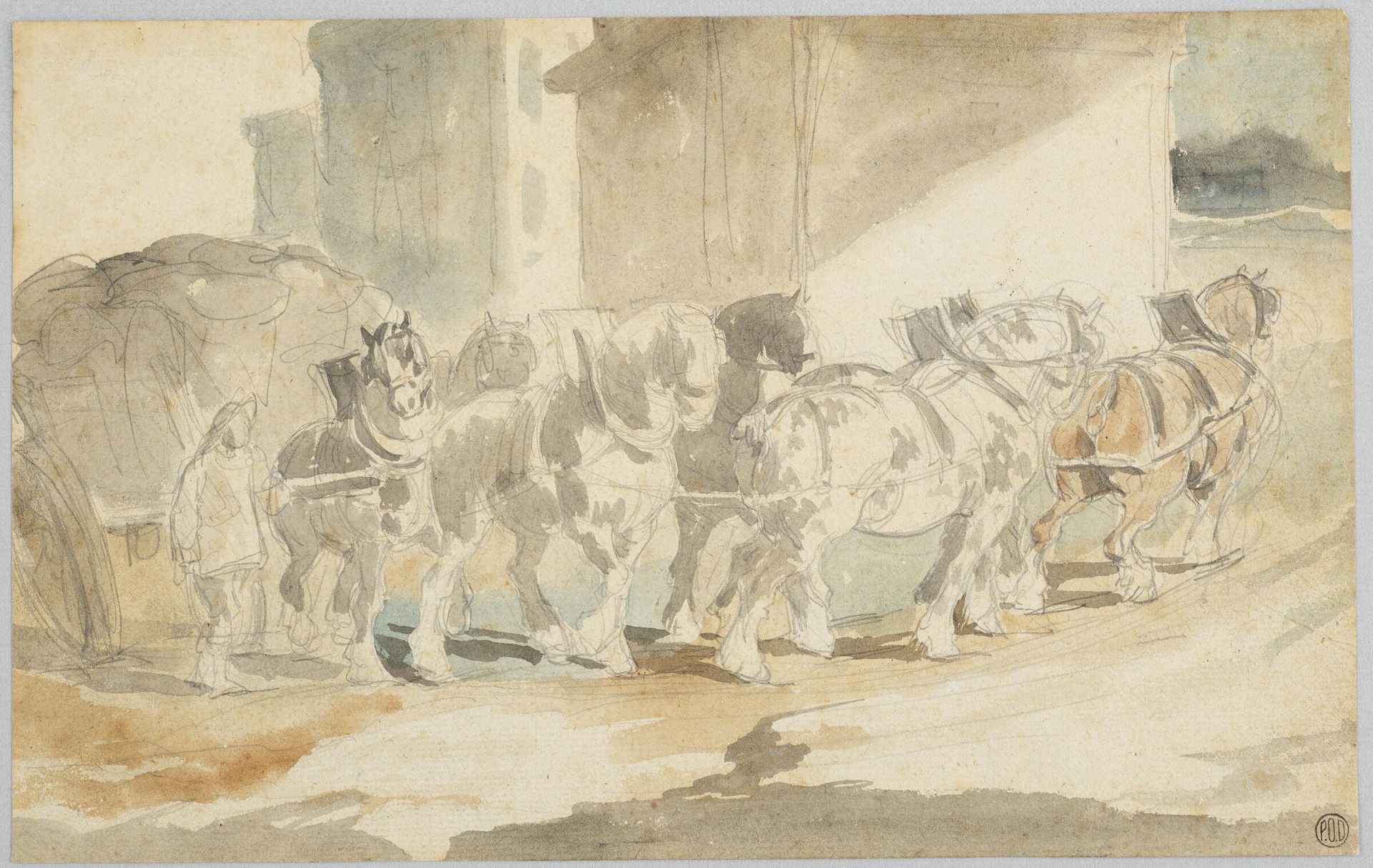
Coal Wagon Hauled by Seven Horses; verso: Sketches of horses and a cart


Listen to curator's interpretation
Curatorial notes
Curator: Here we have Théodore Géricault's "Coal Wagon Hauled by Seven Horses." It's a delicate watercolor and pencil drawing at the Harvard Art Museums. Editor: It certainly evokes a feeling of burden, doesn't it? All that weight, the muted tones, the way the horses strain... Curator: Absolutely. Géricault was deeply affected by the plight of the working class. This piece, though a quick sketch, speaks volumes about the socio-economic realities of his time. The horses become symbols of exploited labor. Editor: And consider the wagon itself. It looms large, almost obscuring the figures. It’s a symbol of industry, but also of the forces controlling their lives. Curator: Exactly, the drawing really resonates with feminist readings of labor where issues of representation and visibility are really brought to the forefront. Editor: Looking at it now, the muted palette and the sheer number of horses really amplify the sense of relentless labor, even now. Curator: It's a small sketch, but it contains so much about the power dynamics of the 19th century. Editor: Indeed, it makes you reflect on how symbols can still provoke feeling generations later.