drawing, print, intaglio, engraving
drawing
baroque
intaglio
history-painting
engraving
virgin-mary
Dimensions: sheet: 8 7/16 x 5 11/16 in. (21.5 x 14.5 cm)
Copyright: Public Domain
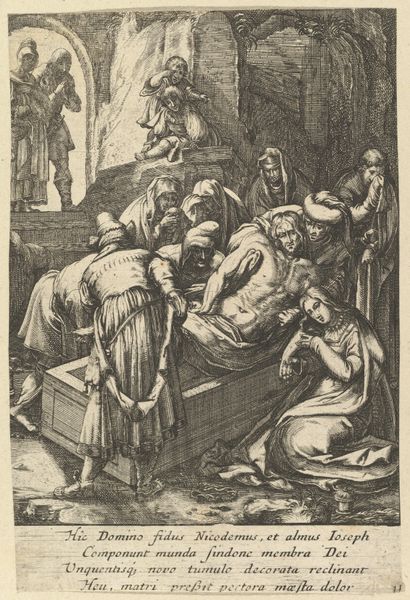
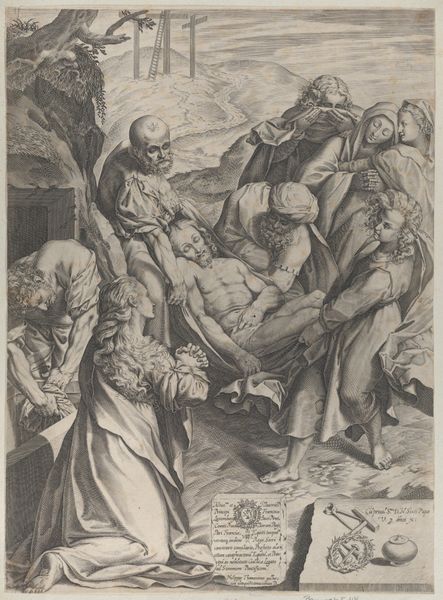
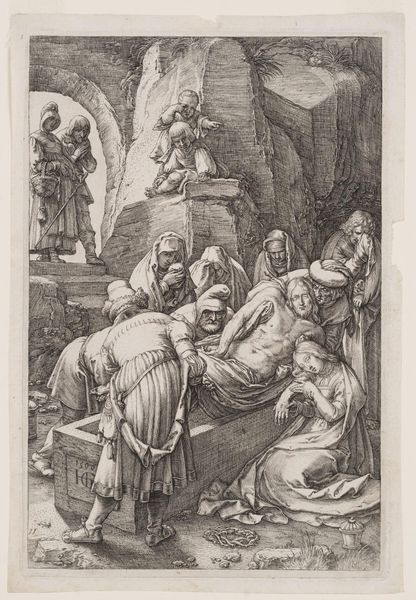
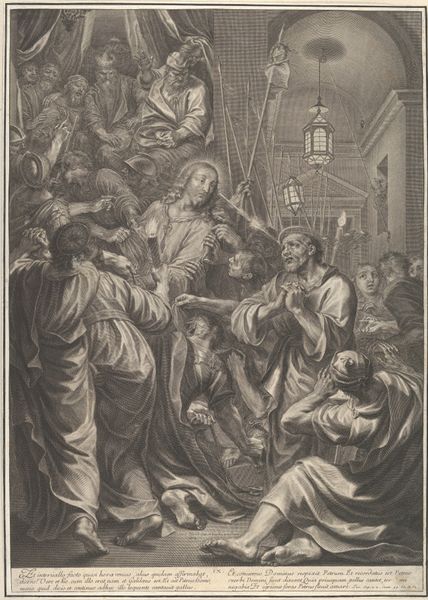
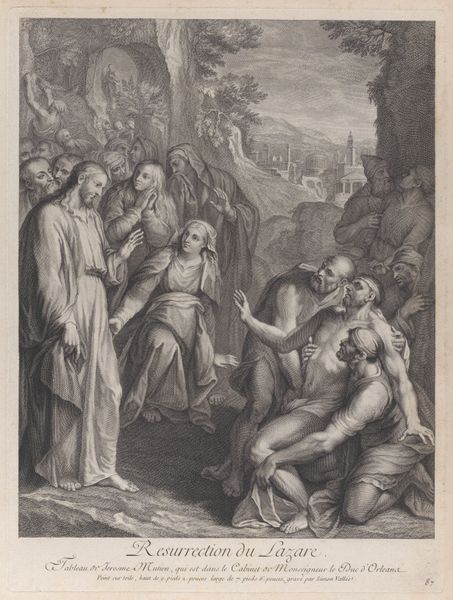
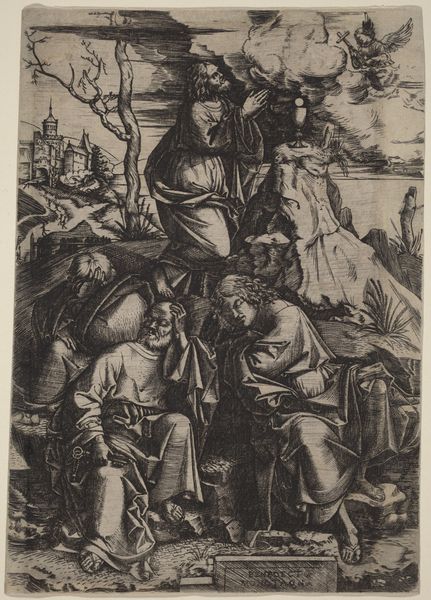
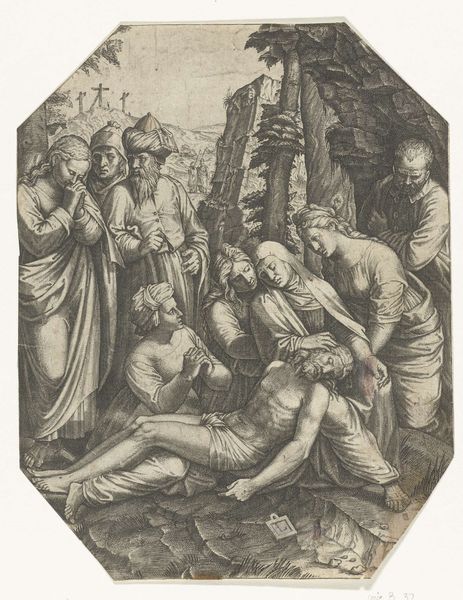
Editor: So, here we have "The Birth of the Virgin," an engraving by Carlo Maratti, dating sometime between 1625 and 1713. There’s so much activity, so many figures crammed into a relatively small space. The use of line to create light and shadow is really striking. What are some of the ways that context shapes our understanding of this piece? Curator: This engraving provides a fascinating window into the cultural significance of the Virgin Mary during the Baroque period. Images like this weren't simply devotional; they played a role in shaping and reinforcing social values, especially concerning women and the family. Notice how the scene, while ostensibly religious, emphasizes the domestic sphere – the birthing room filled with female attendants. Editor: Right, it’s a very intimate setting. Almost voyeuristic. Curator: Precisely! The church utilized the emotional accessibility of these images. This wasn't just about Mary's divine status but also about the ideal of motherhood. What is depicted as a celebration of a historical/religious event also operates within a framework that regulated and defined acceptable forms of feminine conduct. Do you see any specific symbols or arrangements that underscore this reading? Editor: Well, the women all seem focused on caretaking; tending to the newborn and the mother. Even their postures seem demure. It does make me wonder about the original audience and how they might have interpreted the scene. Curator: Exactly. It's crucial to consider who would have viewed this print – perhaps members of the clergy, wealthy patrons, or even a wider public through circulated images. Their social status and beliefs would greatly influence their reception of this image, cementing not only a divine birth but the prescribed social roles within their immediate world. Editor: It’s amazing to think about how a religious image can also function as a social tool. Thanks for illuminating that for me! Curator: My pleasure. Looking at art this way makes you realize its potential to reveal, and perpetuate, values that aren’t immediately apparent.
Comments
No comments
Be the first to comment and join the conversation on the ultimate creative platform.
 React
React Comment