drawing, ink
#
portrait
#
drawing
#
pencil sketch
#
figuration
#
ink
#
symbolism
Dimensions: height 194 mm, width 155 mm, height 335 mm, width 241 mm
Copyright: Rijks Museum: Open Domain
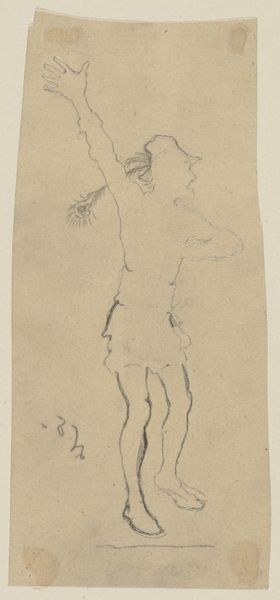
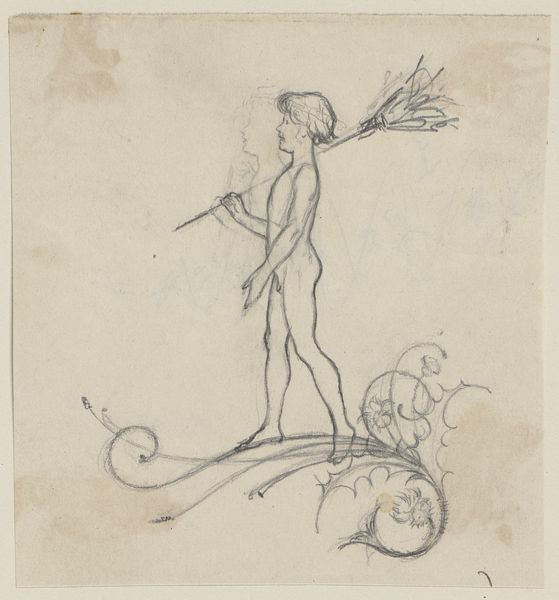
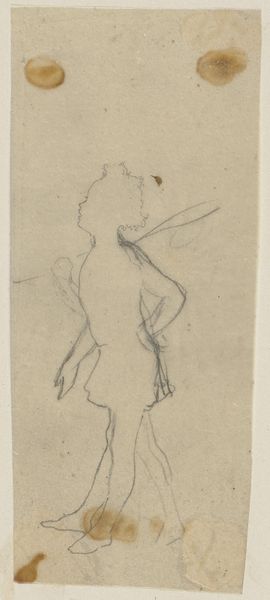
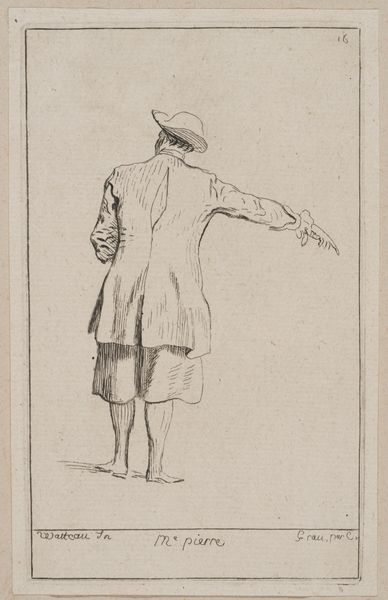
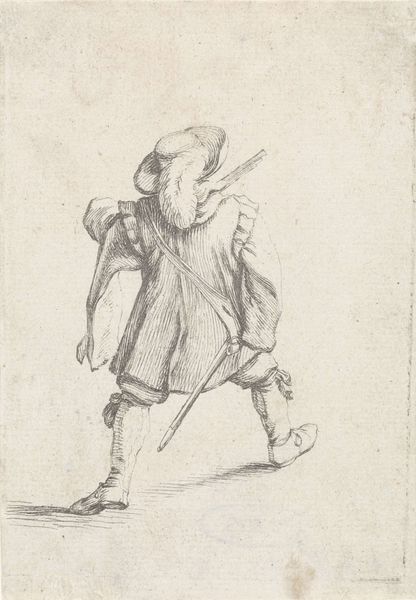
Editor: So, here we have Gustave Joseph Chéret's "Standing Figure with Branch with Birds," made between 1870 and 1894, using ink and pencil. There's a dreamlike, almost ethereal quality to it. What's your take on this piece? Curator: I see in this piece a challenge to traditional modes of representation prevalent in 19th-century art. Chéret, through his exploration of form and symbolism, hints at burgeoning conversations around gender and identity. The figure, seemingly unburdened by conventional expectations, occupies a space between the real and the imagined, but does it successfully subvert gender norms, or is it simply aestheticizing them? Editor: That's interesting! I hadn't considered that aspect. The birds and branch seem almost classical, contrasting with the figure’s ambiguous presentation. Curator: Exactly! These elements draw from symbolist traditions. We must ask: How do these visual cues inform our understanding of the figure's position within societal structures? How does the juxtaposition of these elements contribute to a broader dialogue on femininity and nature? Editor: I see what you mean. The symbolist influence does invite deeper consideration about societal norms. What did people at the time think? Curator: This drawing emerges from a period grappling with profound shifts in power dynamics, from political uprisings to calls for social reform. The seemingly simple portrayal invites scrutiny of those complex debates. What is the agency of the central figure? The branch with birds suggests hope but are we reading our contemporary values onto a bygone era? Editor: I appreciate that historical context! It gives the sketch more complexity than I initially recognized. Curator: Context is everything. Considering Chéret's potential engagement with these debates encourages a more nuanced reading of his work. Editor: I hadn’t considered all the layers beneath the surface. Now I’m thinking about how this piece engages in wider social commentary. Curator: Indeed. It is not merely about aesthetic beauty but potentially serves as an articulation of shifting social and political ideas, offering us a lens to contemplate not just the art but also the world that shaped it.
Comments
No comments
Be the first to comment and join the conversation on the ultimate creative platform.
 Collect
 React
React Comment
More like this