About this artwork
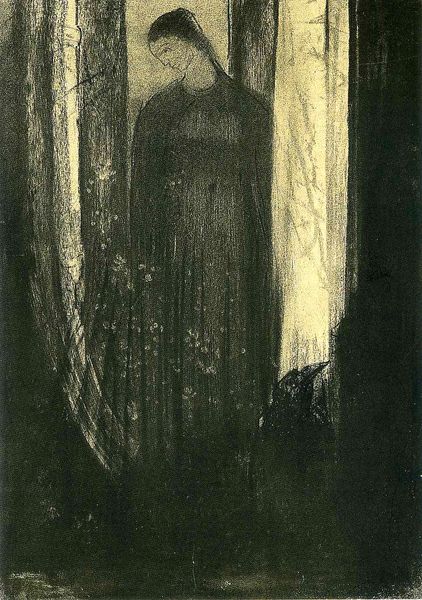
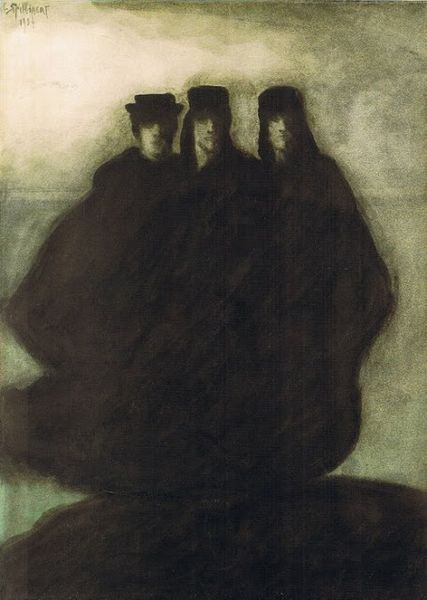
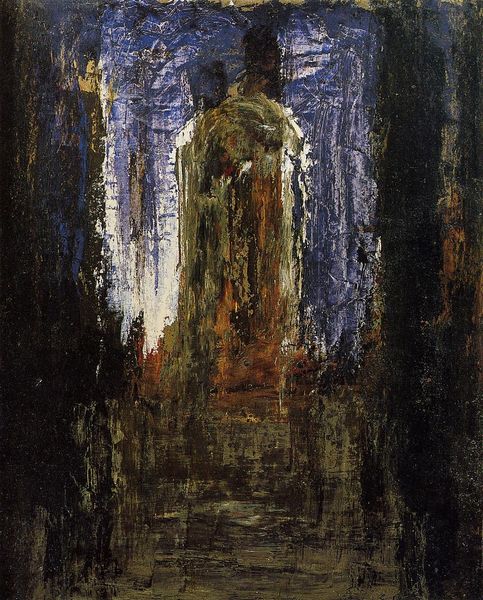
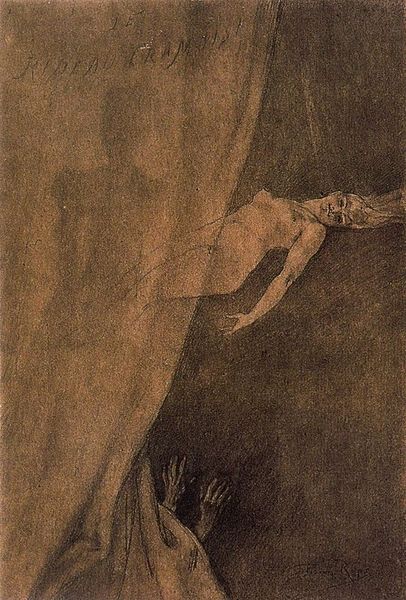
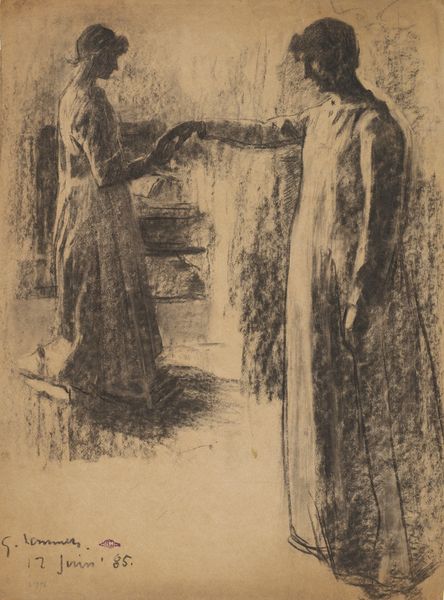
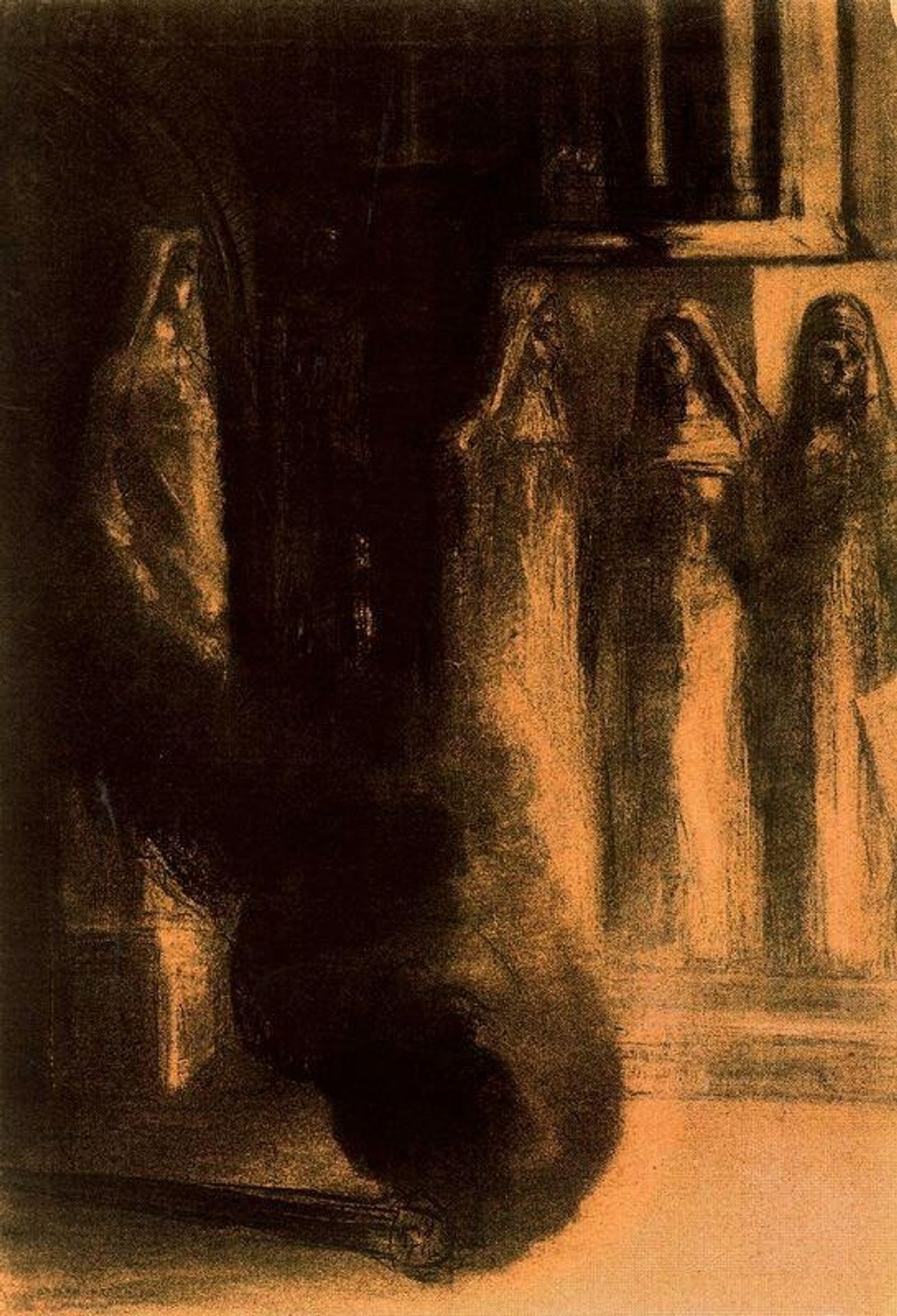
Curator: Odilon Redon's “The Black Torches,” created in 1889, employs charcoal to evoke a rather unsettling atmosphere. Editor: Unsettling is one word for it. To me, it’s straight out of a nightmare. The hazy, almost ghostly figures are draped and the smudging— it really makes the air feel thick, doesn't it? Curator: Absolutely. Redon was deeply embedded in Symbolism. And, looking closely, the technique here suggests more than just depiction; it seems intentionally constructed to provoke certain emotions and anxieties. Considering the charcoal, a relatively accessible medium, how does the apparent simplicity of its production factor into its aura? Editor: Good point, a raw material. There's a very delicate interplay between what's present, the draped figures emerging from dark shadows, and what's absent— the suggestion of more beyond our view, a void, the stuff nightmares are truly made of. It’s kind of scary in its ambiguity. Curator: Redon, as a Symbolist, actively pushed back against the rigid confines of academic painting. "The Black Torches" embraces the evocative power of line and shadow to unlock inner worlds. Editor: Right! Almost like automatic drawing, straight from the unconscious, just a stick of charcoal against textured paper. Does this kind of art-making liberate something dark inside us, do you think, Curator? Curator: Well, the immediacy of charcoal emphasizes the artist's gesture, his labor. Its widespread availability democratizes the means of production and perhaps in that, democratizes a sort of unconscious expression. It’s about labor, about material. Editor: Huh! Democratizing the darkness. So interesting. Thanks for turning on the light! Curator: My pleasure. Charcoal allows him— us all, potentially— to give material form to ethereal, conceptual realities.

Artwork details
- Medium
- drawing, charcoal
- Copyright
- Public domain
Tags
Comments
Share your thoughts
About this artwork
Curator: Odilon Redon's “The Black Torches,” created in 1889, employs charcoal to evoke a rather unsettling atmosphere. Editor: Unsettling is one word for it. To me, it’s straight out of a nightmare. The hazy, almost ghostly figures are draped and the smudging— it really makes the air feel thick, doesn't it? Curator: Absolutely. Redon was deeply embedded in Symbolism. And, looking closely, the technique here suggests more than just depiction; it seems intentionally constructed to provoke certain emotions and anxieties. Considering the charcoal, a relatively accessible medium, how does the apparent simplicity of its production factor into its aura? Editor: Good point, a raw material. There's a very delicate interplay between what's present, the draped figures emerging from dark shadows, and what's absent— the suggestion of more beyond our view, a void, the stuff nightmares are truly made of. It’s kind of scary in its ambiguity. Curator: Redon, as a Symbolist, actively pushed back against the rigid confines of academic painting. "The Black Torches" embraces the evocative power of line and shadow to unlock inner worlds. Editor: Right! Almost like automatic drawing, straight from the unconscious, just a stick of charcoal against textured paper. Does this kind of art-making liberate something dark inside us, do you think, Curator? Curator: Well, the immediacy of charcoal emphasizes the artist's gesture, his labor. Its widespread availability democratizes the means of production and perhaps in that, democratizes a sort of unconscious expression. It’s about labor, about material. Editor: Huh! Democratizing the darkness. So interesting. Thanks for turning on the light! Curator: My pleasure. Charcoal allows him— us all, potentially— to give material form to ethereal, conceptual realities.
Comments
Share your thoughts