1753
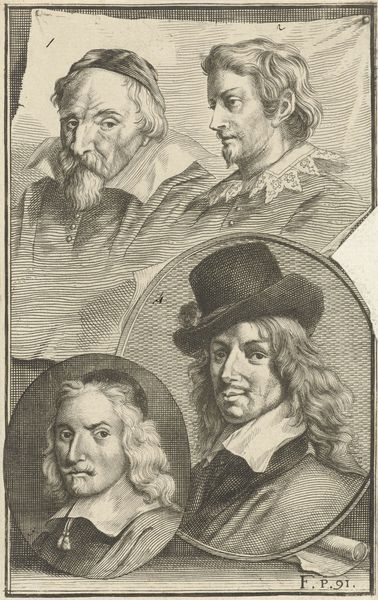
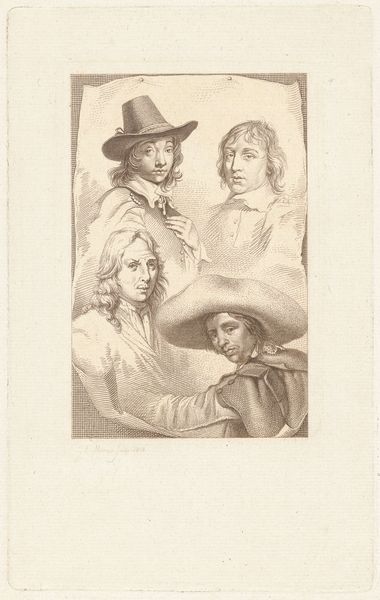
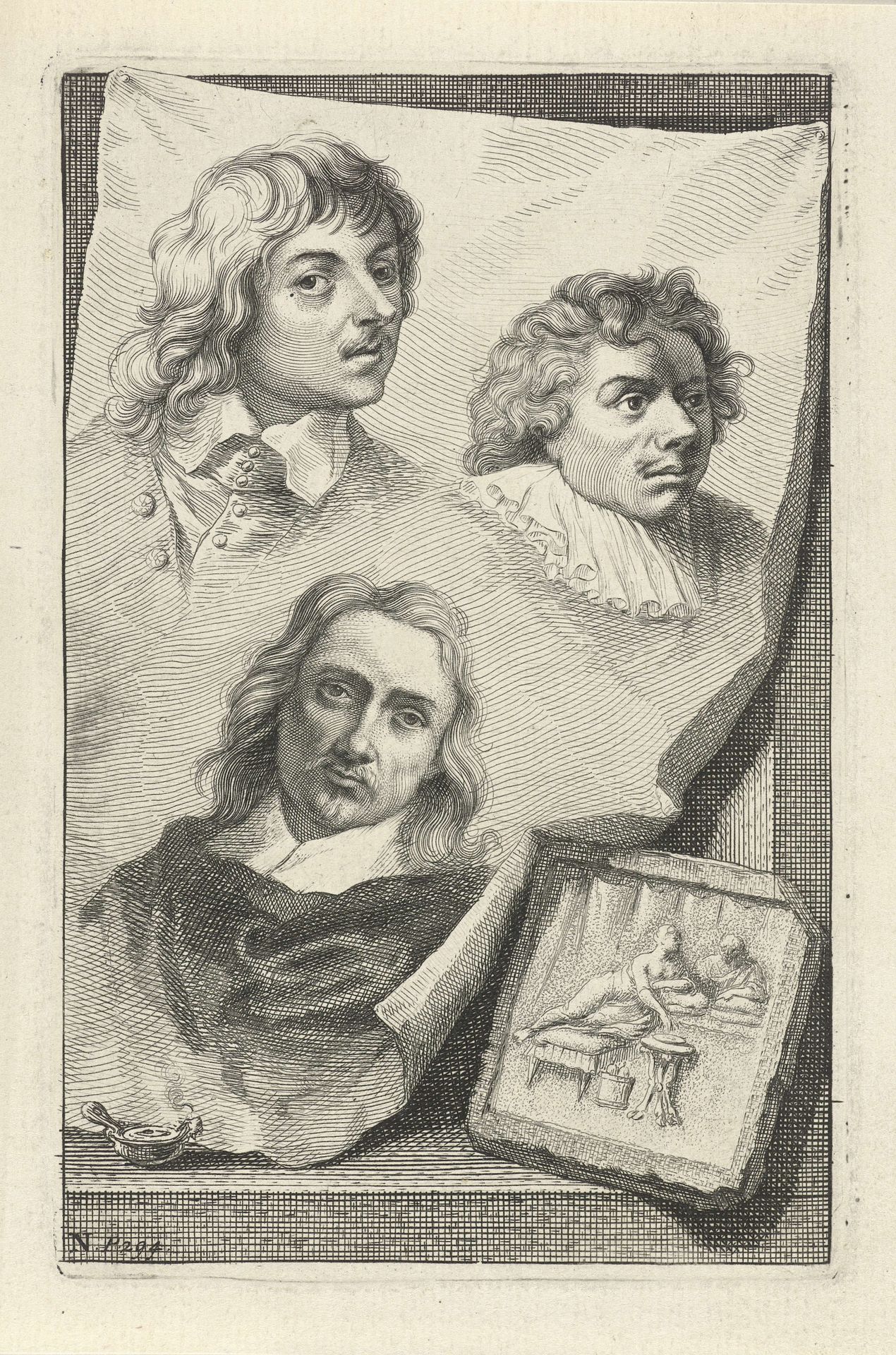
Portretten van Jan Lievens, Anthonie Palamedesz. en Erasmus Quellinus

Jacob Houbraken
1698 - 1780Location
RijksmuseumListen to curator's interpretation
Curatorial notes
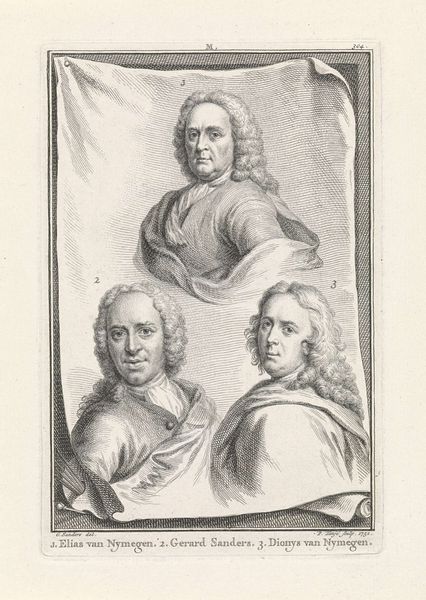
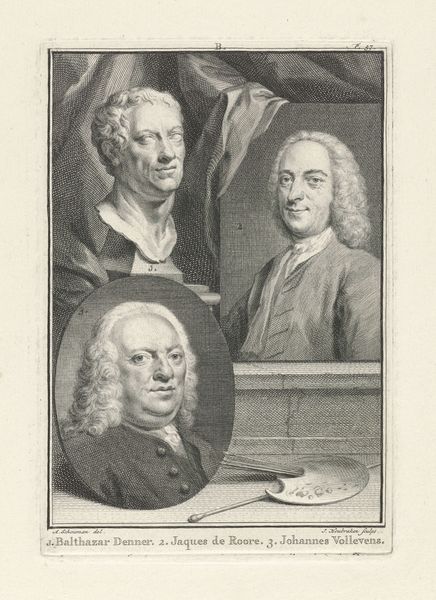
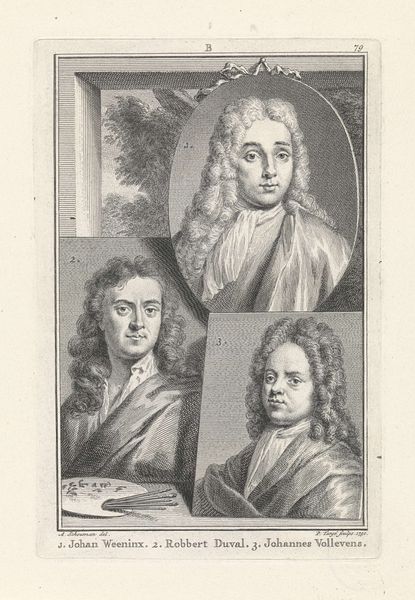
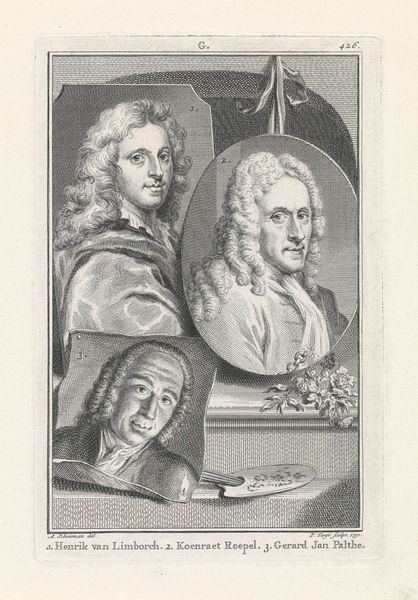
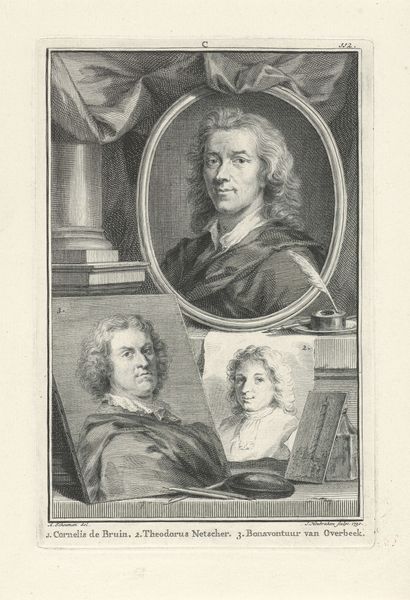
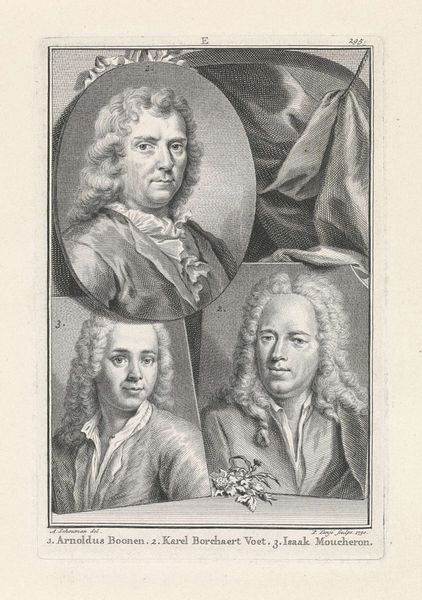
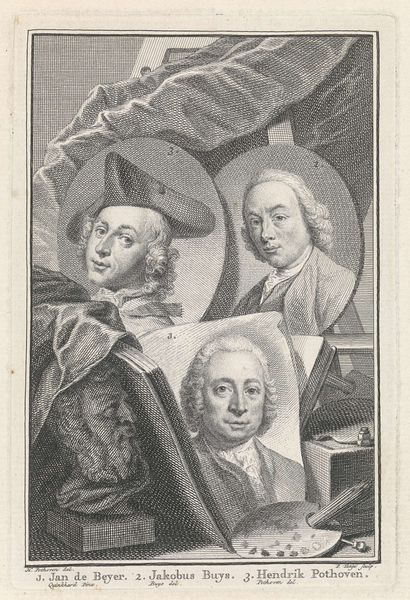
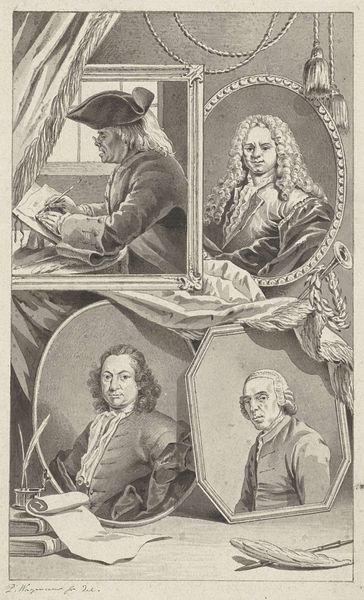
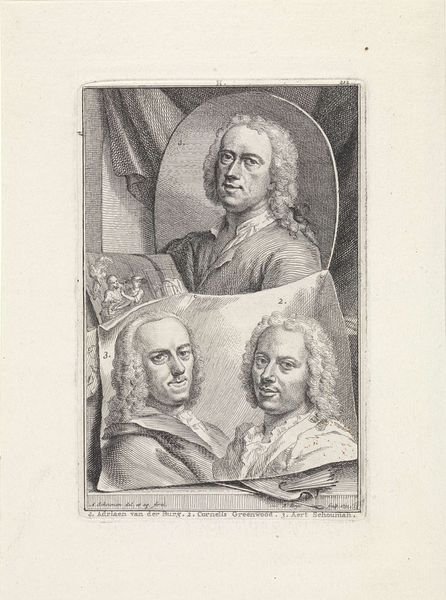
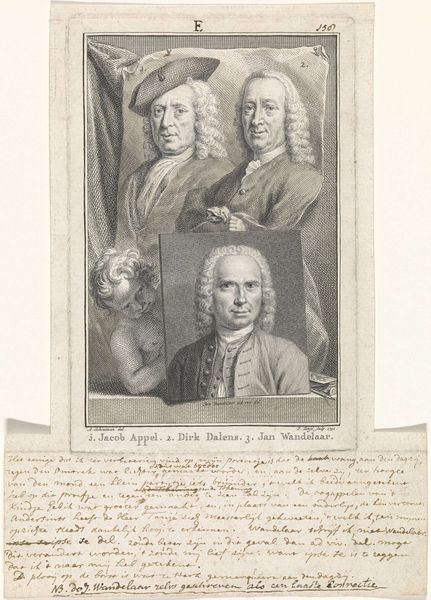
This print of Jan Lievens, Anthonie Palamedesz, and Erasmus Quellinus was made by Jacob Houbraken, sometime in the 18th century. It’s an engraving, meaning that the image was incised into a metal plate, likely copper, using a tool called a burin. Think about the hand-work involved. Each line you see was physically carved, demanding meticulous skill. The varying density and direction of those lines create tone and volume, giving the portraits depth and character. The plate would then be inked, and the image transferred to paper through a printing press, a technology that enabled the wide distribution of images. Prints like this played a crucial role in shaping artistic reputations. They democratized access to art, allowing people to collect and study images from their own homes. Consider the labor involved not just in the creation of the plate, but also in the many impressions pulled from it. Ultimately, this print bridges the worlds of fine art and reproductive craft, reminding us that all images have a material basis, and a social context.