

1886
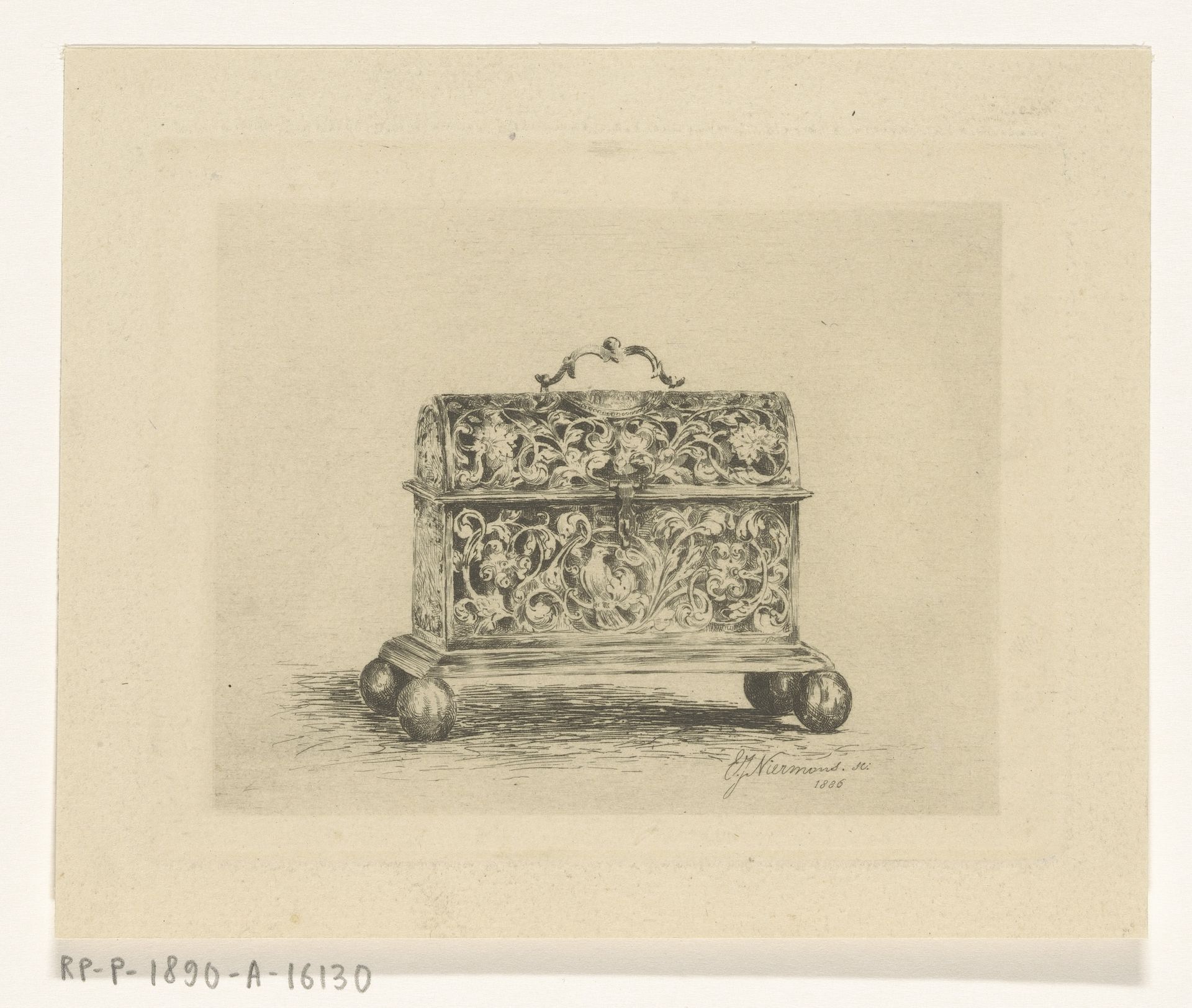
Kist met bolvormige poten en halfrond deksel

Listen to curator's interpretation
Curatorial notes
Editor: This is Eduard Niermans' "Kist met bolvormige poten en halfrond deksel", created in 1886, a drawing and print using the etching technique. I'm struck by the ornate details captured so delicately; it feels both precious and a little... dusty. What do you see when you look at this etching? Curator: The image offers a window into the 19th-century fascination with craftsmanship and the decorative arts, which were often intertwined with national identity. These detailed depictions of objects served a purpose. Can you guess what that might be? Editor: Perhaps… as a kind of record, before photography was widespread or easily accessible? Or for catalogs? Curator: Exactly! Etchings like these were often used for documentation and dissemination. This piece is fascinating because it straddles the line between art object and archival record. Look at the detailed floral motifs – do you think this accuracy might reflect anything about its public role at the time? Editor: Hmm… maybe this level of detail speaks to the societal value placed on artisanal skills and artistry, and maybe it’s an implicit celebration of national craft? Curator: Precisely! It reinforced the idea of cultural pride and showcased achievements through material objects. It subtly suggested what the Dutch could accomplish. How do you see its relation to contemporary museum display? Editor: Interesting! It feels removed from the sometimes sterile presentation of artifacts. We often see objects isolated in a display, and that separation, and its original, often practical context. I hadn't considered that it also performed a didactic role! Curator: Exactly! Considering art as part of the wider sphere, as an object of record that played into historical and political discourse has reshaped my way of observing it, thanks.