c. 20th century
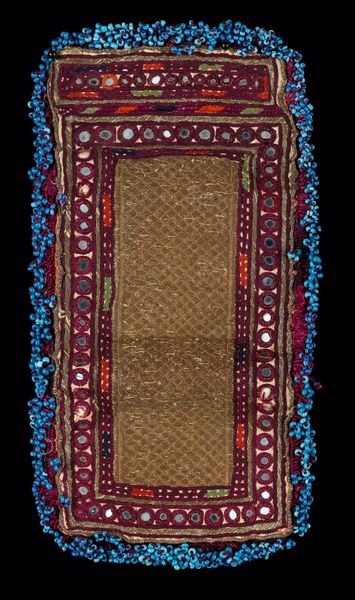
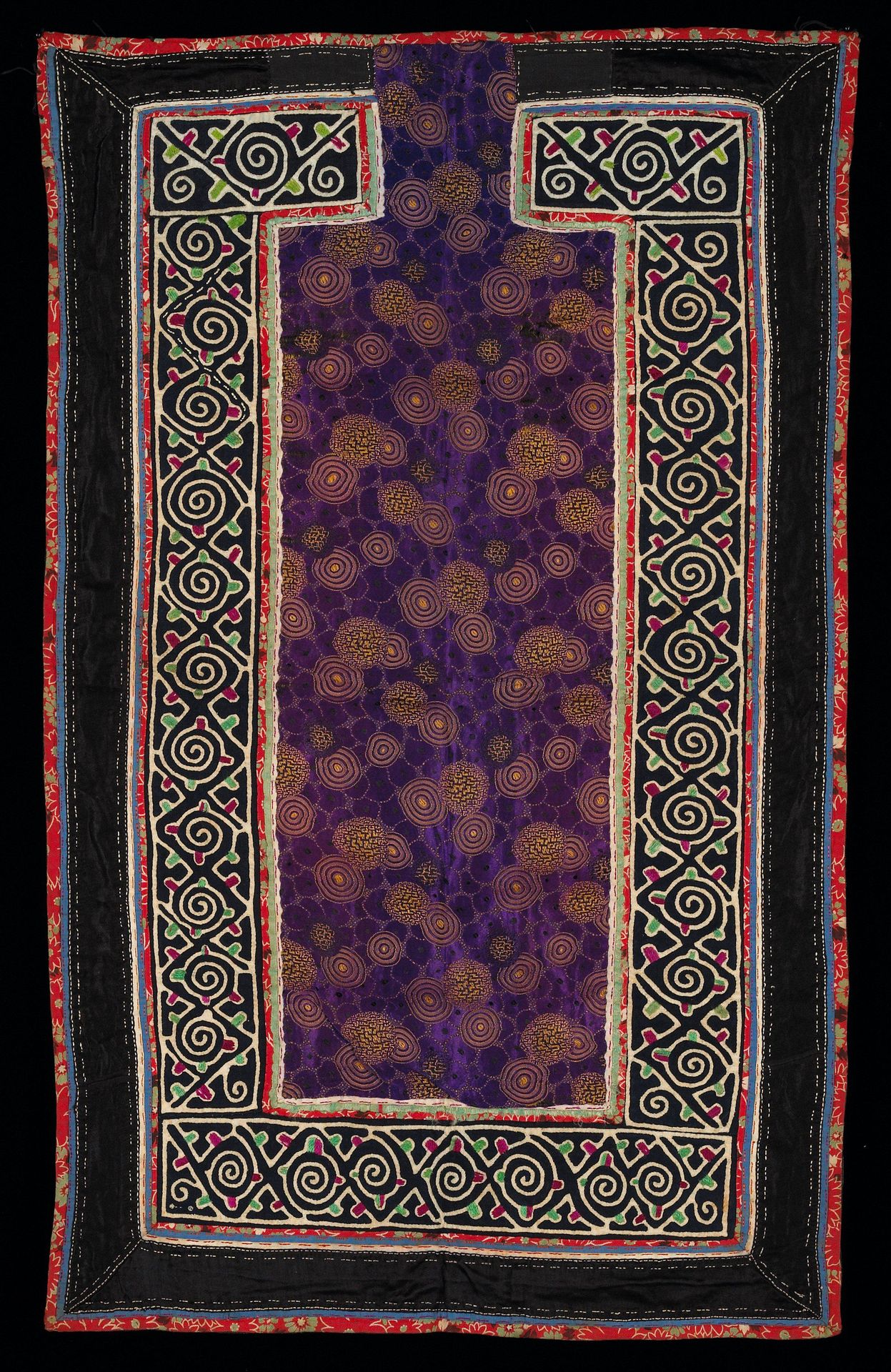
Baby carrier cover


Listen to curator's interpretation
Curatorial notes
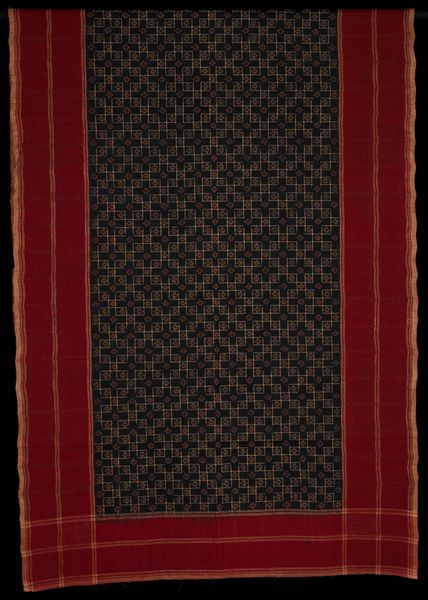
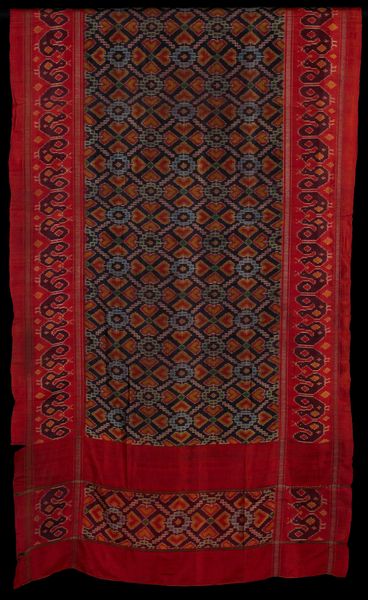
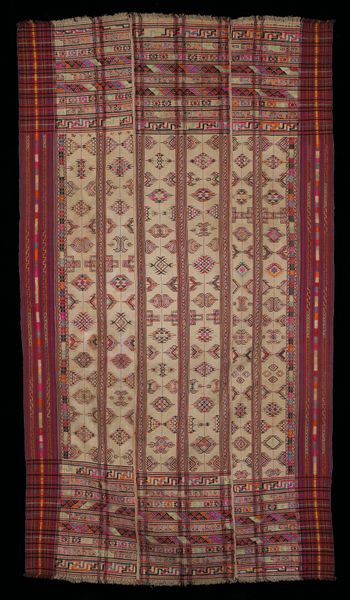
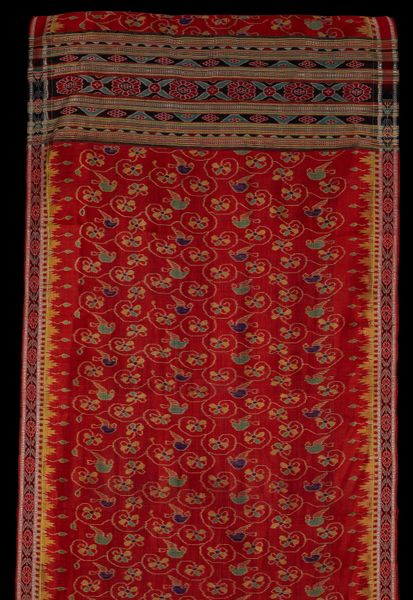
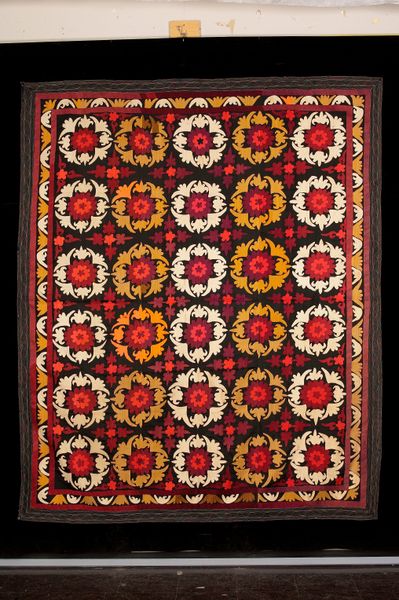
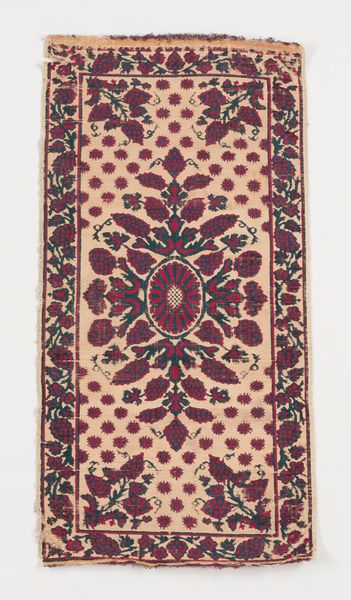
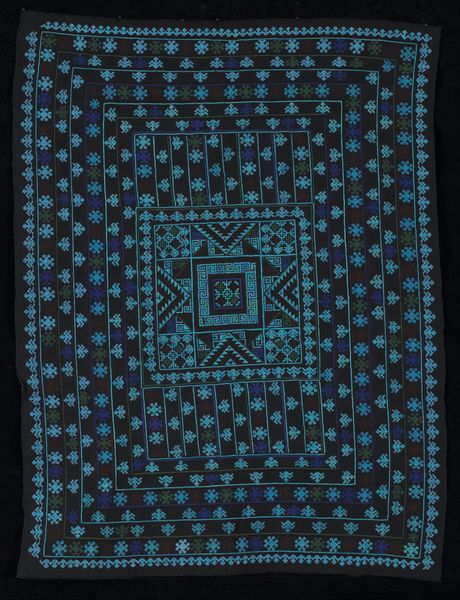
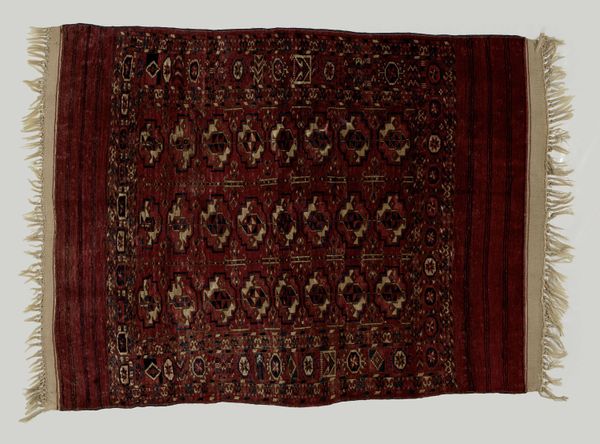
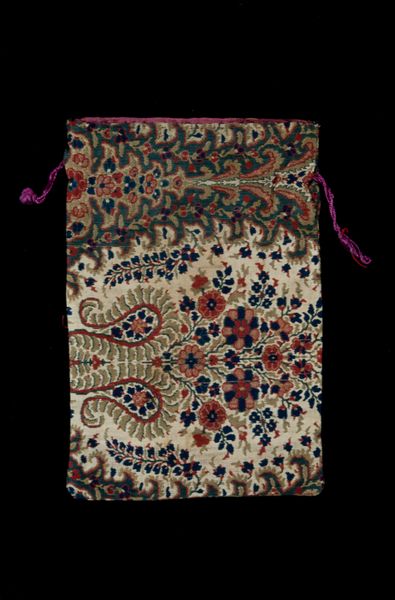
Editor: This is a baby carrier cover, a textile made with silk and cotton, dating from the 20th century. The patterns are mesmerizing. How would you interpret its geometric designs? Curator: Notice how the patterns work together; spirals enclosed within right angles. The spiral is an ancient symbol of growth and the cycle of life found across cultures. Framing them with straight lines gives a sense of protection and structure. Editor: Structure and growth? Curator: The structure that supports growth and new life. But look closer at the ground of the design - a series of circles, perhaps representing family, community, or generations of ancestors, offering a kind of protective net. How do these designs make you feel? Editor: Warm, definitely protected and cared for. It seems like such a thoughtful object, charged with cultural meaning. The colors even feel symbolic...the purple especially. Curator: Yes! What do you associate with purple? It carries an aura of royalty or spirituality; a gentle color to swaddle an infant and remind them of what they're heir to, don't you think? Editor: Absolutely. Considering it as a cultural object, it highlights the hopes and aspirations a community places on new life. It is incredibly moving. Curator: The use of shapes and patterns become powerful expressions of shared cultural memory and hope. This humble textile becomes so much more.