drawing, ink
#
abstract-expressionism
#
drawing
#
flat colour
#
ink
#
geometric-abstraction
#
abstraction
#
modernism
Copyright: Hedda Sterne,Fair Use
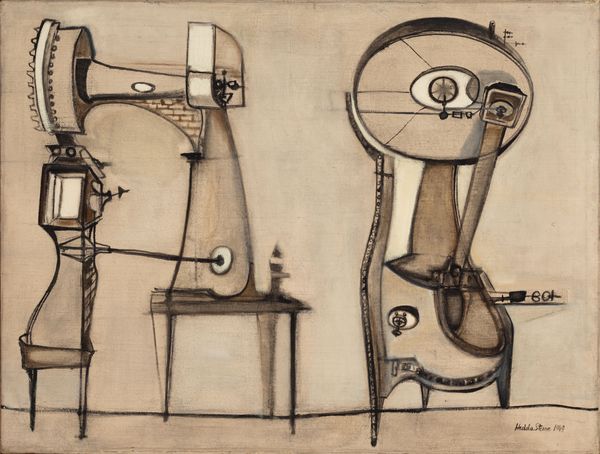
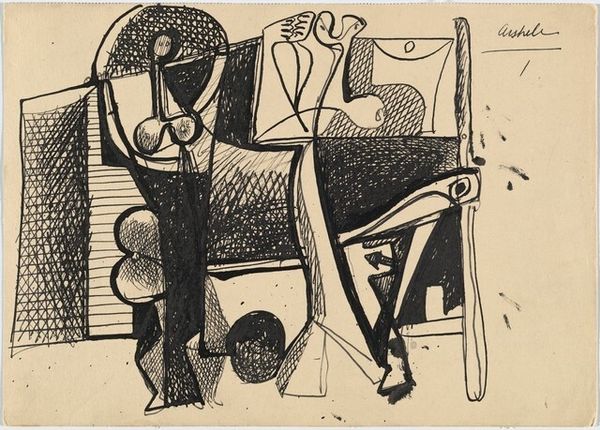
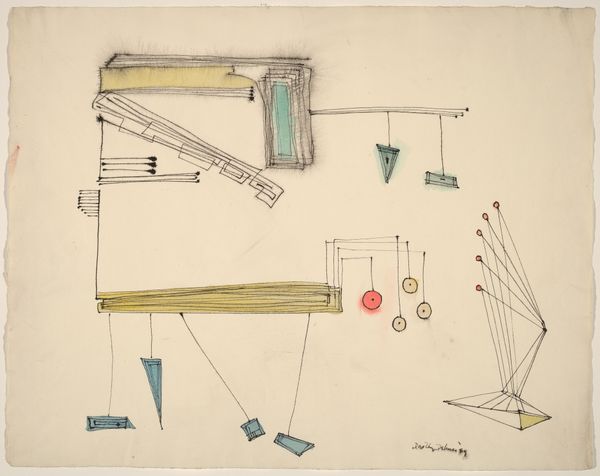
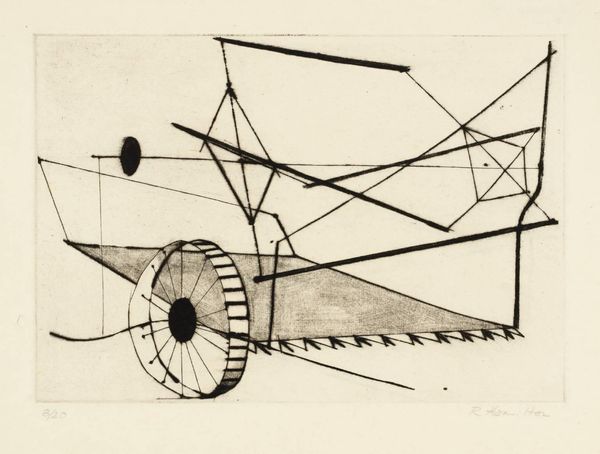
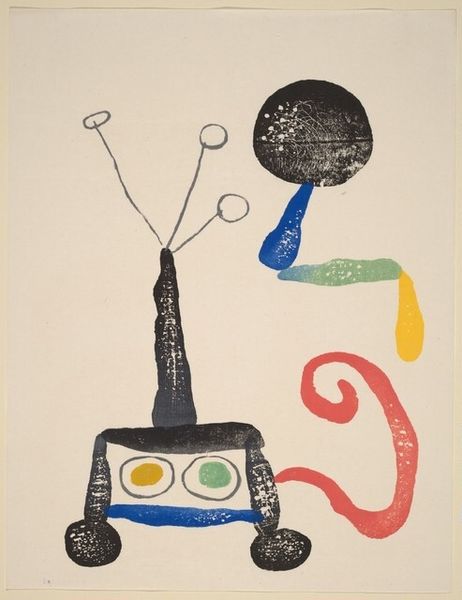
Curator: Here we have Hedda Sterne’s “Antro II,” rendered in ink in 1949. The composition feels industrial, doesn’t it? Editor: Absolutely. There’s an almost mechanical feel to it. These enigmatic forms – are they creatures, machines, or something in between? Curator: Sterne, particularly during the late 40s and early 50s, was deeply engaged with abstraction. You see how this period aligns with larger social shifts in American art, toward abstract expressionism? Editor: Yes, but what I find particularly striking is its ambiguous, almost uncanny nature. The geometry is cold and uninviting; do these forms hint at some hidden or oppressive order? The contrast between hard lines and soft shadows complicates any singular reading. Curator: I think your reading hits on something crucial, reflecting Sterne's broader philosophical investigations. "Antro II," particularly if we understand the "Antro" part of the title as a truncation of "anthropomorphic," embodies a crisis in the representation of the human figure following World War II. Many women artists like Lee Krasner are not necessarily represented by such canonized movements; how can their contribution be better addressed? Editor: And there's an undeniable feminist critique here. Sterne's positioning within a largely male dominated movement surely influenced her representation of mechanized forms—deconstructing the idea of progress by critiquing how its imagery often fails women? Curator: Exactly. Furthermore, look closely, because you can see she often blends various perspectives and styles. It is crucial to examine abstraction from varied historical contexts and understand what they convey when women are involved, as abstraction cannot be isolated or separated from historical analysis. Editor: Considering how Sterne later resisted labels, defining herself always in opposition to conventional categorizations, I wonder if "Antro II" in 1949 isn't so much a culmination as a premonition. The piece really is so forward-looking. Curator: I agree, the image’s strength remains how forcefully it asks us to reimagine the power of art, the power to comment and engage within the world we share.
Comments
No comments
Be the first to comment and join the conversation on the ultimate creative platform.
 Collect
 React
React Comment
More like this