


Curatorial notes
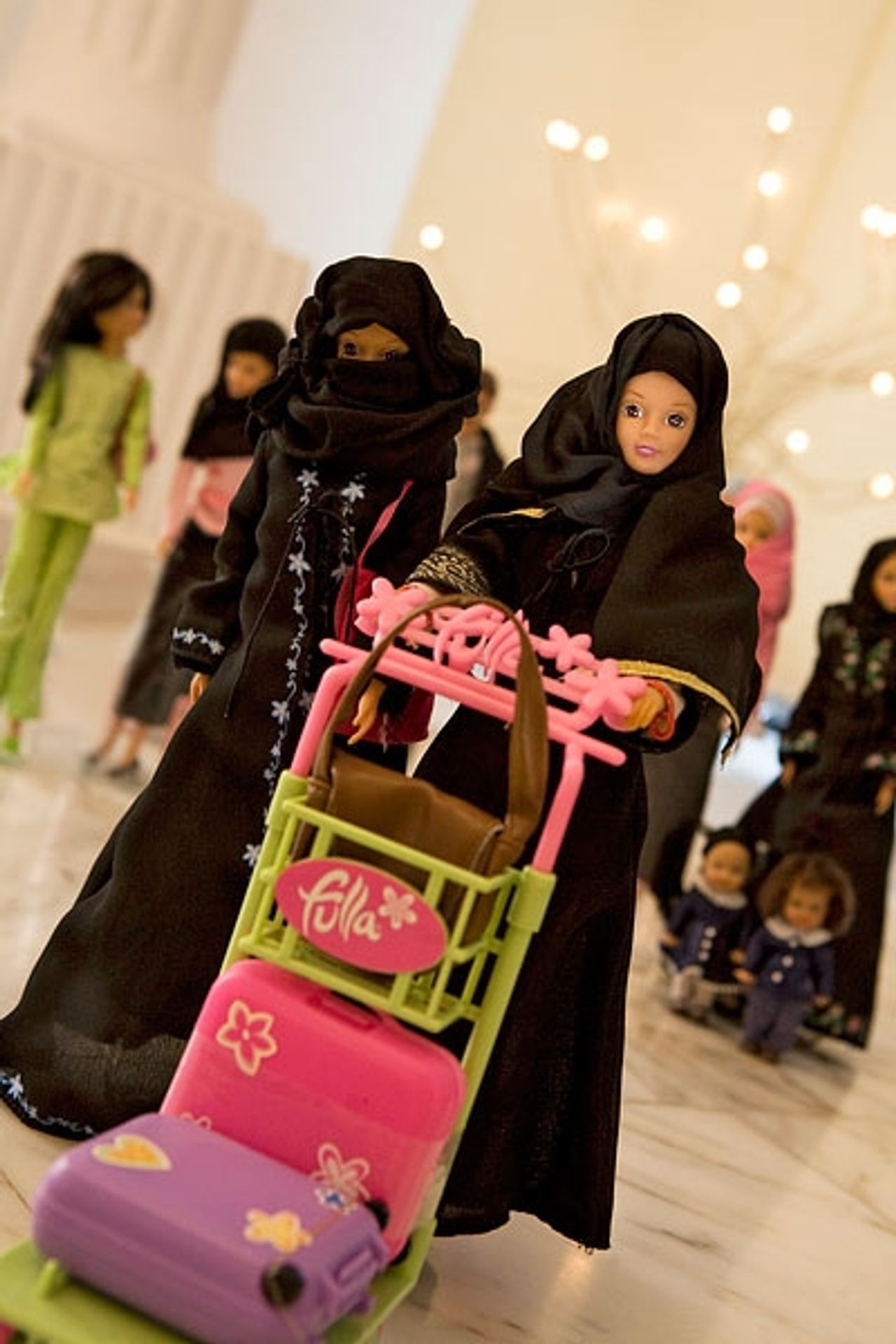
Editor: Here we have Boushra Yahya Almutawakel's photograph, "Fulla," from 2010. It's a really striking image, presenting a group of dolls dressed in Abayas. It makes me think about cultural representation and consumerism. What strikes you most about this work? Curator: For me, it's the fascinating tension between the mass-produced doll – itself a commodity object – and its deliberate re-presentation in culturally specific clothing. Almutawakel focuses our attention on the *making* of meaning. What labor went into the creation, distribution and then subsequent costuming of these dolls? Editor: That’s interesting, thinking about labor. I hadn’t considered the manufacturing aspect. Curator: Exactly! We see not just an image, but also the tangible products and economic forces shaping identities. Consider the material implications: Where were the dolls made? Who assembled them? How are the Abayas crafted? How are the products then distributed, and to whom? All very important when reflecting on material production and distribution, yes? Editor: Yes, definitely. It changes the way I view it. I initially saw it more as a comment on cultural identity. Curator: It IS about cultural identity! But through a lens that's considering commodification and production, not simply symbolic representation. How the Fulla doll and it's clothing is sold and bought becomes an extension of it's commentary. Editor: So, it's a more critical look at how identity is constructed through…things. Curator: Precisely! It questions the authentic versus the manufactured. The labor involved, from factory floor to boutique shelf, ultimately frames our understanding. It's the means of production under scrutiny, with identity caught in the cogs. Editor: I see. Thinking about it that way, it’s a really complex statement. Thank you!