1824
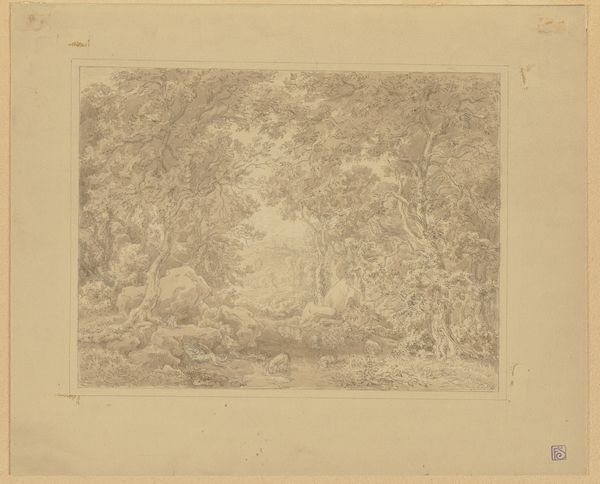
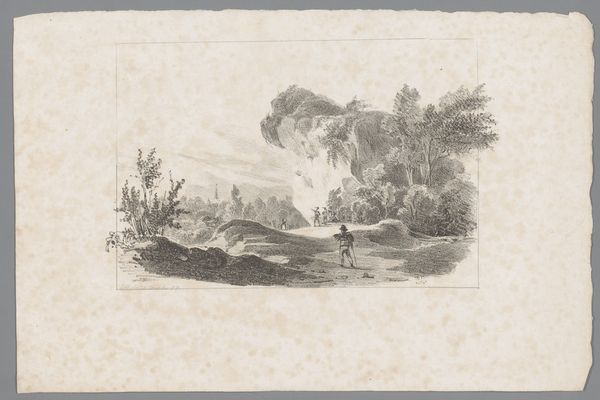
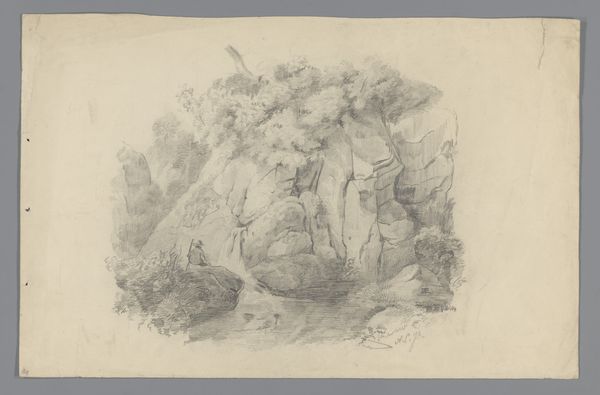
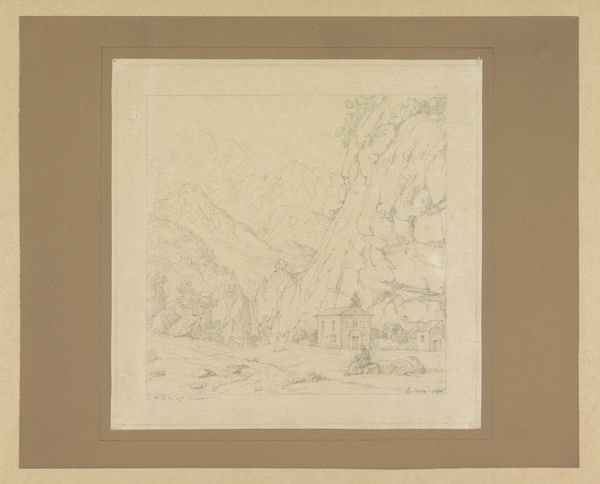
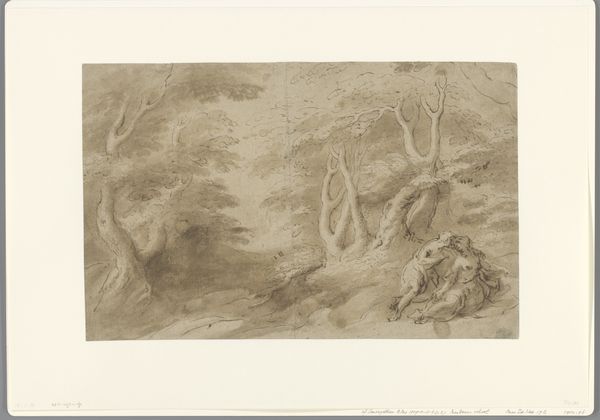
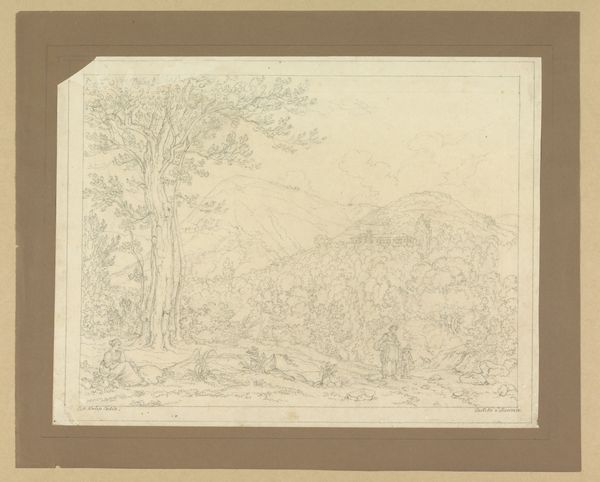
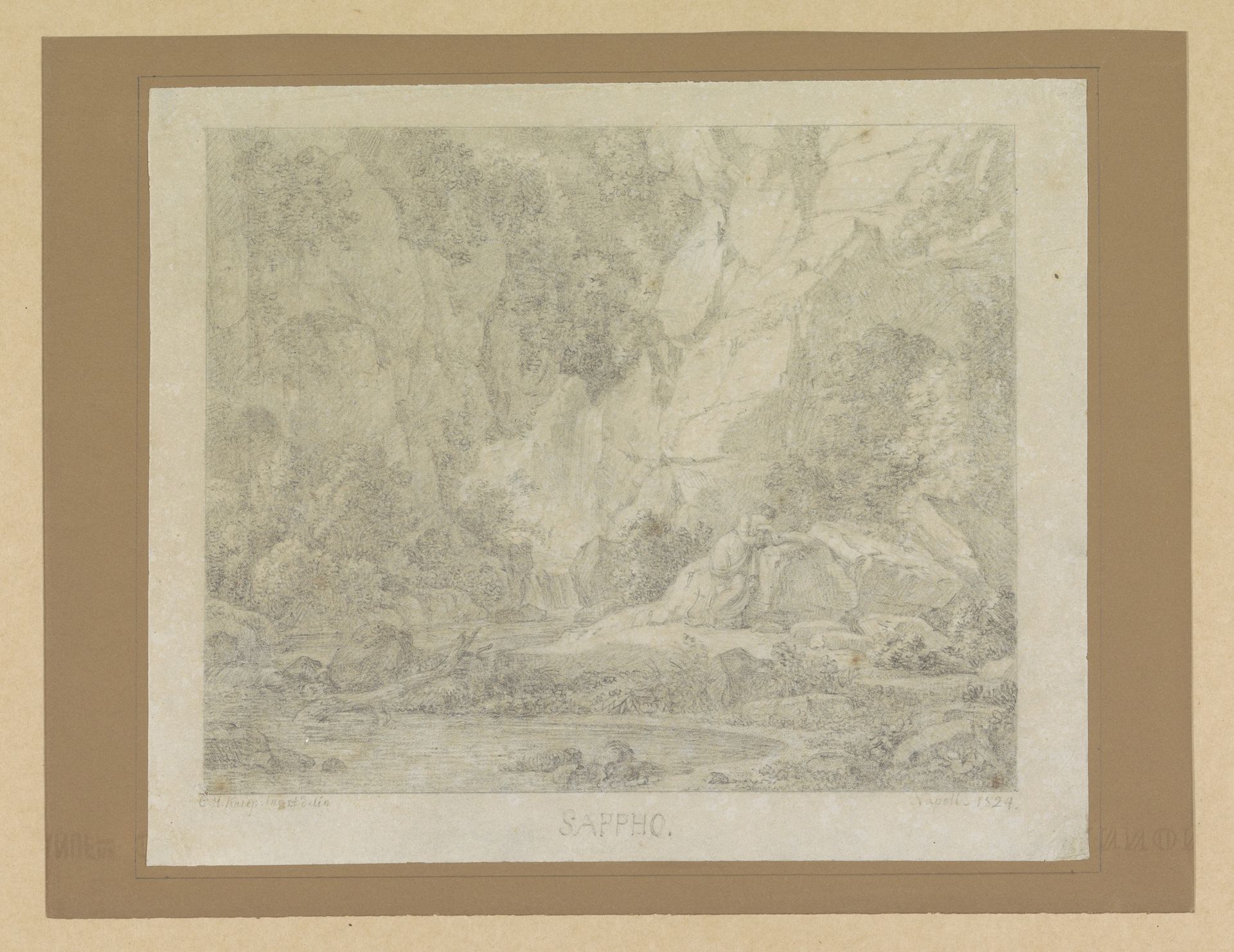
Sappho bij een meer in een berglandschap

Listen to curator's interpretation
Curatorial notes
Editor: This is Christoph Heinrich Kniep’s "Sappho bij een meer in een berglandschap," or "Sappho at a lake in a mountain landscape," created in 1824. It looks to be done with a combination of etching and pencil. I'm struck by how the lines almost create a smoky atmosphere, yet the details are still so sharp. What do you see when you look at this piece? Curator: What immediately strikes me is the production of this print, likely destined for a collector's album. Look closely at the layering of etching and pencil work. How does the reproductive technology democratize landscape views for wider consumption? Editor: That’s an interesting perspective! I hadn’t considered the idea of it being reproduced on a larger scale. So the choice of etching was deliberate for its replicability? Curator: Precisely! Think about the socio-economic context: who had access to landscapes like this, and who might want a 'souvenir'? This print flattens the space, bringing that mountainous environment into the domestic sphere. But what is gained, and what is lost, in that process of translation? Editor: That's true, owning a print would be far more accessible. So, by focusing on the materials and process, we can unpack a much broader commentary on access and cultural consumption at the time. I appreciate how you’ve changed my perspective. I initially looked at the artistry, and you refocused my view onto the materiality of artistic making, consumption, and society! Curator: Indeed, by focusing on the method of production, it allows us to better contextualize and demystify art history, shifting away from individual genius to the social dynamics that create art.