About this artwork
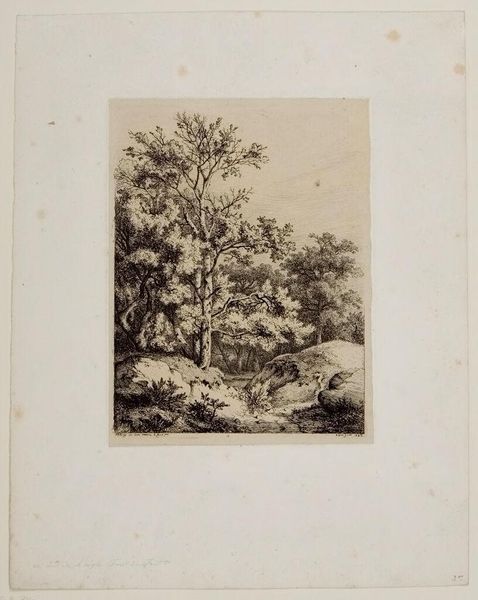
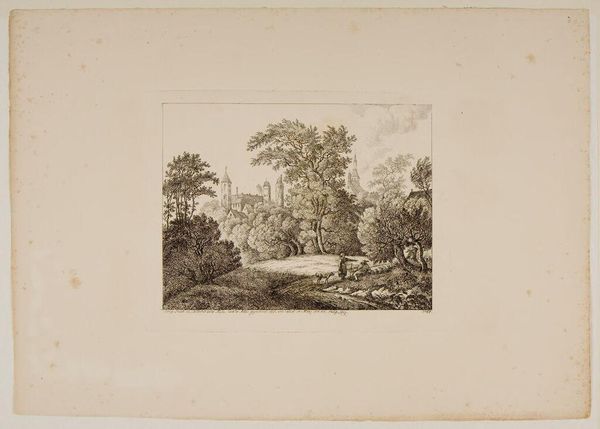
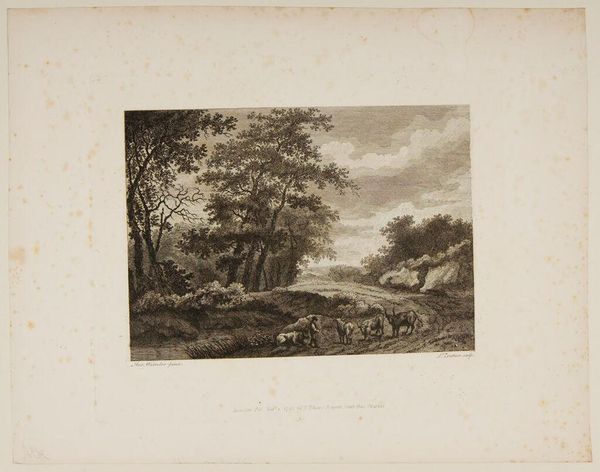
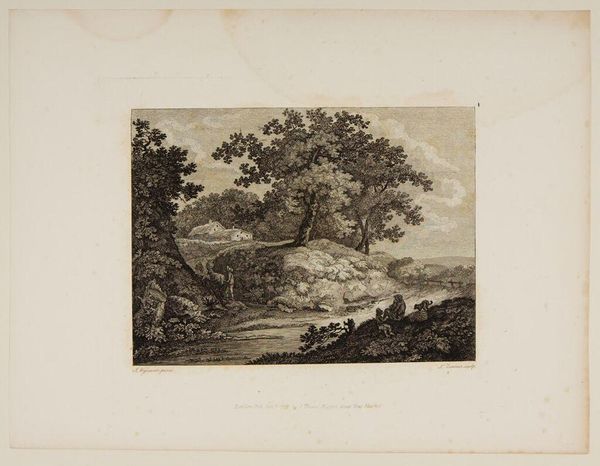
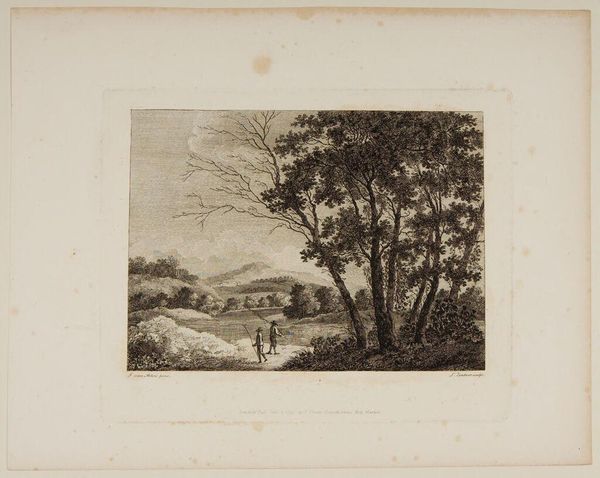
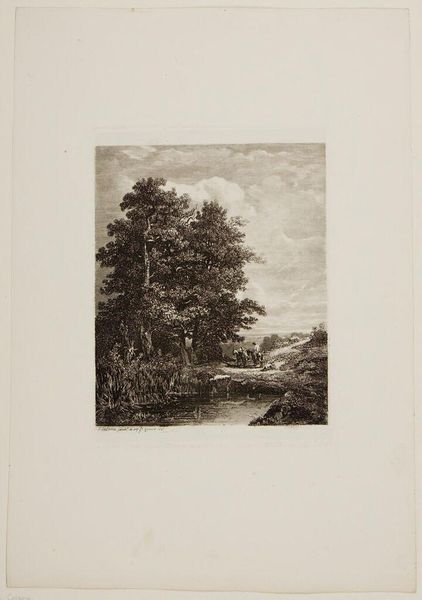
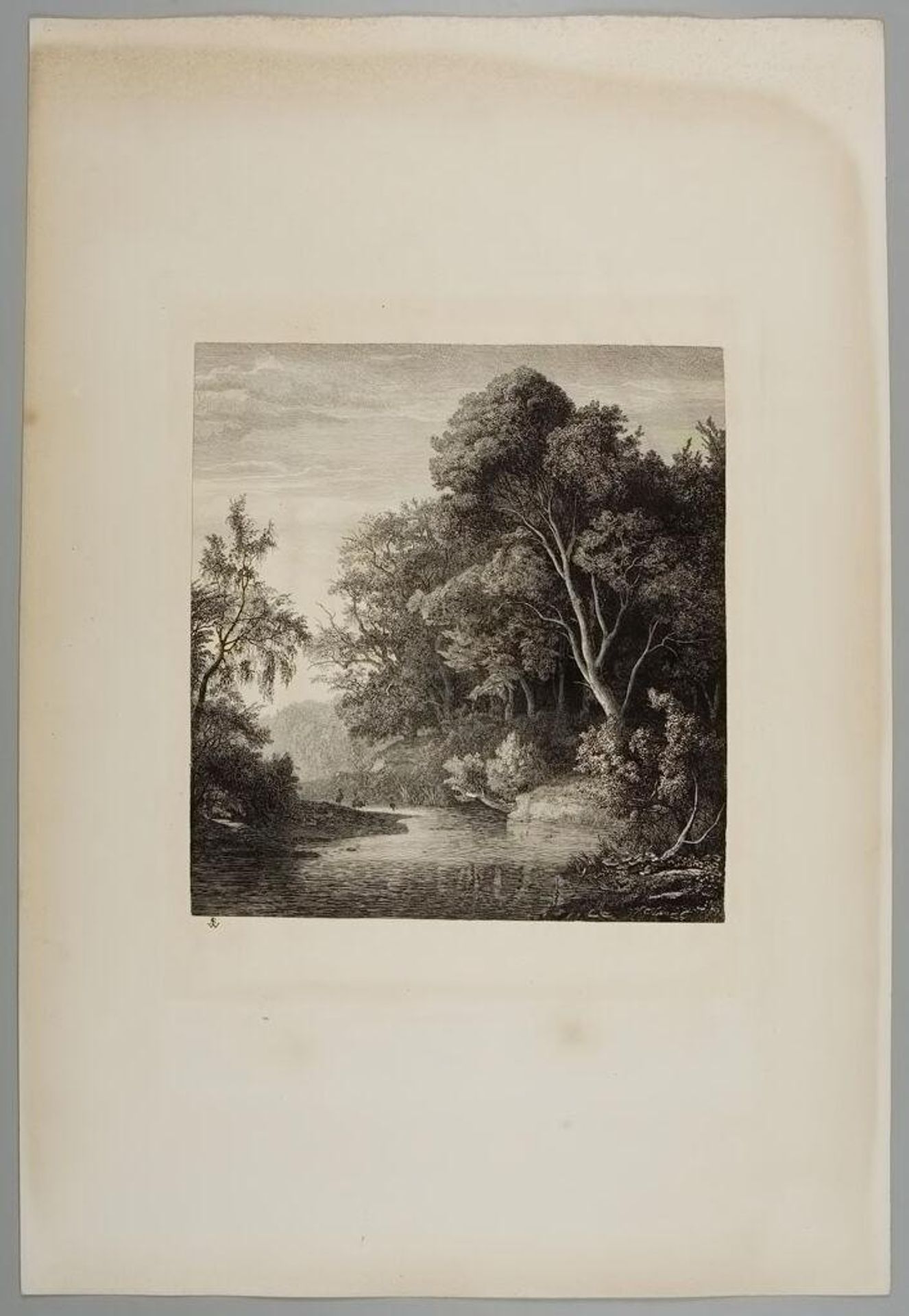
Curator: This is "Stream in a Forest with Storks," by Johann Wilhelm Schirmer. Editor: It's moody, I'll give it that. The stark contrasts create a sense of quiet drama. Curator: Schirmer, who lived from 1807 to 1863, was a key figure in the Düsseldorf School of painting. This work reflects their focus on detailed landscapes that evoke strong feelings. Editor: The composition is interesting. The stream acts as a diagonal anchor, pulling the eye through the dense foliage toward that distant horizon. Curator: Yes, and landscape paintings like this were increasingly popular, reflecting a growing national pride and appreciation for nature among the rising middle class. They offered a shared sense of place. Editor: The storks feel almost like an afterthought, though. They don’t really factor into the overall visual balance. It's all about the trees, the light, and the water’s reflective surface. Curator: Perhaps, but their inclusion hints at a deeper connection to the land, an assertion of ownership and belonging within a rapidly changing social landscape. Editor: Well, whether symbolic or not, Schirmer's play with light and shadow gives it a timeless quality. Curator: Indeed. It invites us to consider not only the aesthetic but also the social and political contexts that shaped its creation and reception.
Stream in a Forest with Storks c. 19th century


Artwork details
- Location
- Harvard Art Museums
- Copyright
- CC0 1.0
Comments
No comments
About this artwork
Curator: This is "Stream in a Forest with Storks," by Johann Wilhelm Schirmer. Editor: It's moody, I'll give it that. The stark contrasts create a sense of quiet drama. Curator: Schirmer, who lived from 1807 to 1863, was a key figure in the Düsseldorf School of painting. This work reflects their focus on detailed landscapes that evoke strong feelings. Editor: The composition is interesting. The stream acts as a diagonal anchor, pulling the eye through the dense foliage toward that distant horizon. Curator: Yes, and landscape paintings like this were increasingly popular, reflecting a growing national pride and appreciation for nature among the rising middle class. They offered a shared sense of place. Editor: The storks feel almost like an afterthought, though. They don’t really factor into the overall visual balance. It's all about the trees, the light, and the water’s reflective surface. Curator: Perhaps, but their inclusion hints at a deeper connection to the land, an assertion of ownership and belonging within a rapidly changing social landscape. Editor: Well, whether symbolic or not, Schirmer's play with light and shadow gives it a timeless quality. Curator: Indeed. It invites us to consider not only the aesthetic but also the social and political contexts that shaped its creation and reception.
Comments
No comments