drawing, print, paper, ink
#
drawing
# print
#
paper
#
ink
#
post-impressionism
Dimensions: 397 × 513 mm (full sheet); 397 × 256 mm (folded sheet); 24 × 94 mm (title block), 105 × 187 mm (headpiece)
Copyright: Public Domain
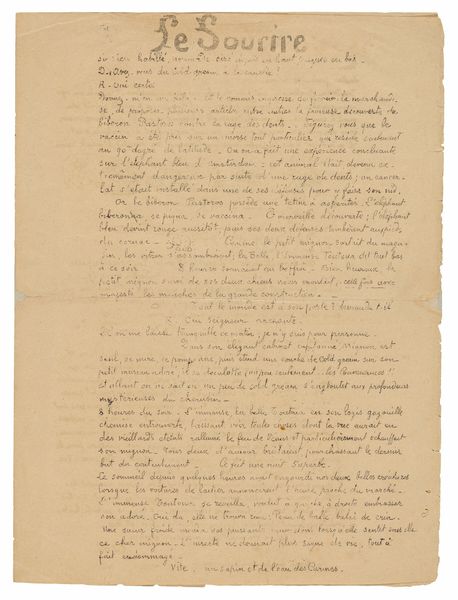
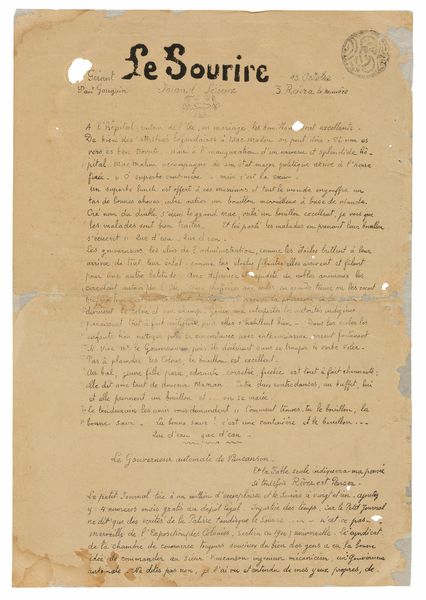
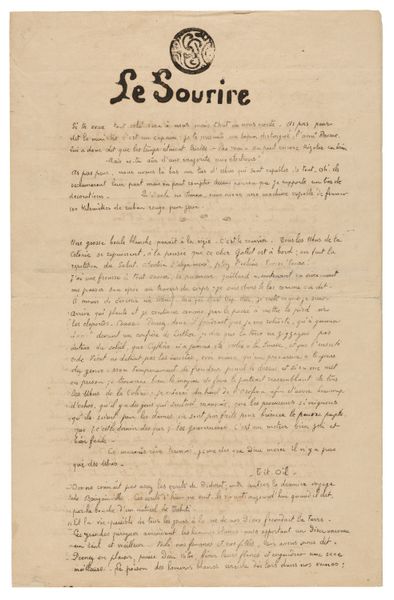
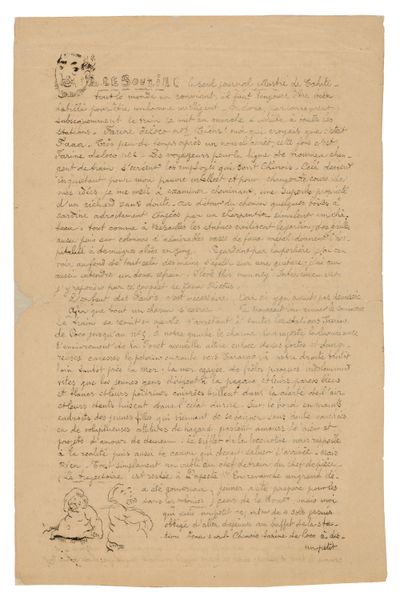
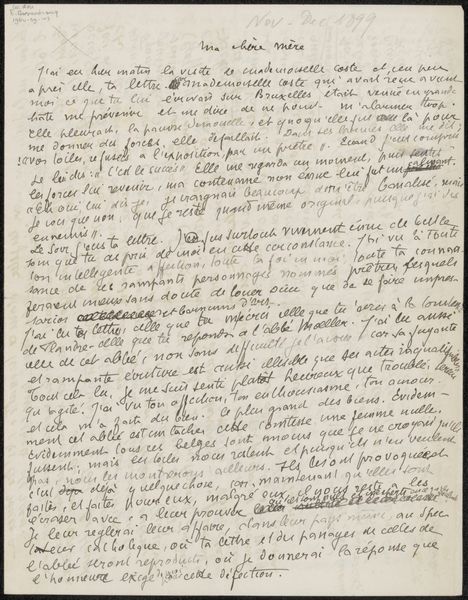
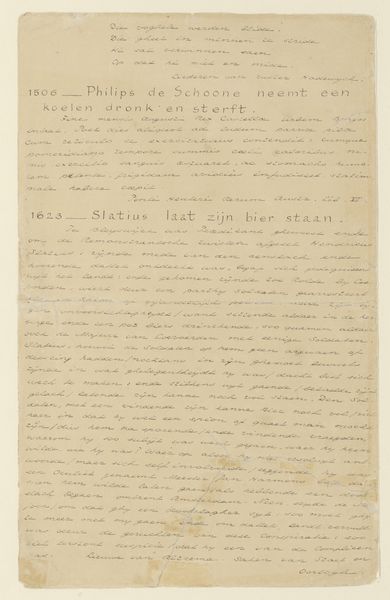
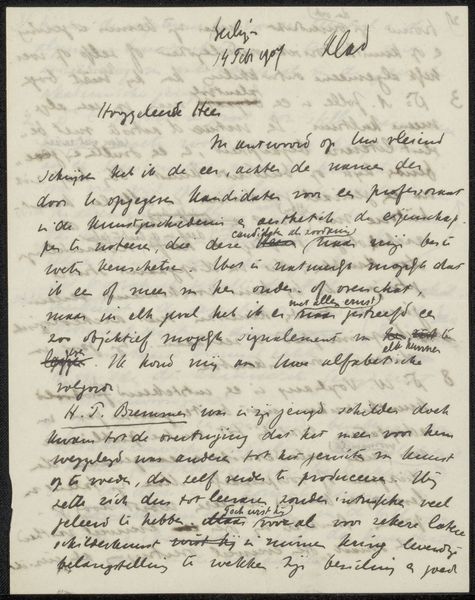
Curator: This fragile paper before us, residing in The Art Institute of Chicago, is a print made with ink entitled "Le sourire: Journal sérieux, Nov. 1899" crafted in 1899 by Paul Gauguin. Editor: Immediately, I'm struck by how raw and unfiltered it feels. It looks like a page torn from a personal diary or manifesto—the scrawled script conveying urgency. There is definitely a sense of defiance. Curator: Indeed. This work and other journals showcase Gauguin's unique voice through both text and imagery, enabling art and politics. He created the literary journal *Le Sourire* during his second trip to Tahiti. How do you think this informs how one must look at this object? Editor: Knowing it comes from that specific colonial context deepens my interpretation. The title itself, "Le Sourire" or "The Smile", now rings with loaded irony. Is it the smile of those colonizing, or the faint, suppressed smile of those colonized resisting, even if internally? I also notice the different size lettering; at the top, there appears a printed typeface but below it looks handwritten. This really plays into the idea of high art/low art, or rather an artist with limited resources finding ways of making an impact in the social-political conversation with whatever they had. Curator: Your point about the visual layering of the printed and written texts resonates with Gauguin’s own layered identities. This journal allows one to interpret and see him wrestling with complex social, political and existential questions; and from the standpoint of being far removed from French society and within a vastly different indigenous cultural landscape. The print makes you contemplate colonial structures in visual culture at the turn of the century, doesn't it? Editor: Absolutely, the fact it’s a printed publication means that Gauguin’s private musings became public pronouncements, adding further layers of intention. And by choosing to print these kinds of reflections from within a colonized territory... it acts as an inherent confrontation. In this context it feels revolutionary, given the fact indigenous populations weren't awarded these kinds of publishing resources. Curator: Considering the work within a framework of the legacies of colonial structures really reframes the meaning-making for today’s museum visitor, as it asks them to question assumptions while also being visually transported back in time to witness the tensions, as they appear to us on paper, as history. Editor: Right. Recognizing the historical currents surging beneath even this seemingly simple, direct gesture allows us to read its implications in powerful new ways.
Comments
No comments
Be the first to comment and join the conversation on the ultimate creative platform.
 Collect
 React
React Comment
More like this