#
photo of handprinted image
#
toned paper
#
muted colour palette
#
possibly oil pastel
#
chalky texture
#
underpainting
#
pastel chalk drawing
#
tonal art
#
green and neutral
#
printed materiality
Copyright: Hans Richter,Fair Use
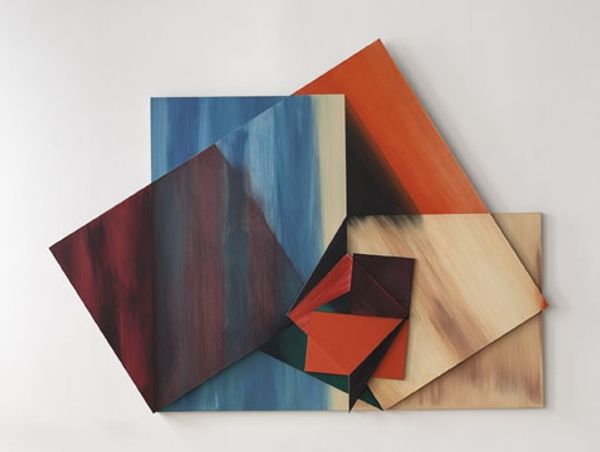
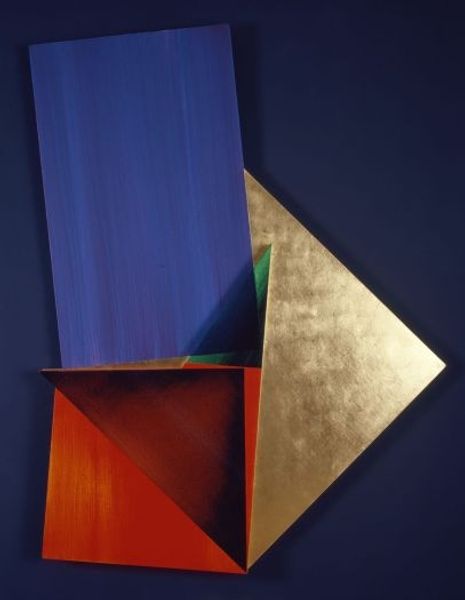
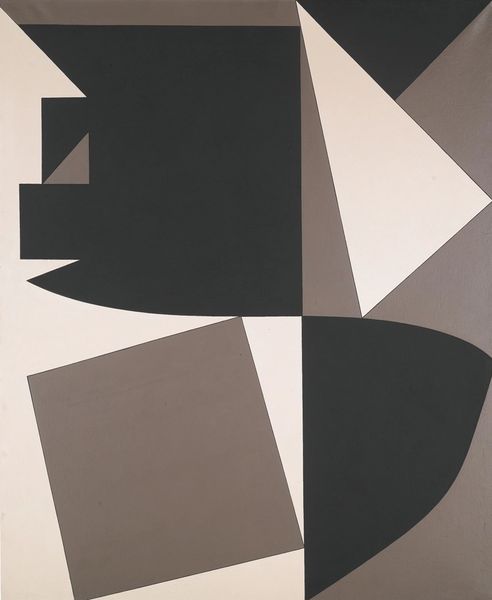
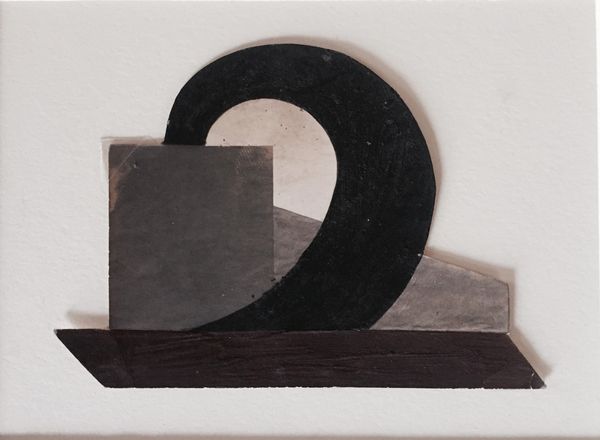
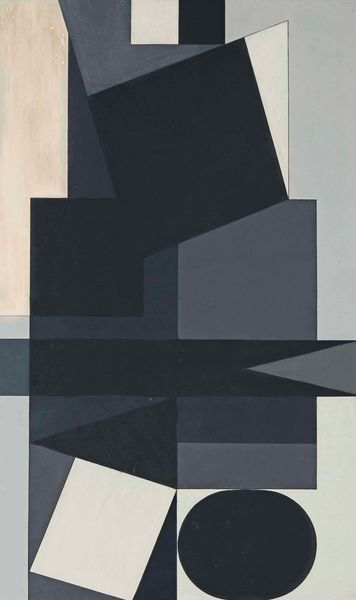
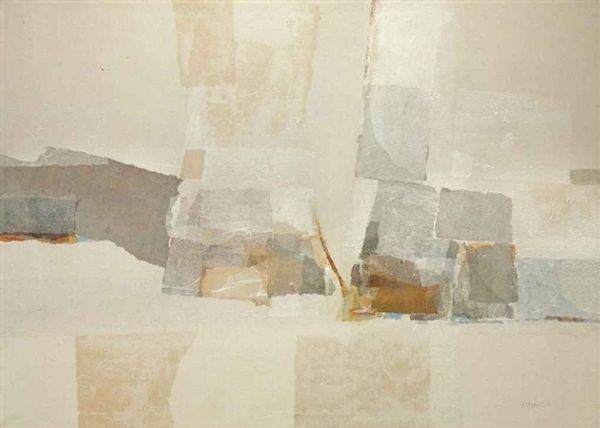
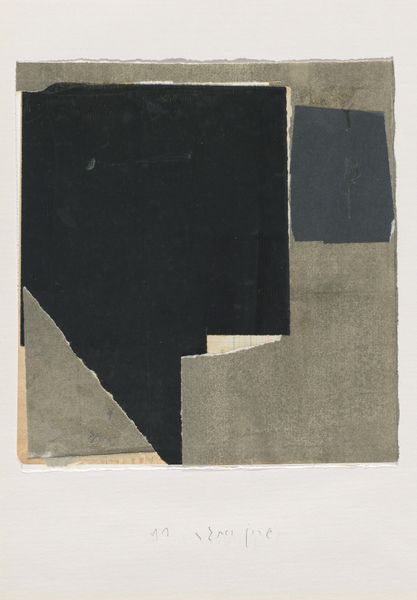
Curator: Editor: We're looking at "Cohesion VII" created by Hans Richter in 1967. The work consists of what appear to be layered, painted wood shapes, almost like an abstract collage. The color palette is subdued and earthy, creating a rather quiet and contemplative mood. How do you interpret this work in relation to the social and political context of its time? Curator: That's a perceptive observation about the mood and the materiality, I am glad you started with that. Considering it was made in 1967, at the height of global sociopolitical unrest, one can't help but view its construction, those carefully placed shapes, as a metaphor for a world attempting to rebuild itself. Richter, having lived through two World Wars, perhaps saw abstraction as a way to depict this process, not necessarily resolving into harmony but achieving some form of fragile "cohesion" through the careful interplay of distinct parts. What strikes you most about the *relationships* between the shapes themselves? Editor: They do feel quite deliberate. Nothing overlaps randomly; everything seems precisely placed, or perhaps even precariously balanced. Do you see the choice of materials – wood, specifically – as having any significance? Curator: Absolutely. Wood carries a sense of history, of growth and change over time, and that aligns with Richter's life, steeped in major cultural movements. In the post-war era, the use of such humble, accessible materials could also be seen as a rejection of elitism. It's almost as if he's grounding this search for cohesion in something tangible, democratic, something accessible to all. How does thinking about it in that way shift your perception? Editor: It makes the piece feel much less cold and abstract. The wood, this grounded, basic material, adds a layer of humanism to an otherwise very formal composition. It’s a reminder that even abstract concepts like "cohesion" have very real implications for everyday life and for everyone. Curator: Precisely. It makes us consider not just *if* things cohere, but *how*, and *for whom*. Art enables critical reflection and cultural awareness. Editor: I see now. Thanks, that really reframes the piece.
Comments
No comments
Be the first to comment and join the conversation on the ultimate creative platform.
 Collect
 React
React Comment
More like this