1896
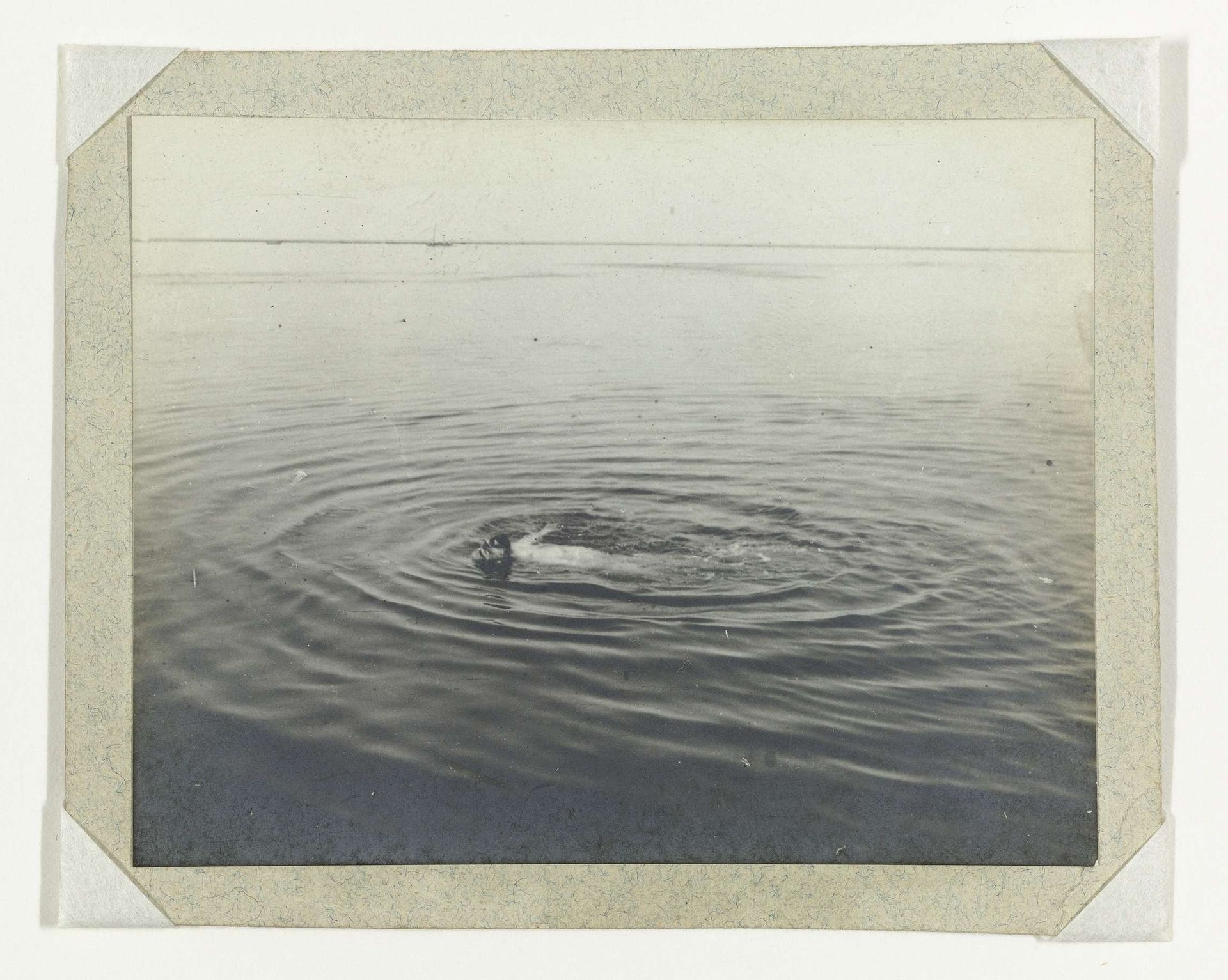
Toulouse-Lautrec Swimming in the Bassin d’Arcachon

Listen to curator's interpretation
Curatorial notes
Curator: There's something wonderfully serene, almost dreamlike, about this photograph. It feels so fleeting. Editor: This is "Toulouse-Lautrec Swimming in the Bassin d’Arcachon," taken in 1896 by Maurice Guibert, a fascinating landscape presented through the medium of photography. It immediately struck me as more than just a candid shot; it speaks volumes about societal expectations of beauty, health, and leisure during the late 19th century. Curator: Yes, the way the water ripples out from him, it’s like watching a stone dropped into a still pond, except the stone is Henri. Knowing his struggles with his health makes this image surprisingly poignant. He’s sort of swallowed up, or held, by the water. Editor: Exactly. It’s about visibility and invisibility. Here’s a man who defied convention and expectation in his art, but the photograph poses questions. What is revealed and what remains hidden? How does his body, marked by physical difference, interact with the supposed openness of nature? The water might "hold" him, but it also obscures. Curator: That makes me think, Henri always played with this in his posters—bold figures emerging from flat space. I can imagine him finding this moment equally captivating; a figure emerging out of the water's textures and the horizon, so dreamily out of focus. Editor: And don't forget the societal context. Leisure and access to natural spaces like the Bassin d’Arcachon were increasingly linked to class and privilege. For Lautrec, this moment isn't simply about carefree swimming; it's about participating in and negotiating a very specific kind of social world. Curator: True, even seemingly carefree moments can be tied up in privilege and how that's shaped by societal forces and norms. But it also has an almost disarming casualness... I still love it. It's all about making me stop and wonder. Editor: Absolutely, this photo’s historical threads complicate and enrich our engagement with it.