oil-paint
#
gouache
#
narrative-art
#
oil-paint
#
landscape
#
figuration
#
oil painting
#
romanticism
#
genre-painting
Copyright: Public domain
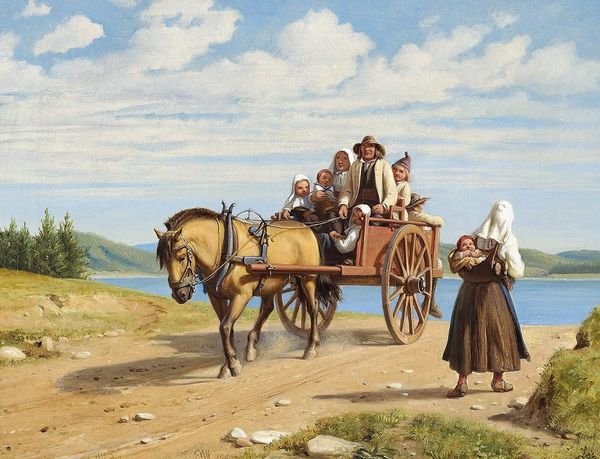
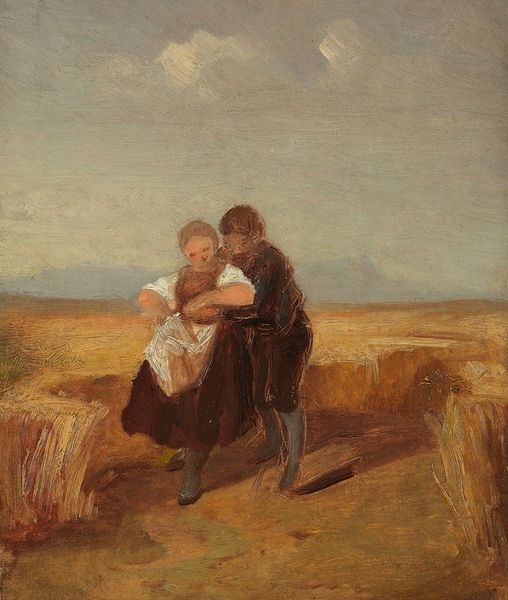
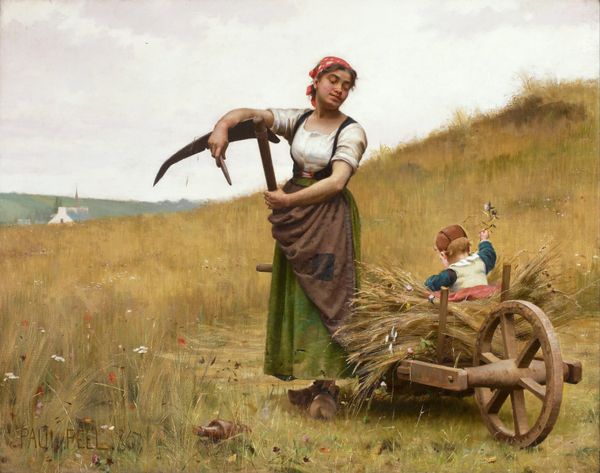
Editor: This is Paul Peel's "The Reaper's Joy," an oil painting that captures a family wading through water. The overall effect is really quite serene; despite the labor implied by the title, there's a soft, almost dreamlike quality to the scene. What do you see in this piece, from your perspective? Curator: Formally, one might observe the subtle interplay of light and shadow. Note the artist’s application of impasto—visible striations in the oil paint. The way the paint describes the reflection of the horse. The limited palette also contributes to a visual unity; a careful arrangement of earthy browns and greens. Observe the placement of the figures: how they’re not perfectly centered. Does this compositional choice create tension, or perhaps lead the eye to wander? Editor: It does guide my eye across the scene, definitely. I notice the background is much less detailed than the figures in the foreground, as well. Is that significant? Curator: The reduced detail creates a sense of depth; it invites us to focus on the geometry of the family group. The painter relies on careful construction: Horizontal and vertical lines structure the organization of the image’s real estate; creating a sense of harmony. Observe how this structure contributes to its aesthetic unity. The texture, color and depth all create a calming emotional response. Editor: That makes me think about the texture of the figures and the smoothness of the water and the sky. That contrast in texture adds depth and makes the image pop in some way. Thanks, I have a much better sense for how all these things add to the overall feel of the painting! Curator: Precisely. Through a close examination of such formal elements, we uncover the artistry—the underlying order, and the calculated decisions of the artist—manifest in the aesthetic experience.
Comments
No comments
Be the first to comment and join the conversation on the ultimate creative platform.
 Collect
 React
React Comment
More like this