About this artwork
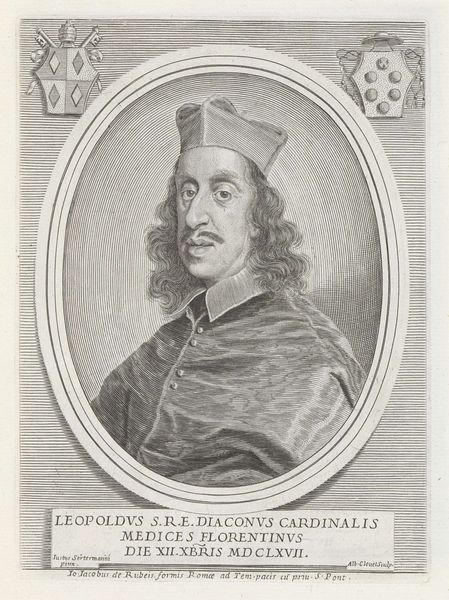
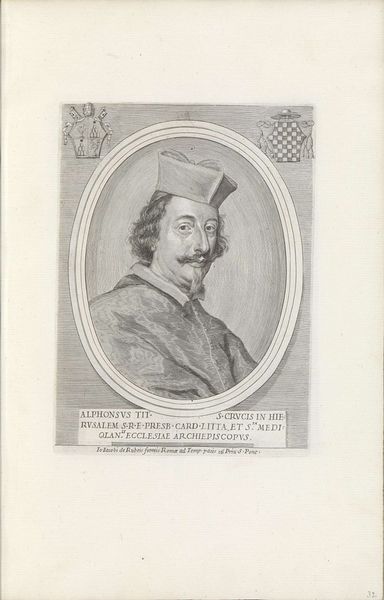
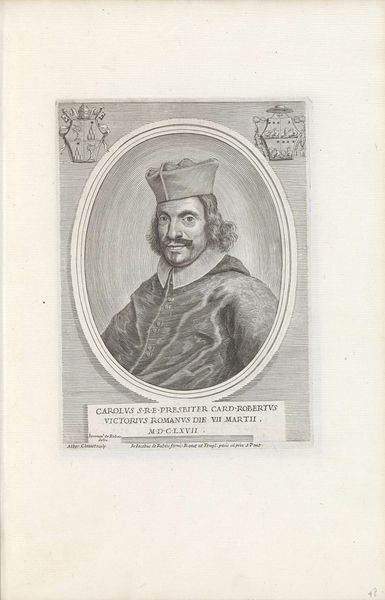
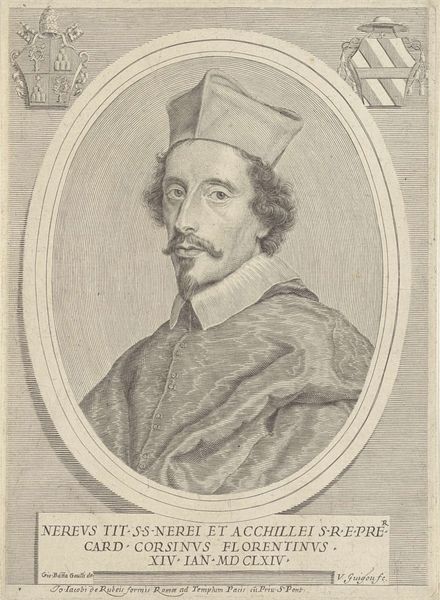
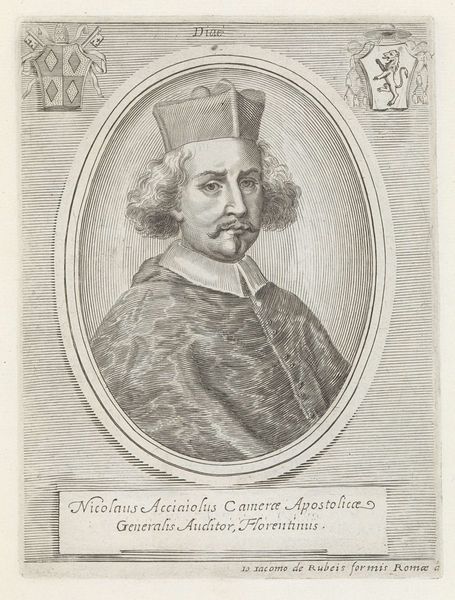
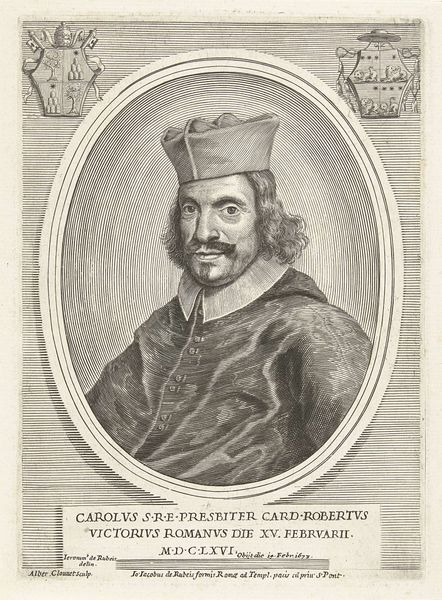
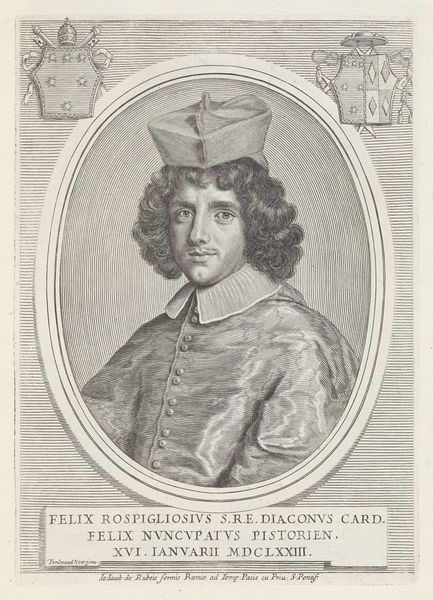
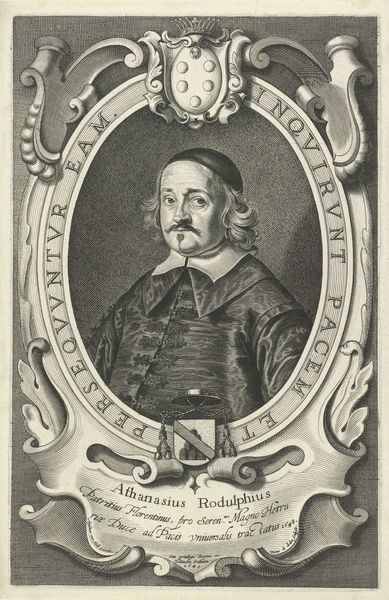
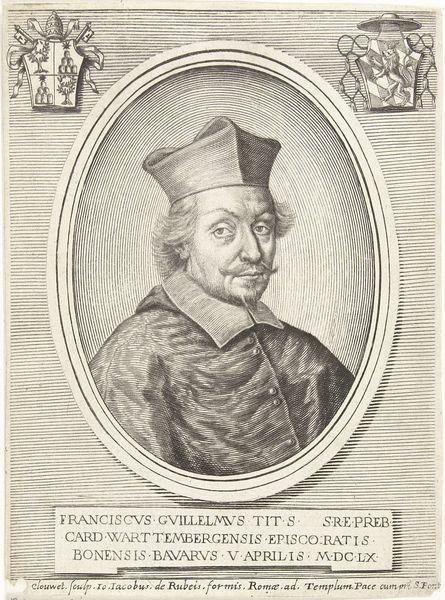
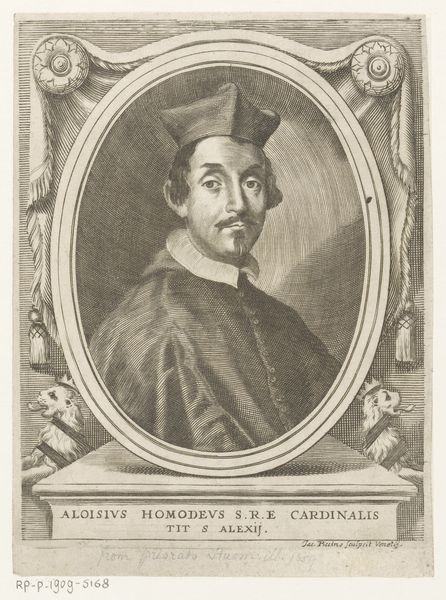
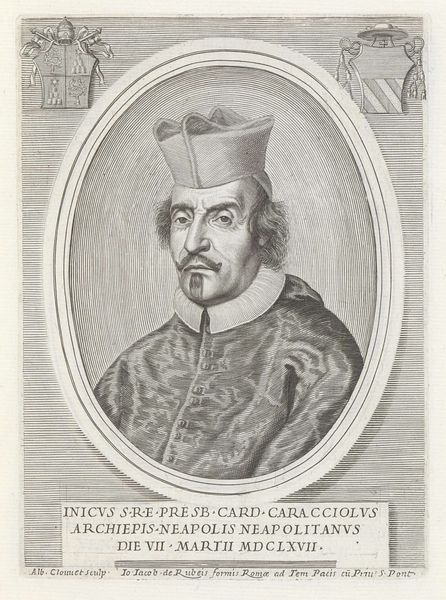
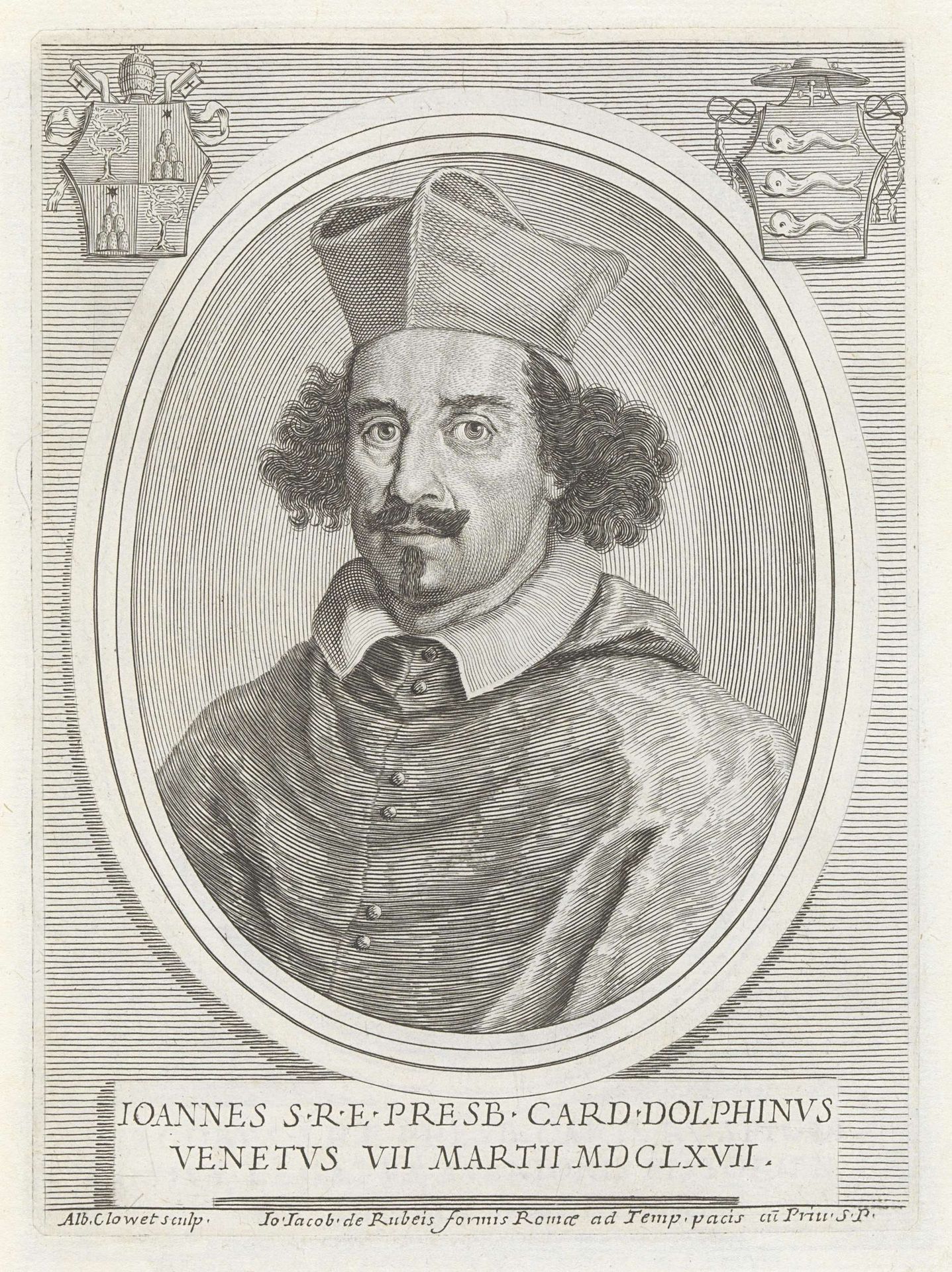
Albertus Clouwet created this portrait of Cardinal Giovanni Delfino through engraving. The composition is dominated by the oval frame that centres the Cardinal's figure, drawing our eyes to the intricate details of his face and attire. The stark contrast of the engraving emphasizes the textures, from the curls of his hair to the folds of his garments, creating a compelling visual experience. Clouwet uses a semiotic system of signs to convey the Cardinal's status and character. The coat of arms above, the clerical garb, and the meticulous rendering of his features all contribute to a reading of Delfino as a figure of authority and intellect. The precision of line and form, typical of engravings, reinforces the Cardinal's image as carefully constructed, designed to project a sense of power. Consider how the artist uses the formal qualities of the engraving to articulate not just an image of a man, but a complex interplay of representation, authority, and identity within the cultural landscape of the time. This artwork serves as a testament to how visual elements can create and reinforce cultural and philosophical ideals.

Artwork details
- Medium
- print, engraving
- Dimensions
- height 191 mm, width 140 mm
- Copyright
- Rijks Museum: Open Domain
Tags
Comments
Share your thoughts
About this artwork
Albertus Clouwet created this portrait of Cardinal Giovanni Delfino through engraving. The composition is dominated by the oval frame that centres the Cardinal's figure, drawing our eyes to the intricate details of his face and attire. The stark contrast of the engraving emphasizes the textures, from the curls of his hair to the folds of his garments, creating a compelling visual experience. Clouwet uses a semiotic system of signs to convey the Cardinal's status and character. The coat of arms above, the clerical garb, and the meticulous rendering of his features all contribute to a reading of Delfino as a figure of authority and intellect. The precision of line and form, typical of engravings, reinforces the Cardinal's image as carefully constructed, designed to project a sense of power. Consider how the artist uses the formal qualities of the engraving to articulate not just an image of a man, but a complex interplay of representation, authority, and identity within the cultural landscape of the time. This artwork serves as a testament to how visual elements can create and reinforce cultural and philosophical ideals.
Comments
Share your thoughts