print, engraving
#
baroque
# print
#
old engraving style
#
landscape
#
history-painting
#
engraving
Dimensions: height 154 mm, width 95 mm
Copyright: Rijks Museum: Open Domain
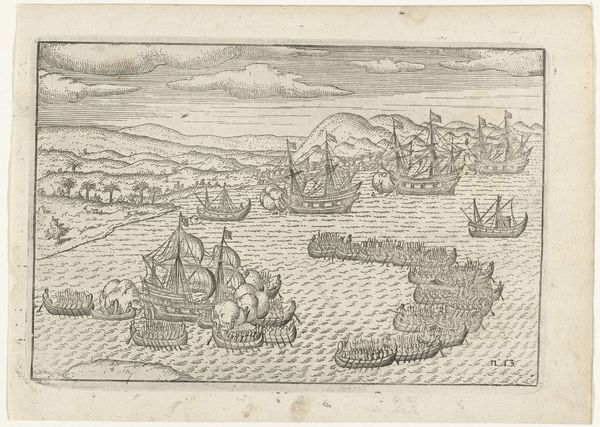
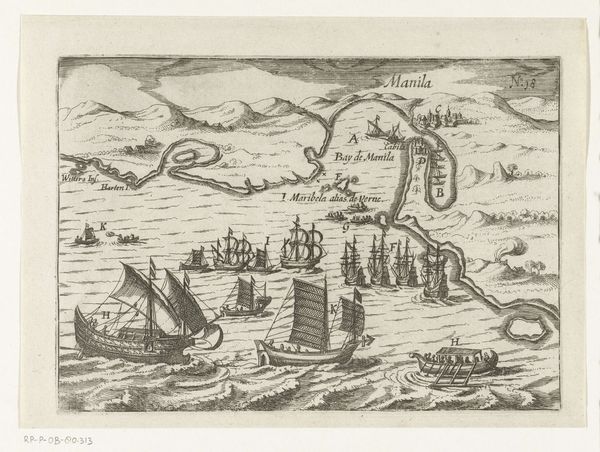
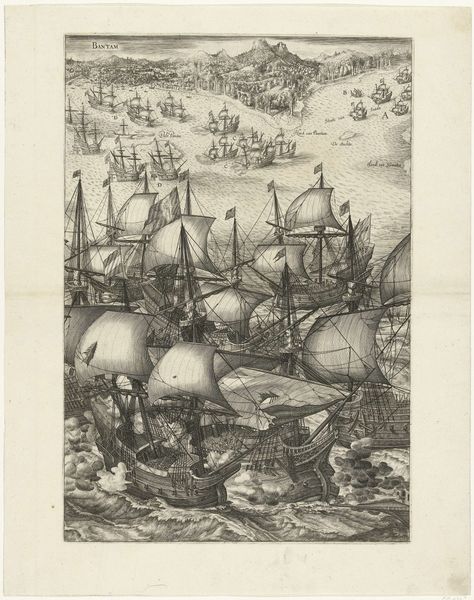
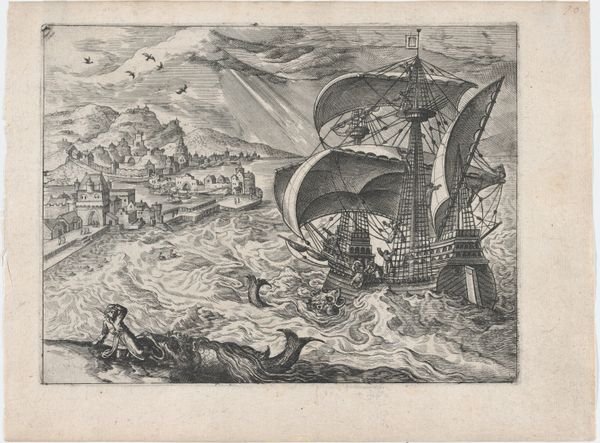
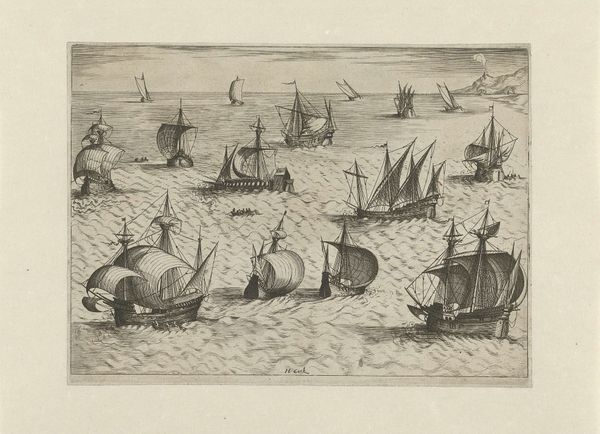
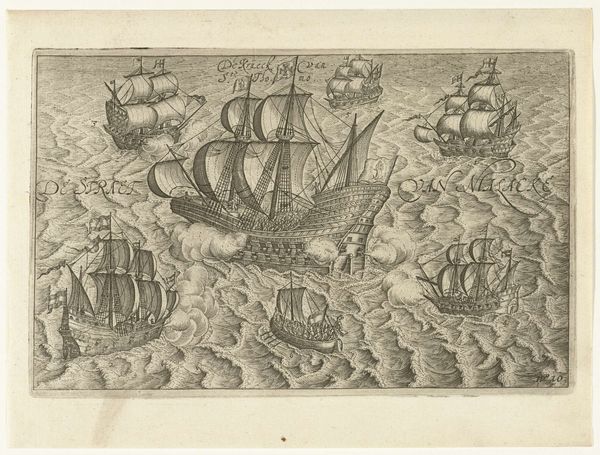
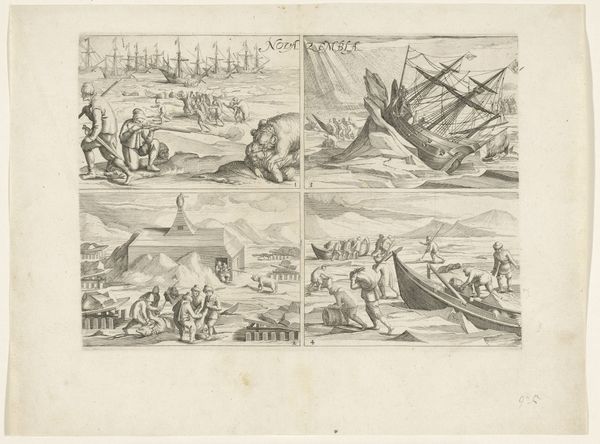
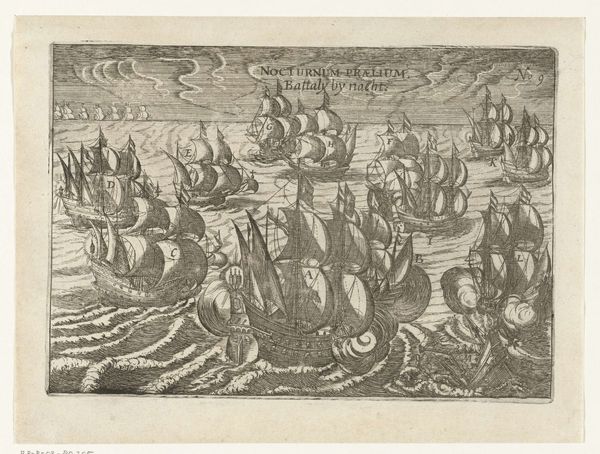
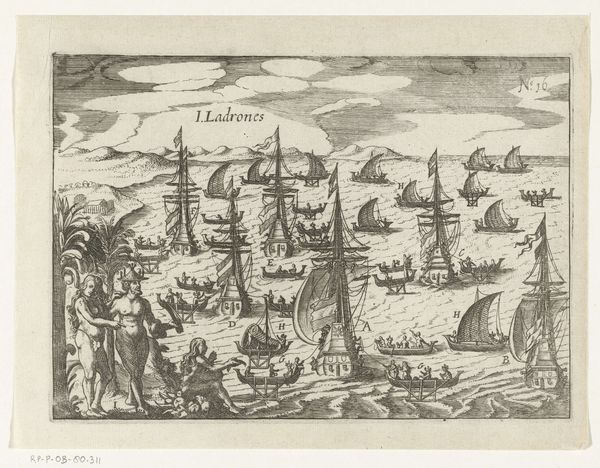
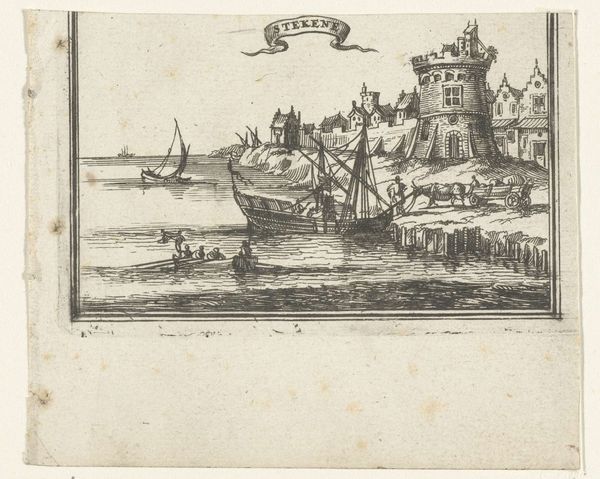
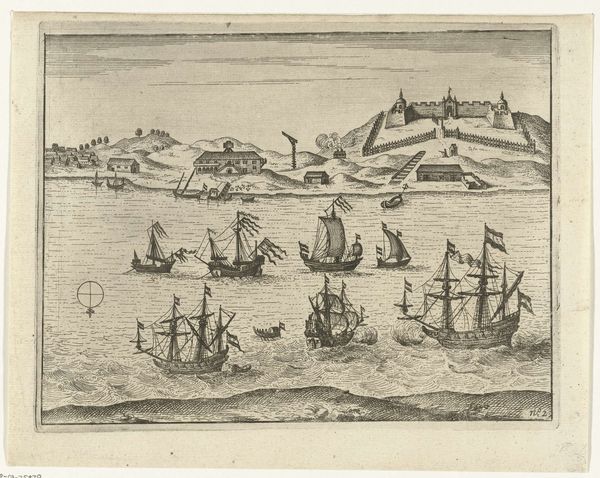
Curator: This intricate engraving, dating back to 1624, is entitled "Fleet of Gondolas." Created by Claude Mellan, this piece employs a highly detailed line technique. Editor: Immediately, the teeming activity strikes me. So many boats, each carrying their own narrative across the water; it's almost overwhelming, a vibrant visual tapestry. Curator: Absolutely. And the details – the slight variations in each vessel, the rendering of the water… it’s all symbolic. Water, of course, is a classic symbol for change and movement. Notice also the gondolas, with many carrying canopies, alluding to Venetian culture. In this, the fleet itself suggests a cultural procession or event, each vessel carrying its individual purpose. Editor: Looking closely, I see structures that could be interpreted as Egyptian pyramids far in the background on the shoreline. I'm intrigued. I wonder how this setting – a mix of Venetian watercraft and hints of Egyptian landscape – speaks to contemporary colonial narratives. Curator: A crucial point. It speaks of power and travel across continents in early globalization. The combination of Egyptian elements may signify a reach toward, or incorporation of, different world histories within European cultural awareness. Pyramids, in art, often embody eternal stability juxtaposed against mortal activity. Editor: And look how Mellan crafts the scene, with a foreground bustling with humanity, set against an ancient landscape—almost staging a dialogue between history and the present. Curator: I agree; it subtly comments on the then contemporary expansion of trade and travel with a backdrop referencing an ancient culture, thus underscoring the West’s expanding worldview through art. Also, consider what the style itself does to add meaning; Baroque flourished during a period defined by grand spectacles that legitimized royal authority. In a society obsessed with outward shows of status, history itself becomes theatricalized. Editor: Right. What I find most captivating is the sheer abundance and depth encapsulated within such a delicate etching. So many interpretations within what at first glance appears merely to be an intricate waterscape. Curator: Agreed. I am struck by how it manages to bring layers of narrative together. It provides rich insights for the observer. Editor: For me, it reflects a perspective where personal stories and immense histories mingle to inform, inspire, and perhaps subtly caution against colonial ambition.
Comments
No comments
Be the first to comment and join the conversation on the ultimate creative platform.
 Collect
 React
React Comment
More like this