About this artwork
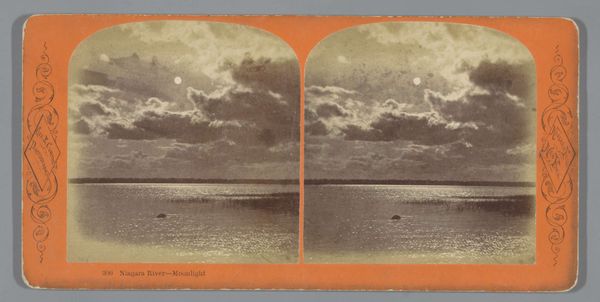
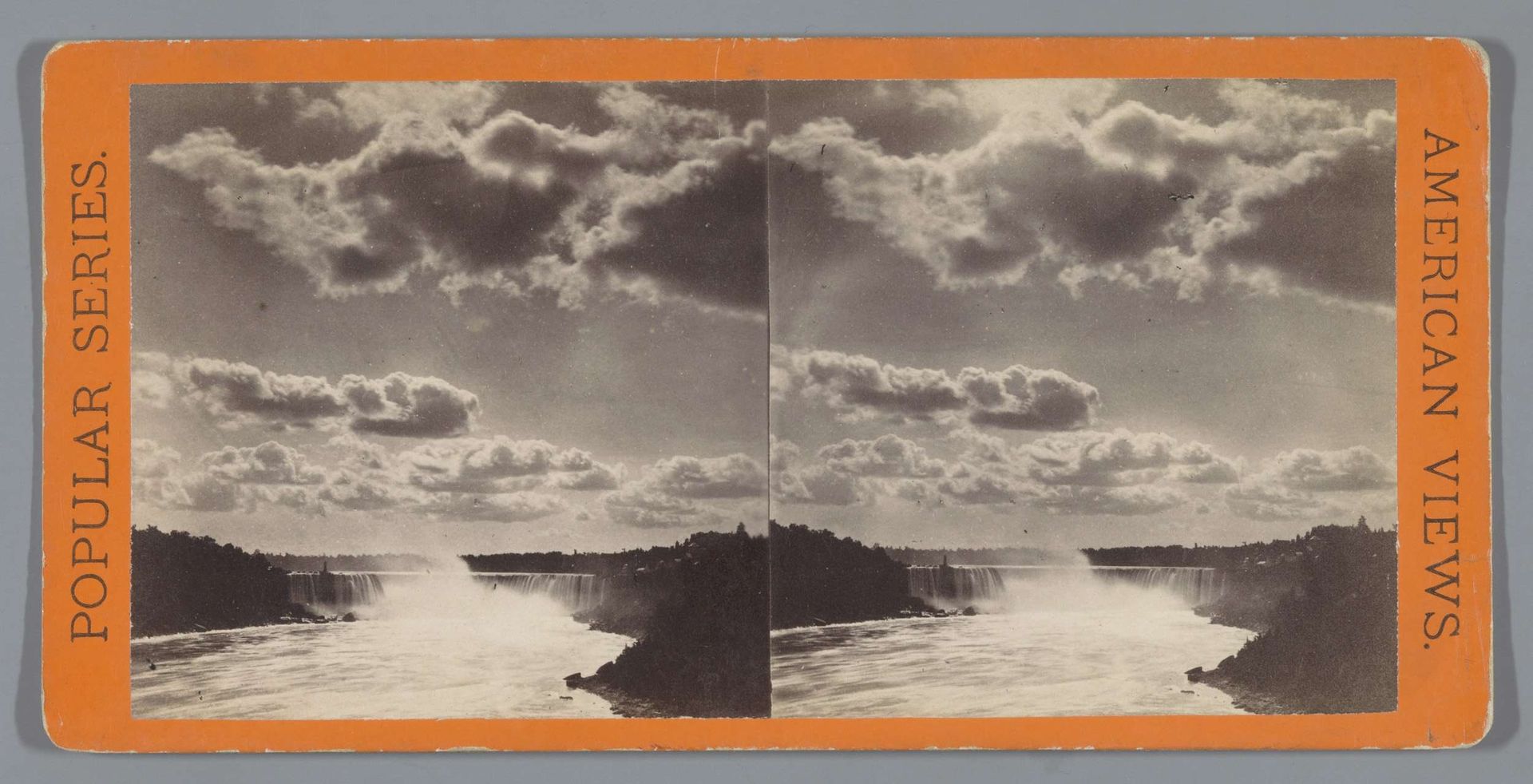
This stereoscopic image shows the Horseshoe Falls and Terrapin Tower, viewed from the Canadian side, and was made using photographic processes. The anonymous maker utilized the relatively new technology of photography, which, by this time, had become increasingly accessible and integral to documenting and popularizing landmarks like Niagara Falls. The material of photography itself – the light-sensitive emulsion, the specific lens used, and the printing process – all influence the image’s appearance. The monochromatic palette and soft focus imbue the scene with a sense of romantic grandeur. This was enhanced by the stereoscopic format, which gave viewers a compelling illusion of depth. The production of these images was tied to the burgeoning tourism industry around Niagara Falls, which was both a symbol of natural wonder and a site of intense commercial activity. These images, mass-produced and widely distributed, became a form of visual currency, circulating the awe-inspiring views of the Falls and solidifying its status as a must-see destination. This highlights how technological advancements intertwine with tourism, consumption, and the promotion of natural landmarks.
Gezicht op de Horseshoe Falls en Terrapin Tower, gezien vanaf Canadese zijde
1871 - 1888

Artwork details
- Dimensions
- height 86 mm, width 176 mm
- Copyright
- Rijks Museum: Open Domain
Comments
Share your thoughts
About this artwork
This stereoscopic image shows the Horseshoe Falls and Terrapin Tower, viewed from the Canadian side, and was made using photographic processes. The anonymous maker utilized the relatively new technology of photography, which, by this time, had become increasingly accessible and integral to documenting and popularizing landmarks like Niagara Falls. The material of photography itself – the light-sensitive emulsion, the specific lens used, and the printing process – all influence the image’s appearance. The monochromatic palette and soft focus imbue the scene with a sense of romantic grandeur. This was enhanced by the stereoscopic format, which gave viewers a compelling illusion of depth. The production of these images was tied to the burgeoning tourism industry around Niagara Falls, which was both a symbol of natural wonder and a site of intense commercial activity. These images, mass-produced and widely distributed, became a form of visual currency, circulating the awe-inspiring views of the Falls and solidifying its status as a must-see destination. This highlights how technological advancements intertwine with tourism, consumption, and the promotion of natural landmarks.
Comments
Share your thoughts