About this artwork
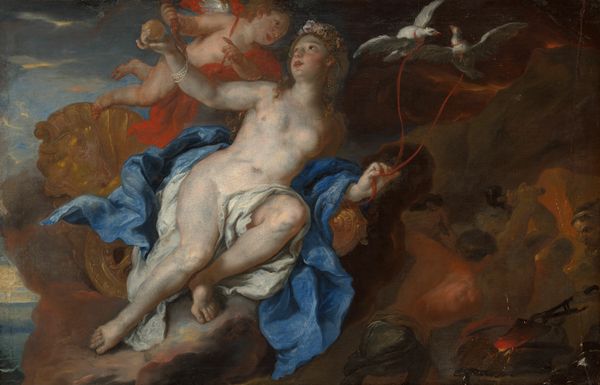
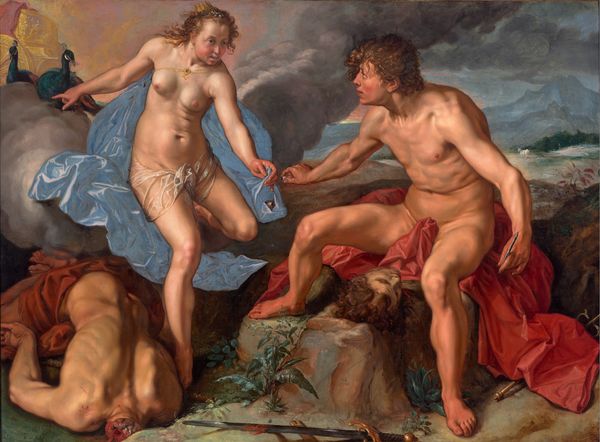
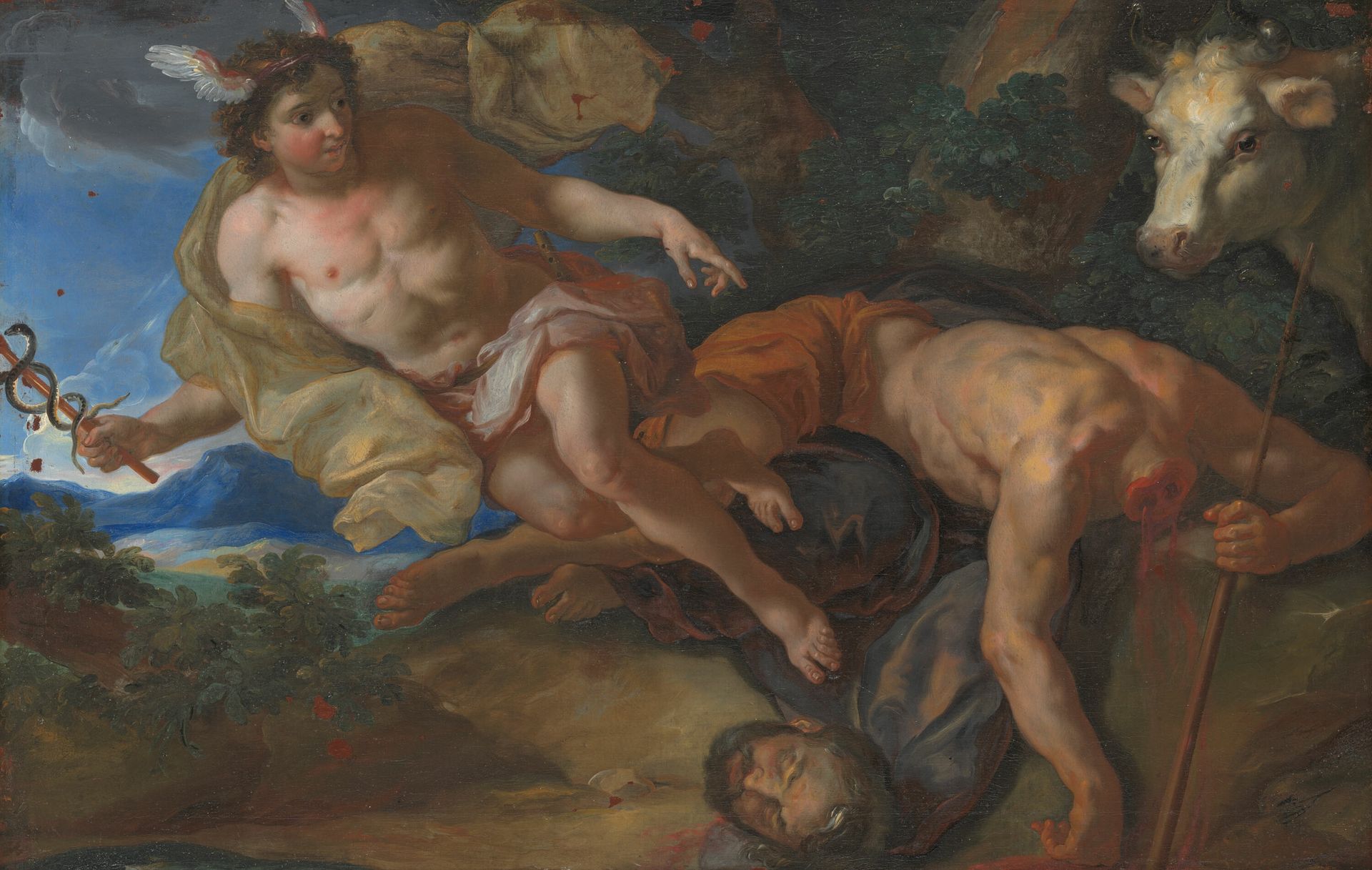
Johann Michael Rottmayr painted this scene of mythological rescue on canvas. Observe Mercury, identified by his winged sandals and caduceus, a staff entwined with two snakes. In ancient Greece, the caduceus was a symbol of commerce, negotiation, and eloquence. Now, contrast this with its modern interpretation, particularly in the United States, where it's often mistaken for the Rod of Asclepius, a symbol of medicine with only one snake. This confusion reflects a fascinating shift in symbolic meaning over time. Consider, too, the presence of Argus, now headless, his many eyes—symbols of vigilance—forever shut. This act of beheading can be interpreted through a psychoanalytic lens as a symbolic castration, representing the overpowering of patriarchal authority. It's a powerful, primal image engaging us on a subconscious level. The symbols, their evolution, and our interpretations are a testament to the cyclical journey of cultural memory.
Mercury rescues the disguised Io after beheading Argus
c. 1690 - 1695


Artwork details
- Medium
- painting, oil-paint
- Dimensions
- 32 × 49 1/2 in. (81.3 × 125.2 cm)
- Location
- The Art Institute of Chicago
- Copyright
- Public Domain
Tags
Comments
Share your thoughts
About this artwork
Johann Michael Rottmayr painted this scene of mythological rescue on canvas. Observe Mercury, identified by his winged sandals and caduceus, a staff entwined with two snakes. In ancient Greece, the caduceus was a symbol of commerce, negotiation, and eloquence. Now, contrast this with its modern interpretation, particularly in the United States, where it's often mistaken for the Rod of Asclepius, a symbol of medicine with only one snake. This confusion reflects a fascinating shift in symbolic meaning over time. Consider, too, the presence of Argus, now headless, his many eyes—symbols of vigilance—forever shut. This act of beheading can be interpreted through a psychoanalytic lens as a symbolic castration, representing the overpowering of patriarchal authority. It's a powerful, primal image engaging us on a subconscious level. The symbols, their evolution, and our interpretations are a testament to the cyclical journey of cultural memory.
Comments
Share your thoughts