c. 1715 - 1717
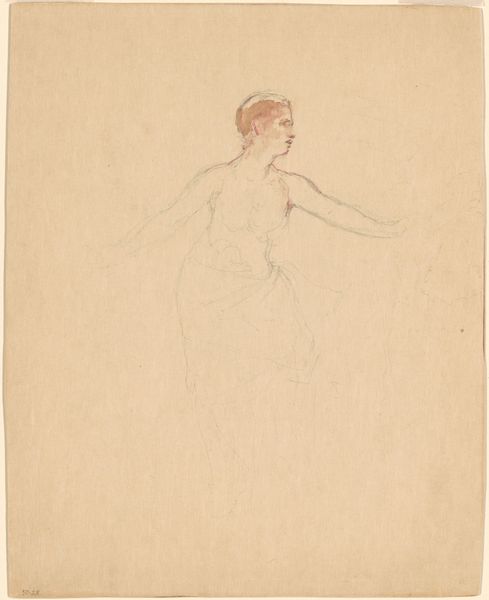
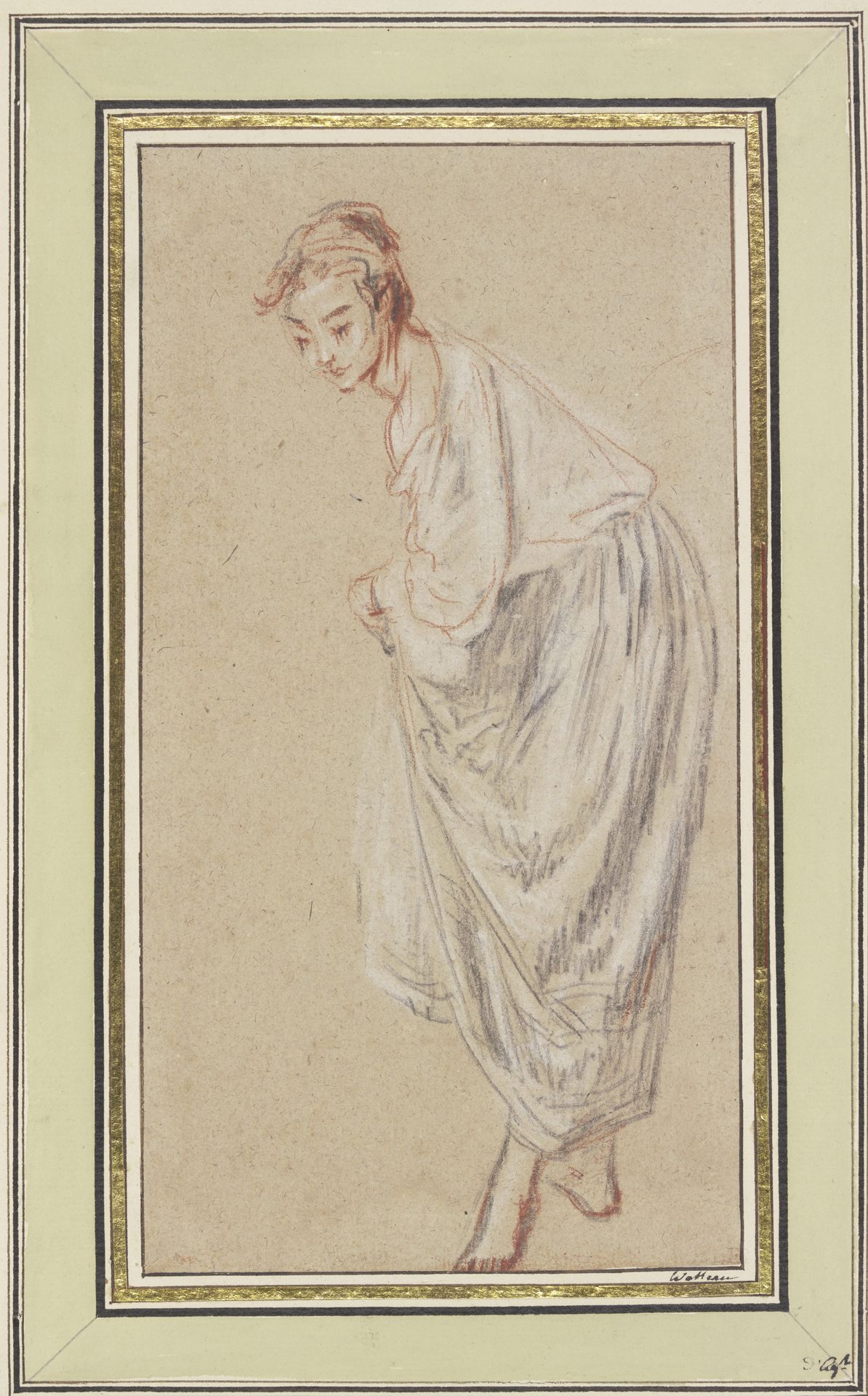
Standing Girl; barefoot, lifting her skirt


Listen to curator's interpretation
Curatorial notes
Editor: Here we have Watteau’s "Standing Girl; barefoot, lifting her skirt," a red-chalk drawing from around 1715. It's delicate, almost like a fleeting impression. What strikes you most about this piece? Curator: Ah, Watteau. This little dancer, or perhaps just a girl caught in a moment of whimsy, invites such speculation, doesn't she? The way he uses red chalk… it's like capturing a blush, a whisper of life. But tell me, what does she whisper to you? Editor: I think…insecurity? Or coyness? It's like she's self-conscious but maybe playful at the same time? Curator: Precisely! That duality is key to Watteau's genius, I believe. He sees, and makes us see, the performance of being. Lifting the skirt, is it a tease, a stumble, a game, or protection? This wasn’t some grand commission – it feels incredibly personal, almost voyeuristic, doesn't it? Watteau had tuberculosis. Is it his closeness to his own end that gives this such vibrancy? Editor: Wow, I hadn't thought of it that way. It does change how I see the girl—not just as a subject, but maybe a mirror for Watteau's own vulnerability. Curator: Perhaps every artist's subject *is* ultimately a mirror reflecting not just reality, but their soul too. It’s interesting how so little information yields to so much speculation, I’d say. Editor: That makes me think about how even the simplest sketch can have layers upon layers of meaning, just waiting to be discovered. Thanks, that was great. Curator: And thank you for dancing along with me. Until the next brush stroke, may you reflect and create, and find only joy.