drawing, print, engraving
#
portrait
#
drawing
#
baroque
# print
#
pencil sketch
#
figuration
#
history-painting
#
engraving
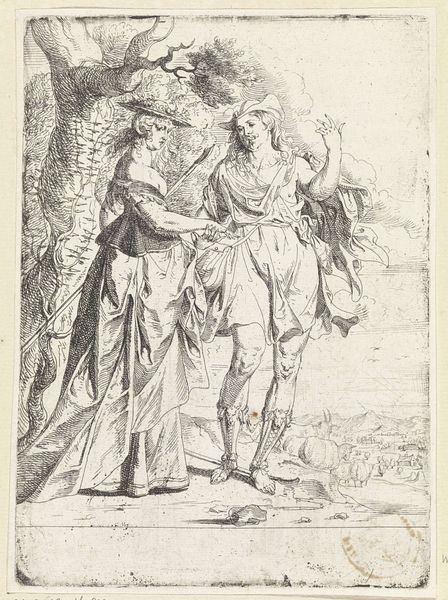
Dimensions: height 160 mm, width 109 mm, height 163 mm, width 103 mm
Copyright: Rijks Museum: Open Domain
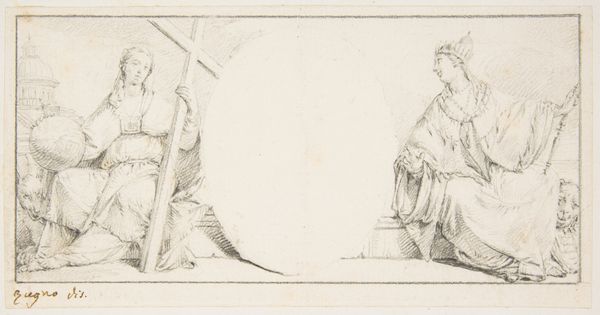
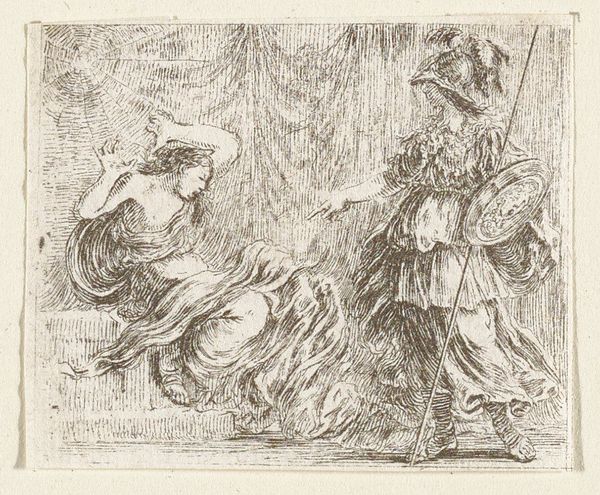
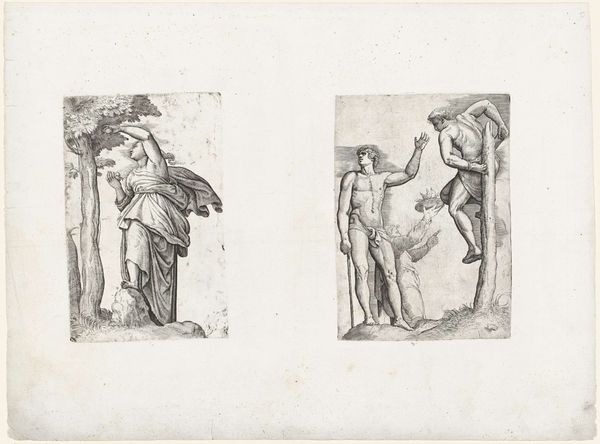
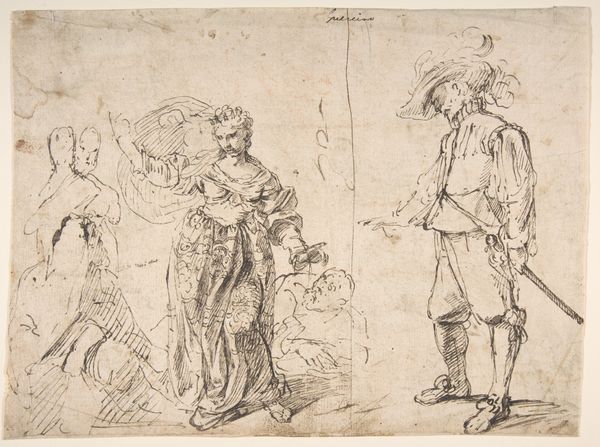
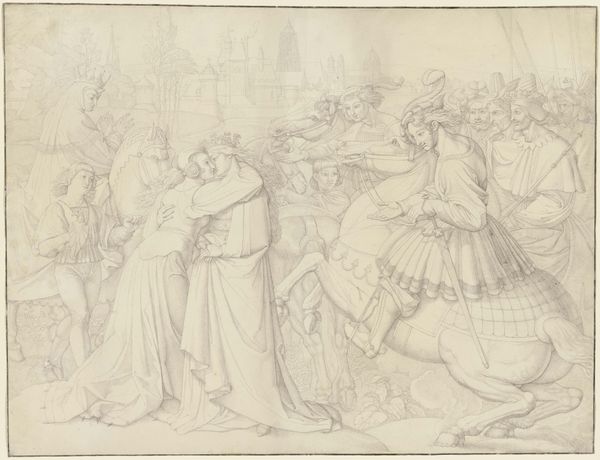
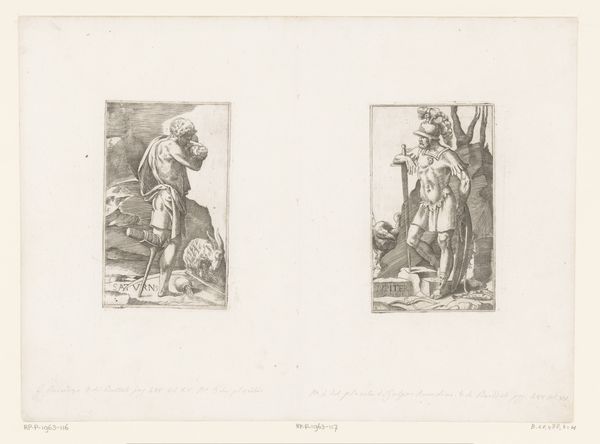
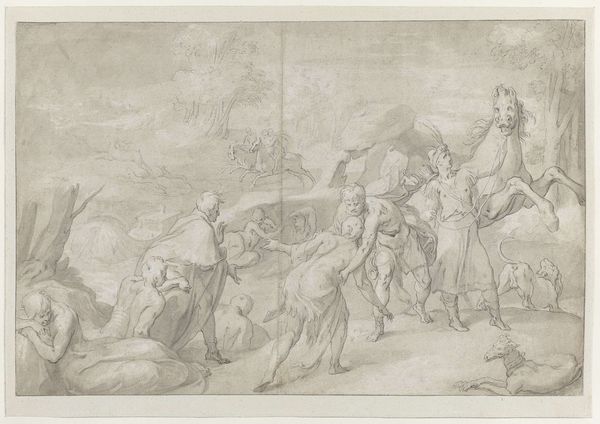
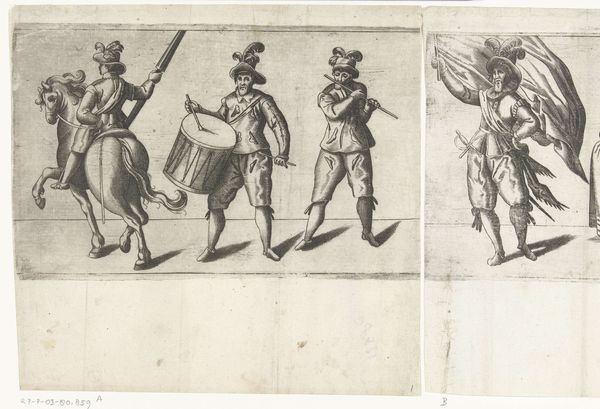
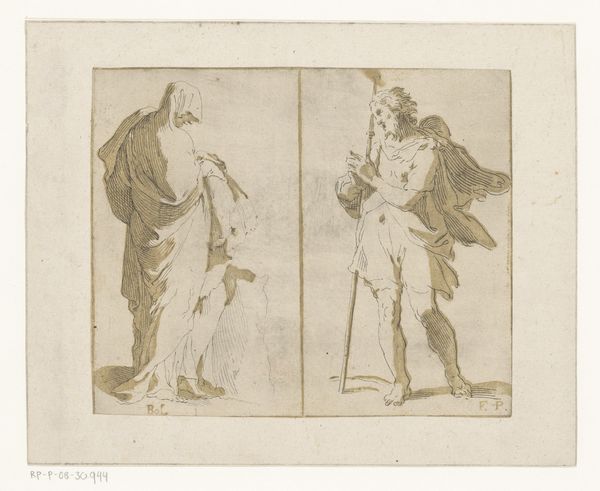
Curator: Before us, we have an engraving from 1702 entitled "Studie van de perfonicatie van de Vrede met de vredeshoed en een olijftak," or, in English, "Study of the Personification of Peace with the Peace Hat and an Olive Branch." Editor: My first thought is that this piece looks remarkably unfinished, a sort of ghost in the machine. It's stark; the absence of color amplifies the subject's almost mournful gaze. I can almost feel the etching needle scratching the plate. Curator: Yes, the comparative states presented side by side offer a look into the printmaking process during the Baroque period, evidencing different stages of development. But the choice to represent Peace this way also has significant political dimensions. Editor: How so? Is it the Phrygian cap she's wearing, that "peace hat" in the title? That feels ripe with symbolism and a possible critique of power. The way she's presented, there is an implied association with liberty and revolution that seems oddly progressive for 1702. Curator: Indeed, the Phrygian cap was often used to symbolize freedom and the pursuit of peace, referencing classical ideals. The decision to use this iconography then carries immense weight when the concept of peace itself is being constructed. Consider, the War of the Spanish Succession had just begun, influencing how peace and liberty are publicly visualized. Editor: And, although there’s classicism and calls back to the traditional symbol for peace, the bare foot gestures to nature and hints at disruption within this time, as society was on the brink of a series of revolutions that continue to reverberate today. Her gaze—almost confrontational—challenges us to question whose peace is being represented and at what cost. Curator: Right, the power of visual culture at work! What seems like a straightforward representation is so much more when you dig into the historical and socio-political context. It reveals the powerful role of imagery in shaping public opinion. Editor: This engraving highlights that the quest for peace, even centuries ago, was complex and interwoven with politics and identity, demanding careful consideration from both the artist and the viewer. It has that timeless relevance and, personally, feels radical and deeply pertinent.
Comments
No comments
Be the first to comment and join the conversation on the ultimate creative platform.
 Collect
 React
React Comment
More like this