Dimensions: height 180 mm, width 465 mm
Copyright: Rijks Museum: Open Domain
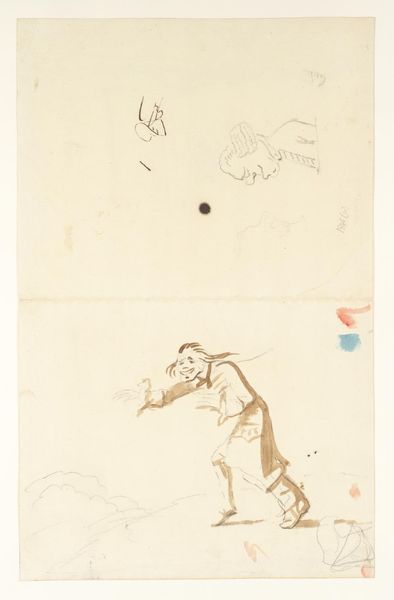
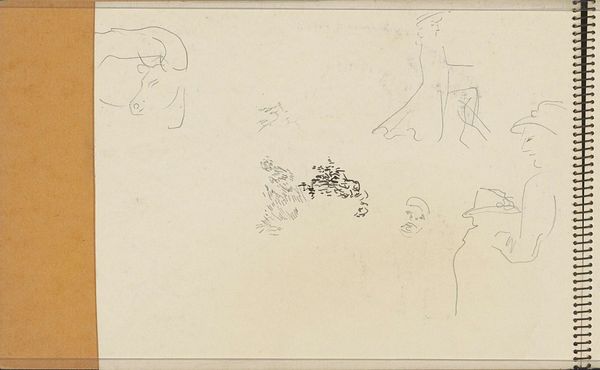
Editor: This curious drawing from 1778, titled "Tatoeëringen op armen van de zeelieden van Tarentin," or "Tattoos on the arms of sailors from Tarentin," is by Louis Ducros and held at the Rijksmuseum. The mixed media on paper, ink and watercolor, lends itself to a kind of study or personal journal page. There’s an intriguing arm on the right with tattoos, surrounded by fainter sketches, almost like visual notes. What stands out to you in this piece? Curator: This image resonates deeply with the iconography of identity. In the pre-photography era, tattoos served as permanent, portable biographies, especially for sailors often lost at sea. The anchor, the ship, the figure with a sword – these aren't just decorations; they are declarations of profession, allegiances, experiences. What stories do you think these particular symbols were meant to convey? Editor: It’s like a glimpse into a secret language! Maybe the figure with a sword represented a battle they survived? Or maybe the sun imagery shows where they sailed, near the Equator? It seems that some of the fainter symbols repeat on the arm... a need for permanency? Curator: Exactly. Repetition emphasizes importance. And consider this: why document these tattoos? Ducros wasn’t just recording images; he was capturing stories, beliefs, perhaps even the collective unconscious of a particular group. This act transforms these everyday sailors into subjects worthy of artistic study, subtly questioning societal hierarchies. Editor: I never thought about tattoos as a form of historical documentation, but it makes perfect sense. Thanks! Curator: And I see how even seemingly casual sketches can be profound cultural records. These images hold echoes of the past, speaking volumes about human experience.
Comments
No comments
Be the first to comment and join the conversation on the ultimate creative platform.
 Collect
 React
React Comment
More like this