
Curatorial notes
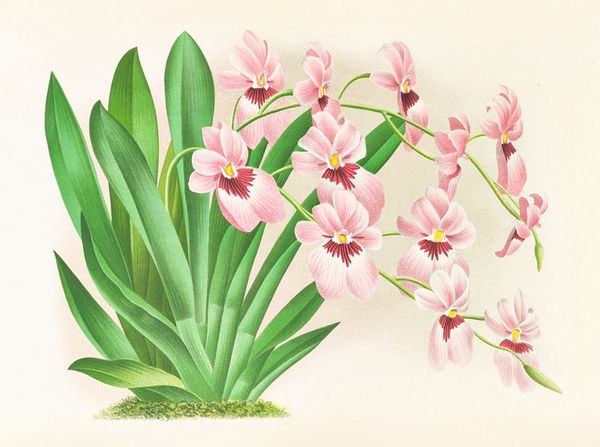
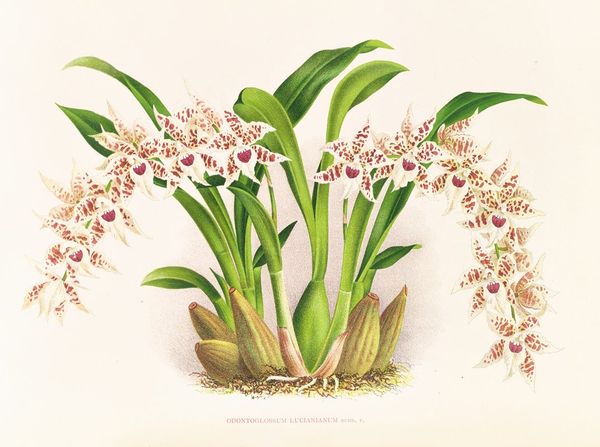
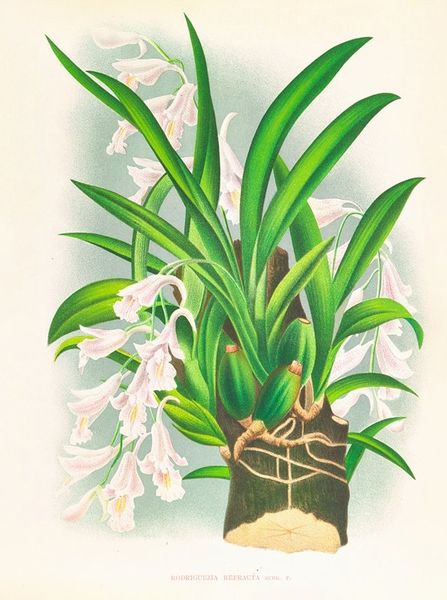
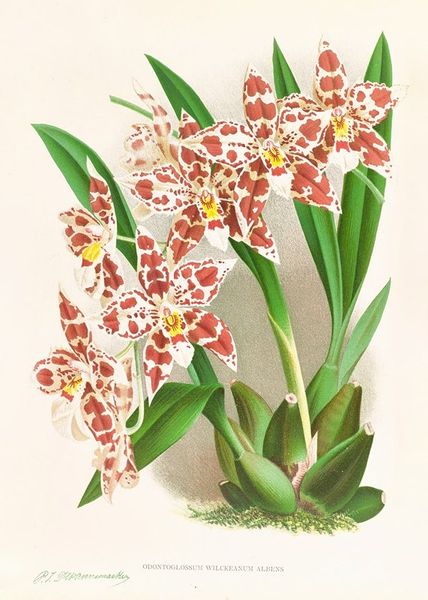
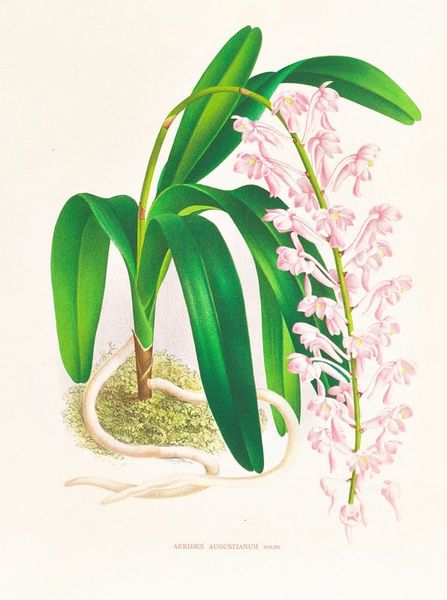
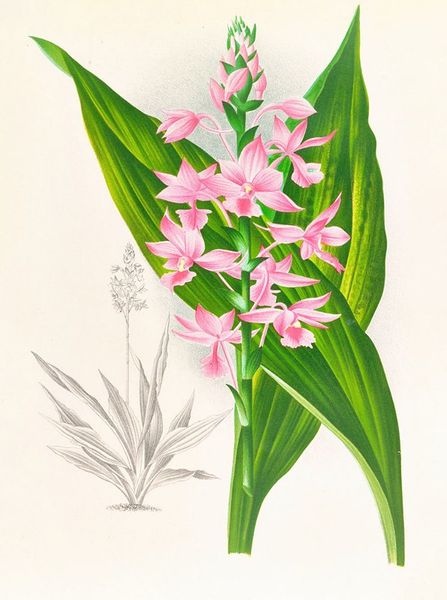
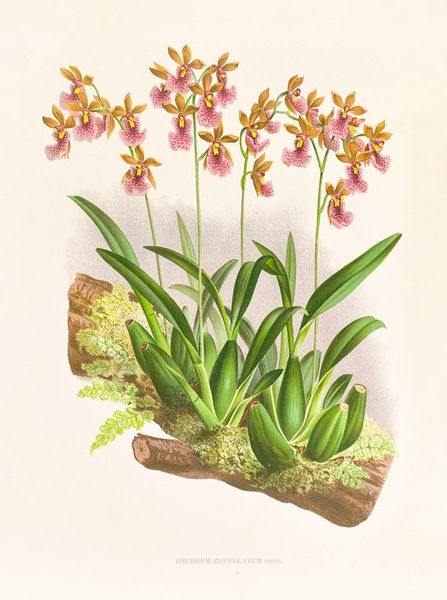
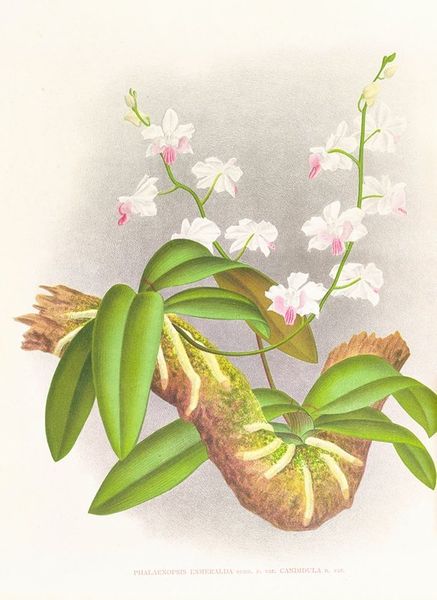
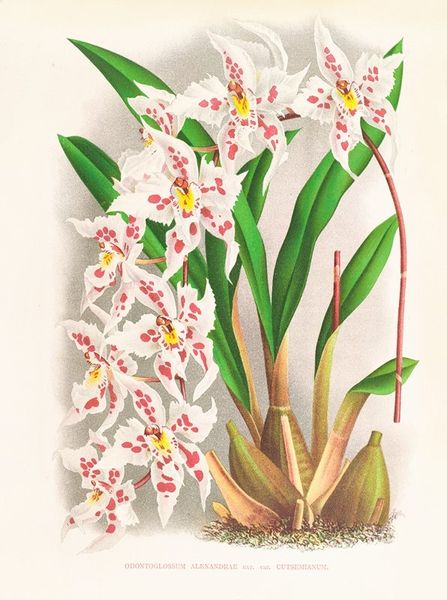
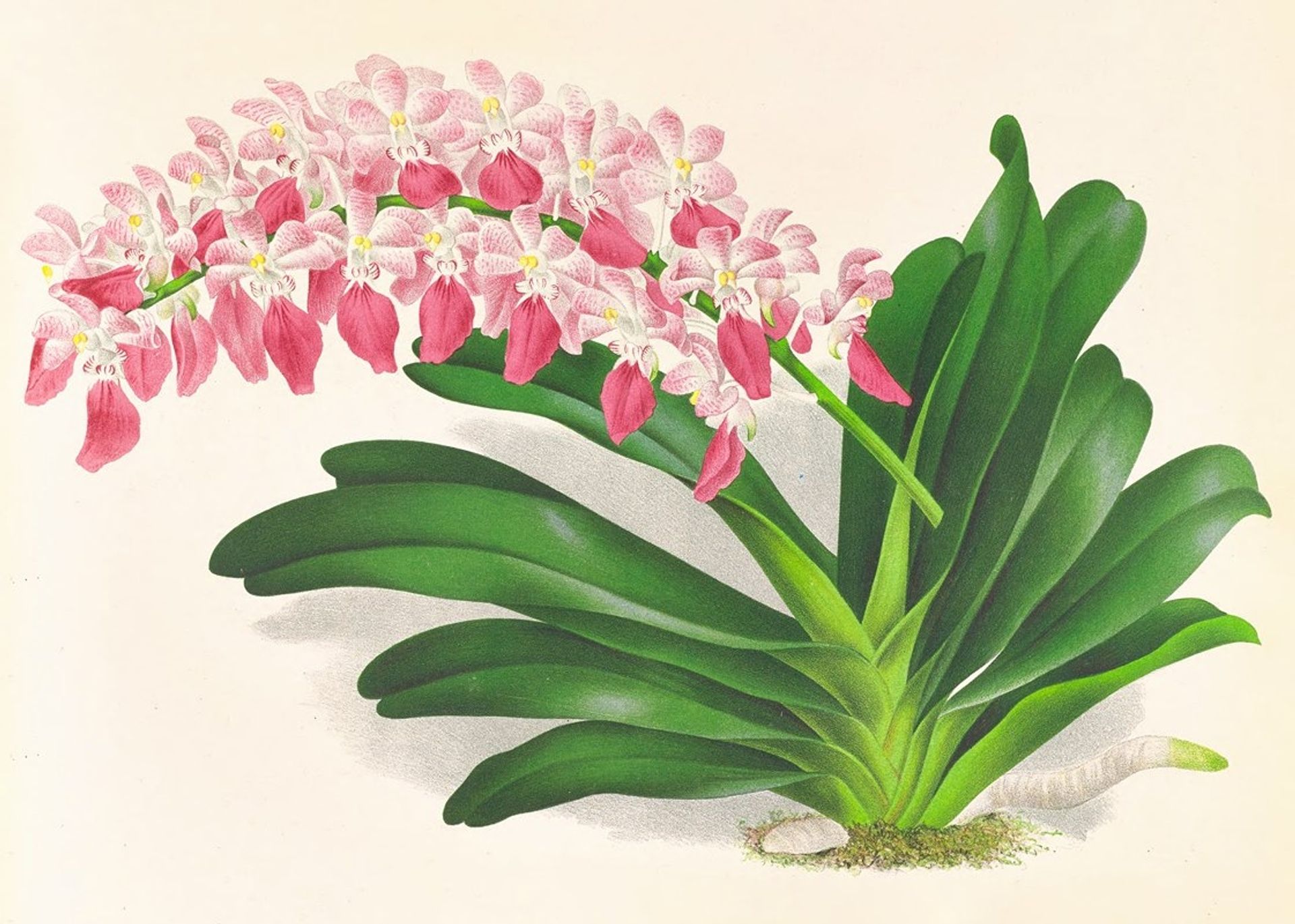
Editor: So, this is Jean Jules Linden’s *Aerides maculosum*, a watercolor illustration dating between 1885 and 1906. It’s such a precise rendering, and the leaves look incredibly vibrant. What draws your eye when you look at this work? Curator: It's the implied labor, really. Consider the conditions: late 19th century, the rise of industrialized printing yet here we have meticulously hand-painted illustration. This orchid becomes a commodity viewed through a scientific lens. It speaks volumes about colonial botanists, expeditions, and the movement of plants. Editor: That’s fascinating! So, the painting is about more than just the flower itself? Curator: Precisely. It's about the entire network surrounding it. Who commissioned this? For what purpose? Was it purely scientific, or was there an element of prestige involved? Watercolour itself—its accessibility and reproducibility—plays into a democratisation of scientific knowledge, yet contrasts with the elitist associations of orchid collecting at the time. Editor: I hadn't considered that tension. The accessibility of the medium versus the exclusivity of the subject. Curator: Indeed. Notice how the focus is almost clinical in its exactitude. This isn't romantic flower painting; it’s documentation, packaged within a system of power dynamics of trade, collecting, and knowledge production during that era. What seems purely botanical is entwined with political and social undertones. Editor: I never would have thought of it that way, but understanding the social context and production helps me to see it in a whole new light. Thank you! Curator: My pleasure. Reflecting on the labor and social conditions opens our eyes to untold aspects of its production and meaning.