

1638 - 1643
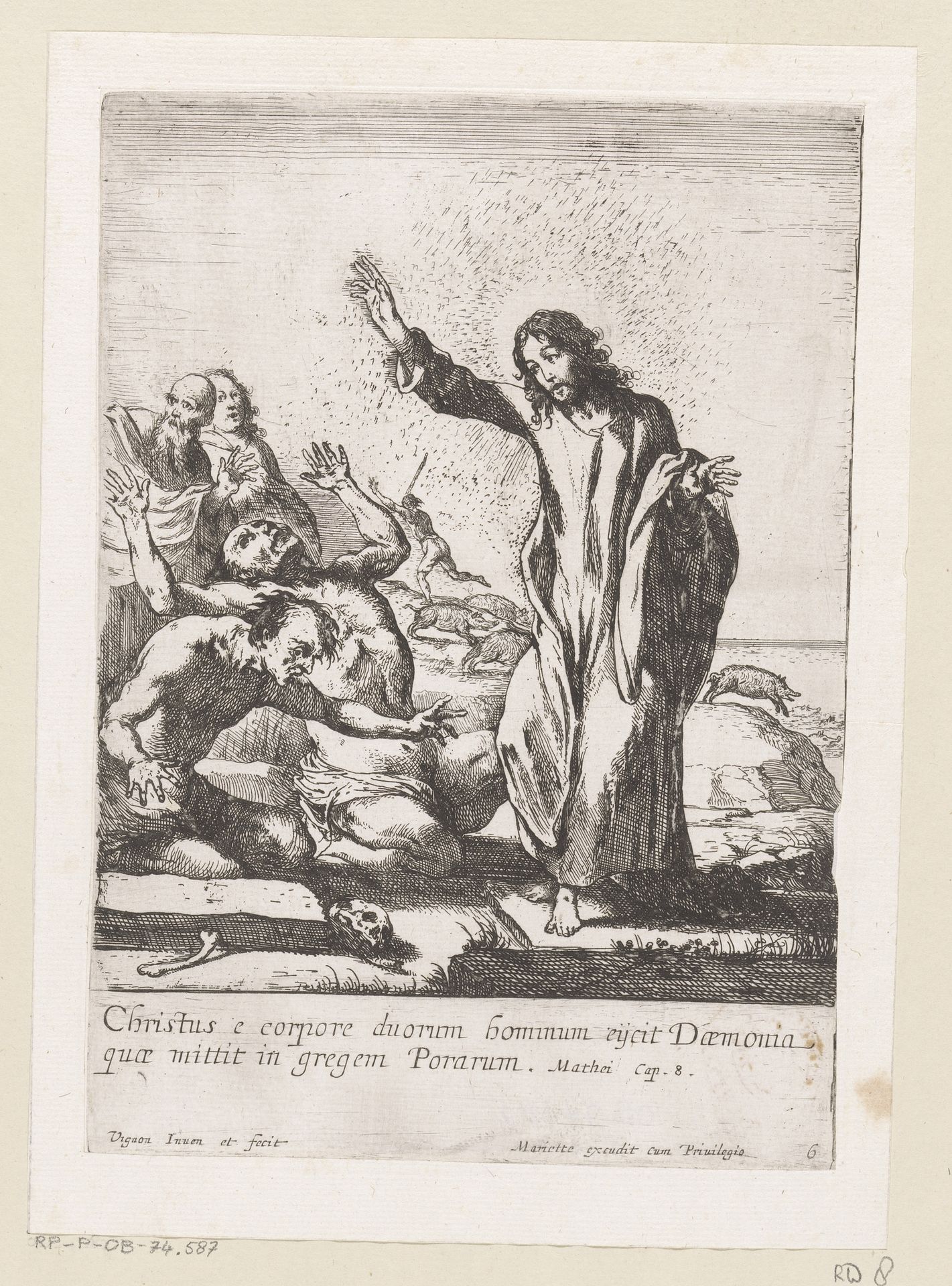
Christus verlost twee bezetenen van demonen

Claude Vignon
1593 - 1670Location
RijksmuseumListen to curator's interpretation
Curatorial notes
Curator: It has this stark, immediate energy about it. It feels like the moment right before a storm breaks. Editor: We're looking at "Christus verlost twee bezetenen van demonen," or "Christ Rescuing Two Possessed Men From Demons," an etching by Claude Vignon, dating back to somewhere between 1638 and 1643. It's currently held at the Rijksmuseum. Curator: Etching really suits the scene. The scratchy lines enhance that sense of torment and struggle. The darks and lights are very contrasted. Do you sense that immediacy, too? Editor: Absolutely. It’s fascinating how Vignon captures the performative aspects of power, particularly through the figure of Christ. Note his gesture: it is so open, almost theatrical. I wonder what this represents to you? Curator: To me, it evokes a profound cultural memory tied to exorcism rituals and the symbolic power of divine intervention. Christ’s outstretched hand feels almost like a conductor leading an orchestra of chaos into harmony, a visual embodiment of order triumphing over disorder. His garments too...They represent peace amid a scene of havoc. Editor: Precisely, but who experiences that peace? The possessed find release as their demons leave their bodies and flee into a herd of swine that plunge to their death into a body of water. What does it mean for the possessed people's identity when one's demons get sent to another living thing? In this etching, Vignon positions this story not as individual healing, but rather the perpetuation of collateral damage from a divine act, right? Curator: You see this violence and collateral damage. It's certainly in the piece, perhaps inescapably. But is that what survives about this etching as it has endured through cultural time? To me it demonstrates, at the deepest level, the power of belief and deliverance, expressed here through a single gesture. Editor: And belief, as you said, is a very powerful force, so powerful it has had an everlasting, profound effect on society in this rendering by Vignon, even now centuries later.