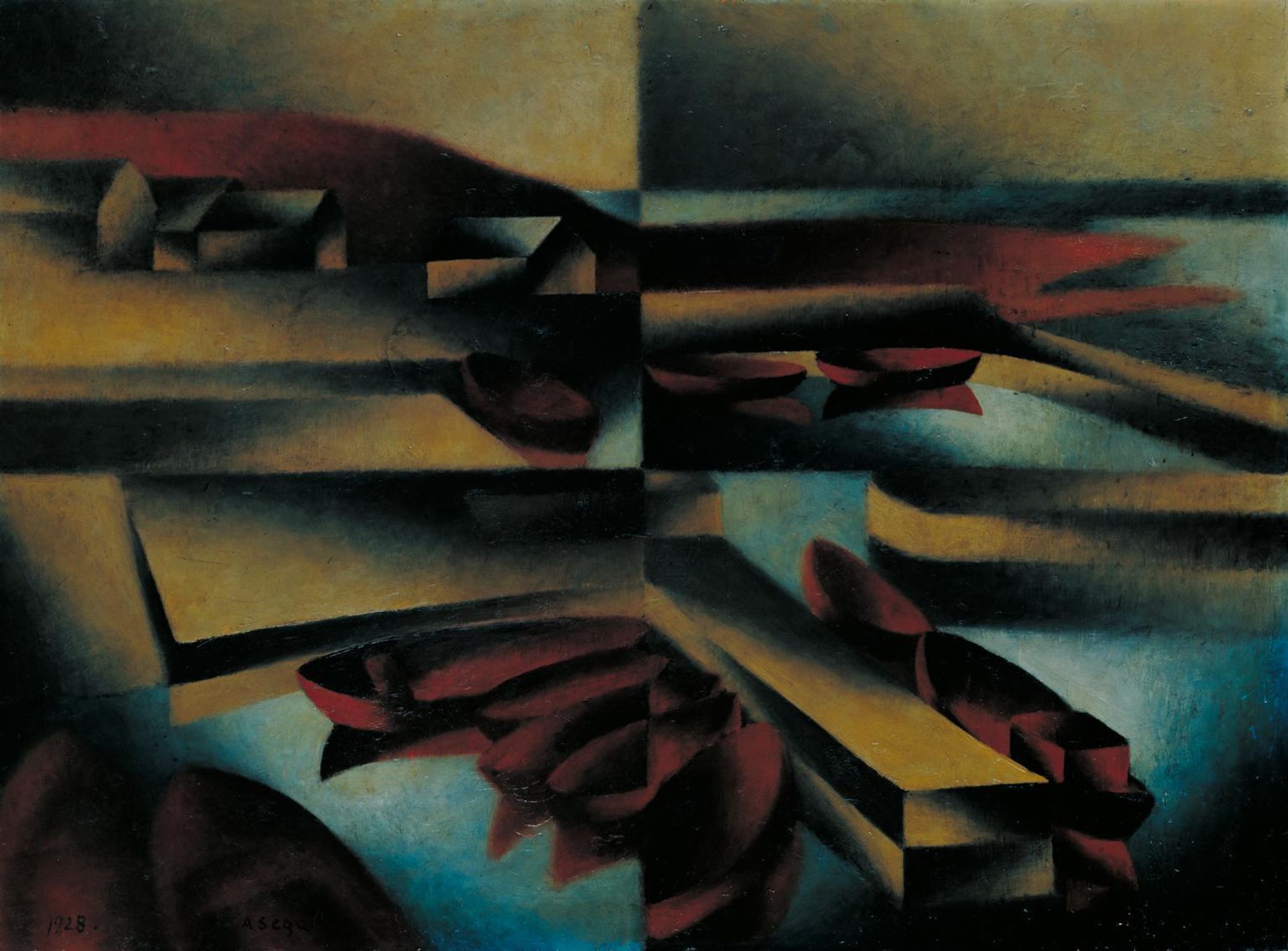
1928
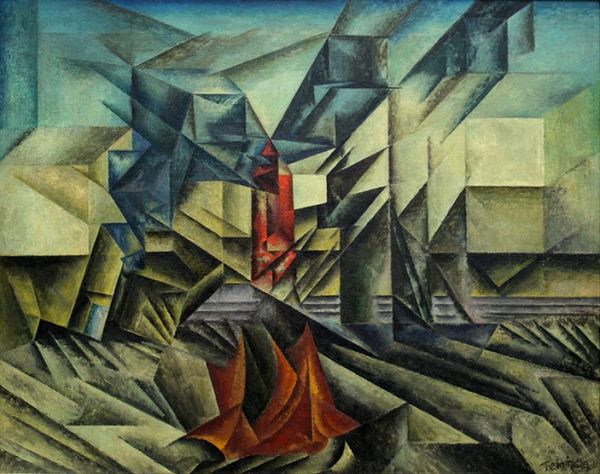
Harbour on Bornholm

Listen to curator's interpretation
Curatorial notes
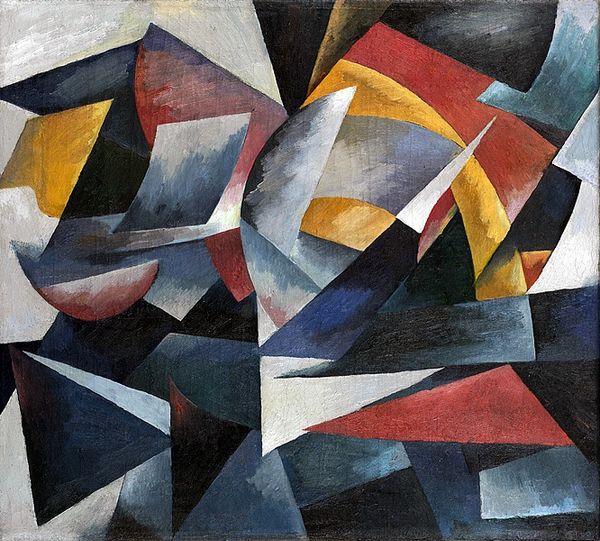
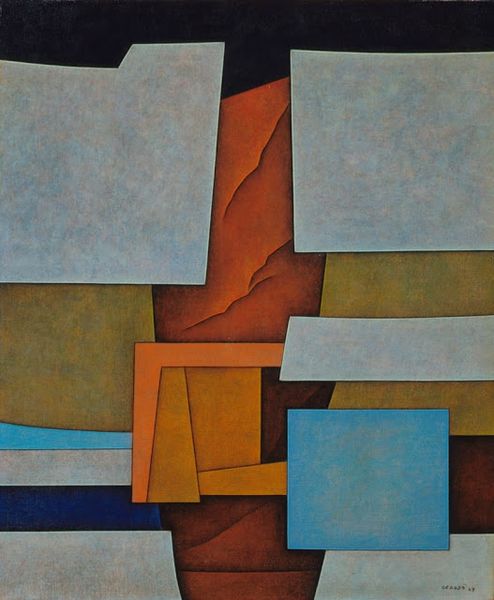
Curator: Arthur Segal, born in 1875, painted "Harbour on Bornholm". It's held in the Tate Collection, and I find it to be a rather striking composition. Editor: Indeed. My initial impression is one of fragmented stillness, like a memory viewed through fractured glass. The heavy horizontals and muted palette reinforce this feeling. Curator: Absolutely. Bornholm was a refuge for artists fleeing conflict. Segal himself had a fascinating, peripatetic life, dealing with exile and displacement. This division, this sense of unease, might reflect that. Editor: I see how this division might reflect Segal's personal experiences, but technically, the canvas itself is divided into four distinct quadrants, each presenting a slightly altered perspective of the harbor. Curator: I'd argue that the distorted perspective reflects his politics; he was a socialist deeply concerned with social harmony and justice and critical of bourgeoise society. Editor: Perhaps. It's intriguing how Segal uses color to unify these fragmented perspectives, though. The reds of the boats are echoed throughout the composition. Curator: I agree, and understanding the historical context allows us a better understanding of the visual techniques employed. Editor: And vice versa. Considering both the formal qualities and historical context allows for a more complete understanding of the artwork. Curator: A truly thought-provoking piece!